LIVE UPDATES: Tsunami warnings, watches, advisories were given to 1/4 of the Earth after 8.8 quake

KGO logo
Last updated: Thursday, July 31, 2025 11:56AM GMT
Tsunami warnings, watches, advisories were given to 1/4th of the earth

SAN FRANCISCO (KGO) -- A tsunami sent waves into Russia, Japan, Hawaii and the West Coast of the United States after an 8.8 magnitude earthquake struck off the coast of the Russian Far East early Wednesday.

RELATED: California hit with tsunami waves after massive 8.8 magnitude earthquake

The quake was one of the biggest temblors ever recorded. Several people were injured, but none seriously, and no major damage has been reported so far.

The danger already appeared to be subsiding in some places, with authorities in Hawaii and parts of Japan and Russia downgrading their warnings. But Chile upgraded its warning to the highest level for most of its lengthy Pacific coast, and said it was evacuating hundreds of people.

Tsunami waves reached the San Francisco coast early Wednesday morning, according to the National Weather Service. Despite the strong current and dangerous waves, they are only expected to increase by about one-to-two feet in the region.

A Tsunami Advisory has been canceled for the Central Coast of California, including the entire Bay Area.

Key Headlines

Here's how the news is developing.
Luz Pena Image
Jul 31, 2025, 3:42 AM GMT

Was the Bay Area ready for a tsunami?

The Tsunami Advisory was canceled late Wednesday morning for the Bay Area as waves hit the California coast after massive 8.8 quake in the eastern coastline of Russia.

ABC7 News reporter Luz Pena spoke to multiple Bay Area counties to check how they prepared in case the tsunami risk increased in our region.

J.R. Stone Image
Jul 31, 2025, 1:15 AM GMT

Tsunami warnings, watches, advisories were given to 1/4 of the Earth

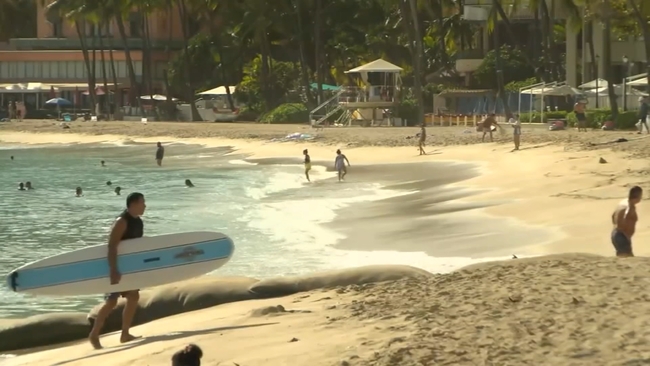
The Tsunami hit Hawaii Tuesday night and the California Coast early Wednesday morning. The coastline of the entire Pacific Ocean was under a warning, watch, or advisory.

"It's not over yet. I mean, it hasn't hit South America yet."

USC professor Costas Synolakis heads the school's Tsunami Research Center and cautions those who think that everyone may be out of the clear of the Tsunami, especially people living in South America.

"I didn't realize that one fourth of the globe is under some sort of advisory," said ABC7 News reporter J.R. Stone.

"Just think about this, the entire Pacific, I mean the entire. You know, the coastline of the entire Pacific Ocean. Just think of the entire coastline. That's about a quarter of the coastline of the globe," replied Synolakis.

The Tsunami hit Hawaii Tuesday night and the California Coast early Wednesday morning.

There were people yelling from balconies in Hawaii Tuesday night, all in anticipation of the Tsunami coming.

It's hard to actually see the arrival of the waves, but that is not surprising to Eric Geist with the USGS.

"Seventy-percent of the time, Tsunamis are not breaking waves. So what you'll just see if you see anything is like a step up in the water, because it's a really long wave," said Geist. "It is tricky because you might not see anything going on on the surface of the water but there are still very strong currents. Actually, it's really the currents, not the amplitude of the waves or the height of the waves that causes a lot of the force and the damage there."

In Crescent City, there's a dock that is now fully submerged in water. The Tsunami current came in fast but boaters here say it wasn't nearly as bad as 2011, also partially because docks here were strengthened.

"It just rages, it comes in, and it looks like it's going 100 miles per hour or better. Everybody's boat is okay. In 2011 it destroyed the harbor - $87 million in damage and 16 boats sank so yeah, we missed one - until another one comes you guys, who knows," said Harry Adams who owns a boat in Crescent City.

"In some areas it hasn't even reached some coastlines in the Pacific yet. So it's going to be a while before we can actually do an actual damage report and actually get a real full idea of what the severity of the Tsunami was," said Geist.

AP logo
Jul 30, 2025, 11:07 PM GMT

A tiny California city prone to tsunamis saw the highest waves in continental US after quake

A small California coastal city near the border with Oregon that has recorded dozens of tsunamis, including one that killed 11 people more than 60 years ago, saw little damage Wednesday as locals returned to their routines amid sunny skies in the town known as a tsunami magnet.

Crescent City recorded waves of up to 4 feet (1.22 meters) early Wednesday - the highest recorded anywhere in the continental United States following an 8.8-magnitude earthquake centered off the coast of Russia's Far East hours earlier. Still, those were far smaller than the 21-foot (6.40 meters) waves caused by the deadly 1964 tsunami.

This time, no one was injured in the city of 6,600 and there was no major flooding, with downtown open later Wednesday morning. A dock at the city's harbor was damaged, and officials warned people to stay away from beaches and waterways.

"A lot of people who aren't from here did evacuate. But they ended up coming right back because nothing happened," said Rose Renee, who works at Oceanfront Lodge that looks out at the famed Battery Point Lighthouse.

A surge of water lifted the dock off its pilings around 2:40 a.m., eventually submerging it, Harbormaster Mike Rademaker said at a news briefing. The dock was engineered to disrupt the waves' force before they reach the inner harbor and appears to have functioned as intended, he said.

Zach Fuentes Image
Jul 30, 2025, 7:28 PM GMT

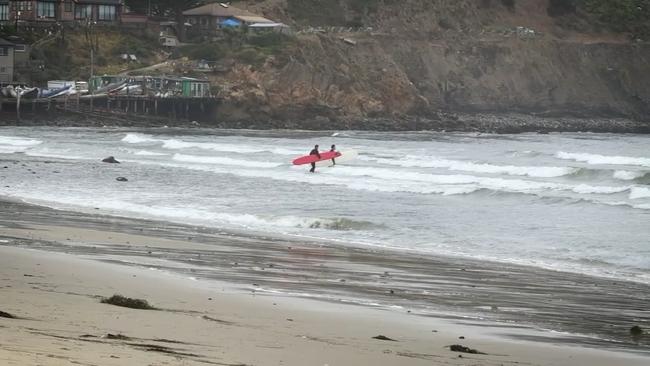
Despite Tsunami threat, surfers took to Pacifica to catch waves

Warning signs could be seen at Pacifica State Beach saying that the beach was closed due to the Tsunami Advisory, but people still made their way to the coast for surfing and morning walks.

Despite beach closures, people still made their way to the Bay Area coast for surfing and morning walks.

Surfers took to the ocean Wednesday in Pacifica, just like any other day of the week. But this wasn't a normal day.

Warning signs could be seen at Pacifica State Beach telling people that the beach was closed due to the Tsunami Advisory.

For some, the warnings did the opposite of what officials may have hoped for.

"That was kind of part of the fun," said David Largusa, who was surfing on the beach, "We're the only ones who are out there on a Tsunami Advisory."

It wasn't just surfers unfazed by the Tsunami Advisory, many other people still went about their morning walks, the same way they do each day.

Thankfully, there were no reports of major damage from the currents throughout the Bay Area.

In a post on social media Wednesday morning, San Francisco Mayor Daniel Lurie confirmed that there were limited impacts from the Tsunami wave.

For some, the Tsunami Advisory was a reminder of the danger that can be behind the natural beauty surrounding their homes.

"It's a good reminder," said Eileen Needham, who walks along the beach every day. "You know, when you hear what has happened all over the world, and Hawaii was a big one with the fires and LA, the fires, we need to be prepared."

The advisory has since been canceled.