Self-driving trucks transport goods on Texas freeways in expansion push, could lead to job losses


MOUNTAIN VIEW, Calif. (KGO) -- Aurora driverless trucks have begun transporting goods on the nation's freeways. That means more efficiency, but also job losses for truck drivers.
Chris Urmson knows his big idea to revolutionize the trucking industry can cause uneasiness at first.
A DRIVERLESS TOMORROW: How Waymo went from secret Google project to dominant robotaxi company
"It's really rational for people to have doubts; this is something new. It's interesting, challenging," said Urmson, CEO of Aurora Innovation, a company developing self-driving technology for big rig trucks.
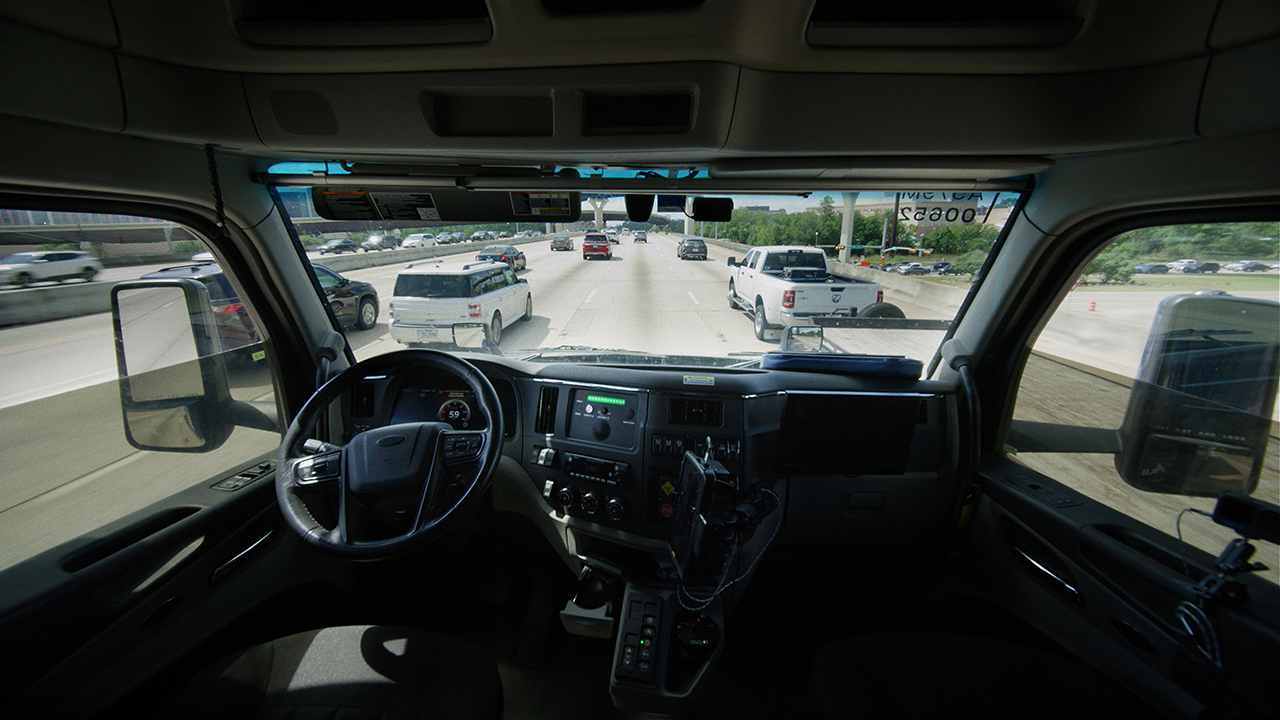
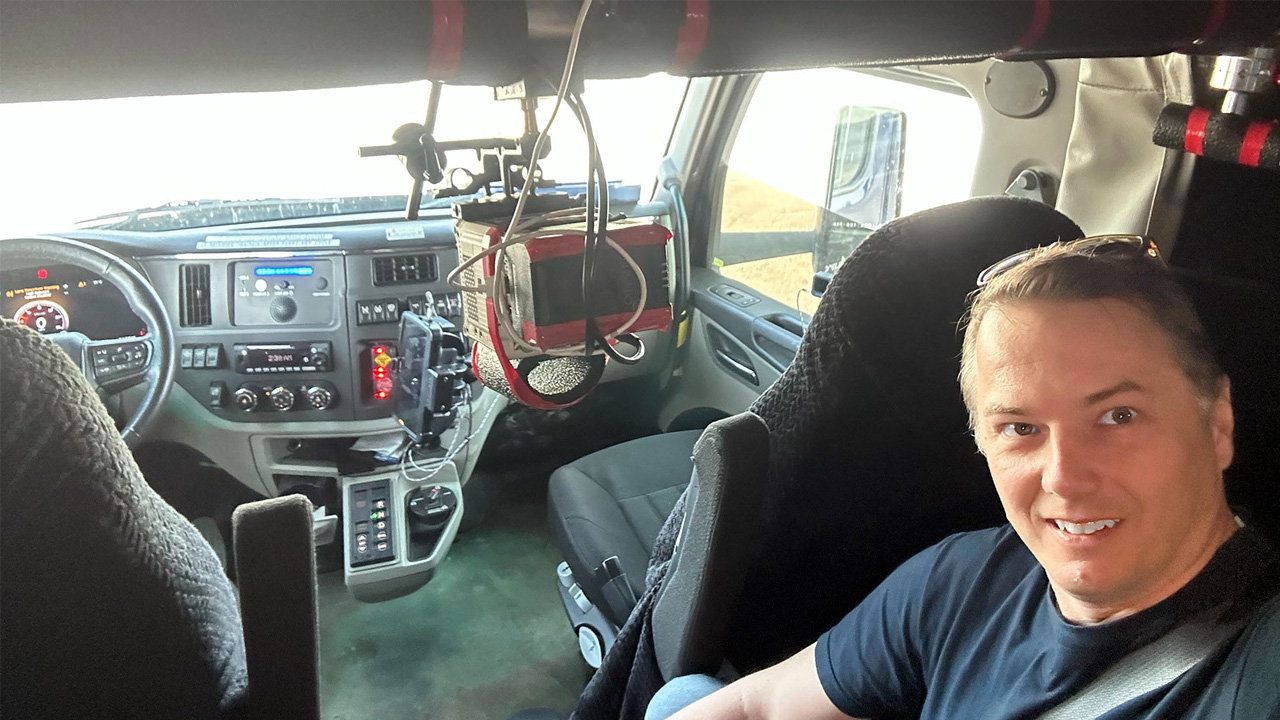
Aurora trucks without a safety driver on board are already on the road in Texas, hauling loads for FedEx on the busy Interstate 45 corridor between Dallas and Houston.
"They bring a trailer to one of our terminals, we hook it up to one of our trucks, then we drive it to the other end, and then they come pick it up and take it where it needs to go," said Urmson.
The Aurora Driver uses a combination of cameras, radar and LiDAR to see around it, similar to other autonomous vehicles like Waymo robotaxis currently deployed in San Francisco and other cities in California.

But these driverless vehicles travel at slower speeds. Semi-trucks travel at freeway speeds, up to 65 miles per hour, so they approach objects much faster.
Aurora developed a special kind of light-sensing LiDAR, First Light, that it placed around the trucks so the autonomous driver can see much farther down the road.
Urmson calls it the company's secret sauce.
"In First Light, instead of counting how long it takes for a light pulse to go out and back, we send out this wave with a particular shape to it, and it bounces off the world and comes back and then we interfere this outgoing wave with the same wave itself. And we look for where it looks the most the same. And that tells us where the peak is and that's how we figure out basically the distance," explained Urmson from the company's headquarters in Mountain View, California.
A DRIVERLESS TOMORROW: Motional and Zoox take different turns in the autonomous vehicle race
Urmson said the technology, which is installed in existing trucks, puts out a clearer signal, even in harsh lighting conditions.
"You get 10 to 20 times multiplication. So that means for 1/10 the light you can see the same amount that a pulsed LIDAR could see," said Urmson.
According to Aurora, First Light can see twice as far as conventional LiDAR.
Urmson has dedicated his entire career to self-driving technology.
He led the Google self-driving car project that later became Waymo. He left the company to launch Aurora in search of bigger payoffs.
"Ride hailing in the U.S. is a tens of billions of dollars business. The trucking market in the U.S. is about $700 billion. So it's gigantic. It's a much bigger opportunity today," said Urmson
Aurora is not the only autonomous vehicle company wanting a piece of those trucking dollars.
A DRIVERLESS TOMORROW: How Mercedes beat Tesla to become 1st to offer level 3 autonomous personal car
Others include Kodiak AI, which provides an autonomous driver system that can be installed in semi-trucks.
PlusAI developed a virtual driving system called SuperDrive that allows trucks to operate fully autonomously. Factory-built autonomous trucks powered by the system are currently in development by a number of manufacturers.
Gatik provides middle-mile deliveries, using small and medium-sized autonomous trucks to deliver merchandise from warehouses to stores.
The earnings potential is huge but getting the technology right has been very expensive. Companies that were darlings of the industry ended up going bust.
Embark started building self-driving software for trucks in 2016. It went public with much fanfare in 2021, but 16 months later, it shut down.
Otto was also founded in 2016. It was bought by Uber but shut down two years later.
TuSimple was another unicorn. In 2021, it completed an 80-mile test drive from Tucson to Phoenix with no human in the cab and was valued at $8.5 billion.
But a year later, a TuSimple truck struck a highway center divider. The company shut down U.S. operations after that.
"There have been really mixed fortunes for all kinds of startups and companies that have been working on autonomous driving. They basically said that the timeline or horizon to get there on the technology was too distant, and it was going to cost too much money. So they just stopped and rethought it," explained Ed Ludlow, co-host of Bloomberg Technology.
Aurora lost $1.7 billion in 2022 but has been able to raise money to keep operating.
A DRIVERLESS TOMORROW: From farming to mining, self-driving trucks are how humans do basic tasks
It partners with several companies like FedEx, Werner and Uber Freight to cut down on operating costs.
Daimler Truck has taken a similar approach by partnering with Volvo and Waymo and buying a stake in Torc Robotics, which was already profitable with its off-road autonomous trucks.
"They already know the industry, they know what big vehicles mean, motion control, sensors and also working in pretty rough environments, like defense or mining. We do not want to launch a technology; we really want to launch a business," said Peter Vaughn Schmidt, CEO of Torc Robotics.
Daimler is now transforming its best-selling Freightliner trucks, an iconic 18-wheeler that has been around for more than 80 years.
It is looking to launch a Level 4 Cascadia semi by 2027, which would have autonomous technology integrated at the assembly plant.
"In Level 4 driving, you do not have a human as a backup anymore in case of a critical failure. Say you lose hydraulic steering power, now we have systems that can perform that backup and are that security blanket in case something happens with one of those safety-critical systems like your brake system, your steering system," said Joanna Buttler, who leads the Autonomous Technology Group at Daimler Truck.
The federal government has no specific regulations for autonomous trucks. If the vehicle meets general safety standards, it can drive on the nation's roads.
"Traditionally, the federal government has set vehicle standards, and states have set driver's licensing standards. So now that you have the vehicle doing the driving, there's some overlap there. And there's a lot of talk about how to best, you know, delineate responsibilities of federal and state level going forward. But it's not a settled question by any stretch," said Pete Bigelow, Director of Technology and Innovation Coverage at Automotive News.
The Transportation Department has been slow to develop guardrails for autonomous trucks, but some states have taken action.
In Michigan, a pilot program is underway on a three-mile stretch between Detroit and Ann Arbor. The dedicated autonomous vehicle lane collects data on road conditions and transmits the information to self-driving vehicles. But this approach is not common.
"These companies have fundamentally decided that they don't want to rely on infrastructure to be changed in order for them to operate. So they decided if they want a business, they're going to have to they'll have to do the adaptation themselves with their technology, more so than wait for changes on the road," added Bigelow.
Two dozen states have passed laws encouraging driverless vehicles in existing infrastructure, including Texas, Florida and Arizona. In Texas, the autonomous vehicles themselves are licensed to drive.
Ten other states have some regulations. New York requires a safety driver in the autonomous vehicle during testing.
California currently prohibits driverless vehicles weighing more than 10,000 pounds, roughly the size of a cargo van. A fully loaded big rig can weigh about 80,000 pounds.
State assemblywoman Cecilia Aguiar-Curry has sponsored several bills to require safety drivers on autonomous big rigs.
"The highways are really crowded and we are narrowing the roads a little bit and the trucks are bigger and I want to make sure, as we change the transportation routes, that we have safety for the trucks that are going on there," said Aguiar-Curry.
Her bills have been vetoed by Governor Gavin Newsom.
According to the Federal Motor Carrier Safety Administration, there were more than 42,000 motor vehicle fatalities on the nation's roads in 2022, about 14% of those involved a large truck, like big rigs, buses and dump trucks. Brake failure was a major factor, as was driver speeding, being distracted or falling asleep.
"People are very concerned about these 80,000-pound trucks going down the highway and they want to make sure they stop on time. They want to make sure the technology works," said Aguiar-Curry.
Buttler said the Freighliner Cascadia has redundancy built in to control steering and braking, so if one fails, the other can take over.
"If a failure happens, the virtual driver software initiates a minimum risk maneuver and instructs the vehicle to come to a safe stop at the next possibility," said Buttler.
Truck drivers worry about the loss of jobs, which are estimated to be between 11,000 and 300,000.
Urmson says many of those drivers can be retrained as maintenance technicians, dispatchers or fuelers for trucks.
He says the bigger issue is finding enough people to drive trucks now.
The trucking industry currently faces a shortage of drivers. Many have left as the price of diesel has gone up and rates for transporting goods have dropped.
For example, an independent truck driver making a typical haul from New York to Texas would have made $4,500 in 2021. By 2023, that income would have fallen to $1,900, a drop of more than half.
"Today, the trucking industry is experiencing a driver shortage of 80,000 drivers and that is expected to double by the end of the decade, so we can offset that shortage and add more capacity. In addition, these trucks can virtually run 24/7 because they are not constrained by hours of operation," said Buttler.
Urmson said self-driving trucks are more efficient than a human driver, which is limited to 11 hours of driving a day. Hauling merchandise on an 18-hour trip would require two days, while an autonomous truck can do the trip in just one day since it does not need to stop for lunch or a bathroom break.
That difference could save companies 25% of the cost of transporting goods.
Truck drivers may still have to do last-mile operations, letting the autonomous truck drive the long, boring freeway miles.
"We do not want to drive in a city; that is the right job for humans. Inner city driving with a Class A truck is a really, really complicated task and we want to leave it to humans," said Vaugh Schmidt.
From a concept for tomorrow to the reality of today. Take a journey through innovation, failed attempts and rise of "A Driverless Tomorrow." You can watch the full ABC7 Originals series here or wherever you stream ABC7.