More than 1,000 flights nationwide canceled Saturday


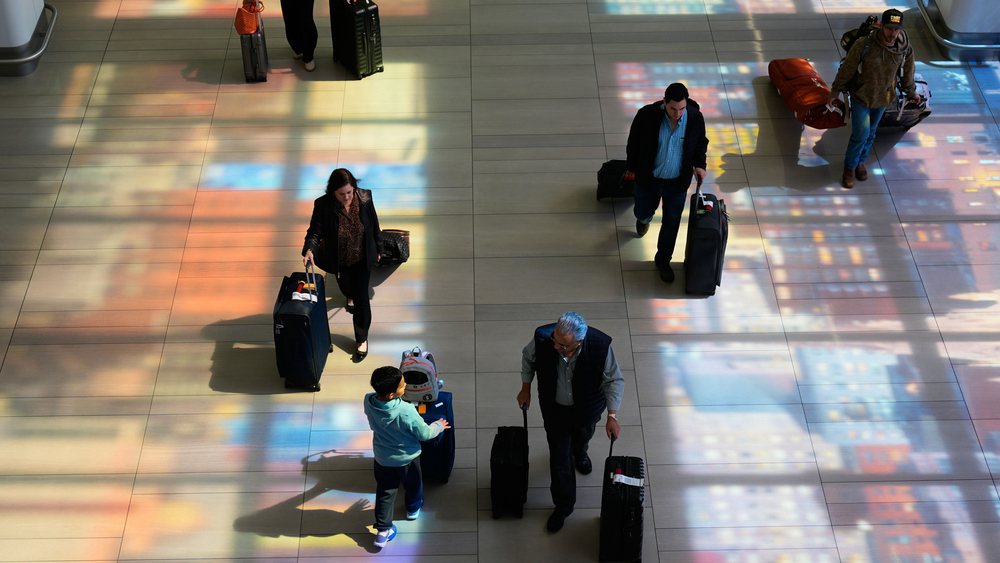
CHICAGO -- More than 1,000 flights have been canceled nationwide on Saturday as the Federal Aviation Administration continues limiting flight capacity at 40 major U.S. airports amid the government shutdown.
As of 3:30 p.m. ET on Saturday, 1,048 flights have already been canceled nationwide and over 4,000 flight delays. This eclipses Friday's toll of 1,024 cancelations.
Major delays at airports across the country continue to persist due to staffing issues in air traffic controller towers and centers.
There are 25 air traffic control staffing triggers Saturday afternoon, a ground stop in Nashville and multiple ground delays due to staffing at airports across the country.
Nashville is currently under a ground stop until 3:45 p.m. due to staffing. There were earlier staffing-related ground stops in Austin, New York's JFK and LGA, Dallas and Charlotte.
If the government shutdown continues, more air travel reductions could be on the way, Transportation Secretary Sean Duffy said in an interview on ABC News Live on Friday.
"My hope is that this government shutdown will end soon and we can get back in the business of letting Americans travel," Duffy said in the interview.
It is possible the Department of Transportation may ask airlines to cancel more than 10% of their flights if controllers keep calling out in higher numbers, Duffy told ABC News.
Duffy said the FAA has asked private jets to avoid flying at the 40 airports impacted by the flight reductions, though they are currently not prohibited from flying there. He said private jet companies have been cooperative and are choosing alternate airports to help alleviate the pressure at those airports.
The cancellations are the latest -- and perhaps biggest -- disruption to air travel since the government shutdown began more than a month ago.
The FAA decided not to cut any international flights as it would be a violation of international agreements with the countries, according to Duffy.
"We have international agreements that we abide by, and because of those international agreements, I'm not going to impact those international flights. And because if I do, what will happen is we have other countries that are waiting to have a breach of those contracts from the US so they can cut down American flights, and then that would have a very long lasting impact on our ability to to to send travelers from the U.S. to those partners that have the agreements," Duffy said.