How did Santa Cruz become the birthplace of surfing in the US? New exhibit shows the hidden history


SANTA CRUZ, Calif. (KGO) -- Saturday, July 19, marks the 140th anniversary of an event that made Santa Cruz a top surfing destination. It's a bit of surfing history not too many people know about, but a new exhibit aims to change that.
"This exhibit is like no other that's ever been staged anywhere in the world," Historian Geoffrey Dunn said as he looked at the collection of 50 surfboards.
The exhibit "Princes of Surf 2025: He'e Nalu Santa Cruz" at the Santa Cruz Museum of Art and History looks back at how surfing got started in Santa Cruz 140 years ago this month. That's when three Hawaiian princes who were studying in San Mateo paid a visit to a family with royal connections in Santa Cruz.
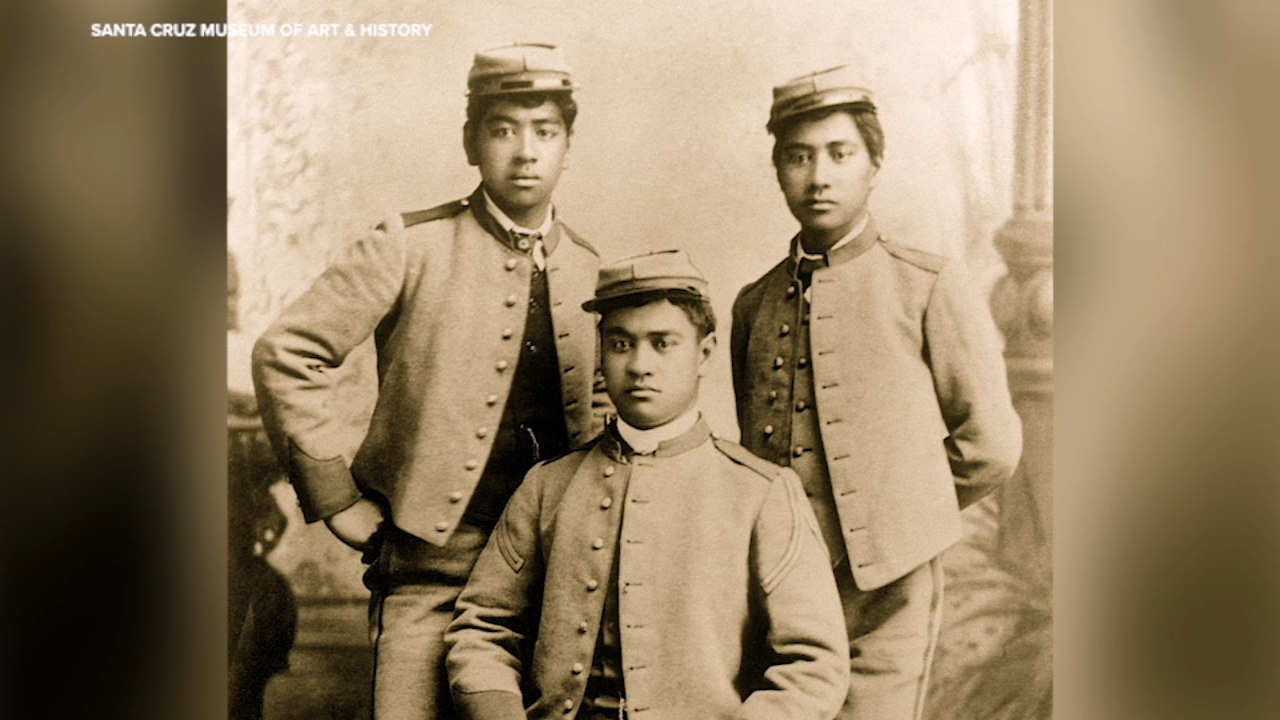
The family lived near the mouth of the San Lorenzo River.
"Certainly these Hawaiians came to the beach and saw these breakers and said looks a lot like Hawaii, we can surf here," Dunn said. "So they went out, got planks, made boards, and really transformed the history of surfing by bringing it here to California."
It was the first time anyone surfed off the coast of North America.
The princes made the surfboards out of redwood, which was plentiful in the area. The connection between the island and Santa Cruz was cemented.
"There was this cultural interchange of the Hawaiians going back and surfing the boards that were made here in Honolulu and over a period of time, the surfboards used in Honolulu were redwood boards with redwood planks coming from California and being shaped in Hawaii," Dunn said.
Dunn led the research for the exhibit with fellow historian Kim Stoner.
MORE: Surfer describes close encounter with shark along Peninsula coast: 'Saw this big mouth'

Known as the sport of kings in Hawaii, surfing caught on with the locals in Santa Cruz. Surf clubs formed and Santa Cruz became synonymous with surfing. It's that history that's being celebrated with the exhibit.
It brings together exact replicas of the most historic surfboards in the world, from those used by Hawaiian royalty in the 19th century to modern boards used at Mavericks.
The replicas were made by legendary surfboard shaper Bob Pearson, founder of Pearson Arrow Surfboards.
Ten years ago, he made replicas of the ones used by the Hawaiian princes.
The boards were 17 feet long and weighed 240 pounds. By comparison, modern long boards weigh less than 20 pounds.
Pearson tried the boards out with some friends.
"These were all pro riders, big name pro riders. It was hard to stay on more five, six, seven seconds, very difficult," Pearson said.
For the current exhibit, Pearson created three new historical boards. One of them belonged to Olympic swimming champion Duke Kahanamoku, who visited Santa Cruz and did surfing exhibitions.
Another is a replica of a board used by Princess Ka'iulani, the heir apparent to the Hawaiian throne before the overthrown of the Kingdom of Hawaii by British and American businessmen.
Pearson copied the boards from the originals stored in a British museum.
"I went over there and measured this thing and as I'm putting my hands on this board, I'm getting chicken skin. I'm getting thrilled I'm going to make this thing," Pearson said.
MORE: Daring surfers head to Bay Area's legendary Mavericks with powerful waves
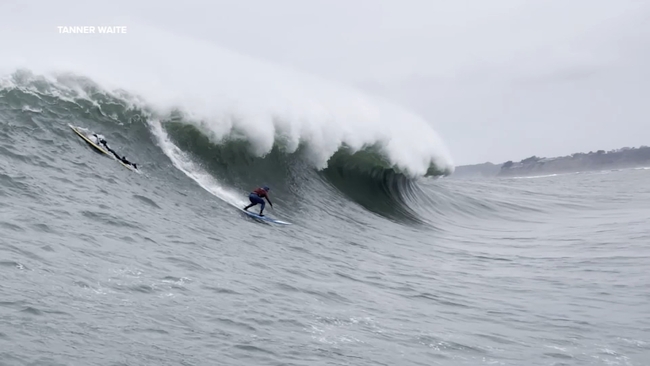
All the replica boards have a special commemorative Hawaii-Santa Cruz brass logo with the Hawaiian royal family crest. The exhibit also showcases more recent boards from legendary manufacturers and surfboards used by the top pros at Mavericks.
But the goal of the exhibit is to break through surfing stereotypes.
"Showing that surfing is this multicultural endeavor and not just the blonde Beach Boys of Southern California is really important to us," Dunn said.
Stoner showed off images of Dorothy Becker, considered the first female surfer in the United States. Pictures of her doing a headstand on a surfboard popularized the sport in the early 19th century.
"It wasn't just a male dominated sport. There were women surfing back then and in the 1930s here with the Santa Cruz Surfing Club," Stoner said.
Stoner co-founded the Santa Cruz Surfing Museum, a tiny space, so he's glad for the bigger space of this exhibit.
"We have more history stored in storage that we could share with the public but we don't have the space for that," Stoner said. "Here's an opportunity to share the surfing history with everybody in the community."
The new boards aren't going into storage after the exhibit is over. Pearson plans to take them out in the water, just like the ones he made a decade earlier.
"Someone's going to ask, 'Did you ride it?' Wouldn't it be better if you said, 'Yeah, I rode it,'" Pearson said with a grin.
The surfboards will be on display at the Santa Cruz Museum of Art and History until January 4, 2026.