Tesla's Bay Area Robotaxi launch: California regulators say company has no AV permit


SAN FRANCISCO (KGO) -- Tesla's highly anticipated robotaxi rollout in the San Francisco Bay Area is hitting a regulatory wall.
The California Public Utilities Commission (CPUC) confirmed Friday that Tesla has not applied for the necessary authorization to operate autonomous vehicles for public passenger service-paid or unpaid-in the state. The clarification comes in direct response to reports that Tesla planned to launch its robotaxi service in the Bay Area as early as this weekend.
RELATED: Would you hail a robotaxi? Musk bets cabs will give Tesla a lift after boycotts and sales plunge
"Tesla has not received approval from the CPUC to offer autonomous passenger service to customers, paid or unpaid, with or without a driver (nor has the company applied)," said Terrie Prosper, Director of Strategic Communications at the CPUC, in an e-mail to ABC7 News.
While Tesla does hold a Charter Party Carrier (TCP) permit, this authorization only allows the company to operate traditional vehicles with human drivers for charter services. It does not permit the use of autonomous vehicles (AVs), even those with a safety driver behind the wheel.
"Tesla does not hold a Drivered Pilot AV permit from the CPUC, so it cannot use a drivered AV in passenger service," Prosper added. "To summarize, Tesla is not allowed to test or transport the public (paid or unpaid) in an AV with or without a driver."
The CPUC also confirmed that Tesla notified the agency on July 24 of its intent to expand operations under its TCP permit to include friends and family of employees and select members of the public.
The company also said it would broaden its geofence to cover the entire Bay Area-from Sausalito and Berkeley down to Los Gatos. That expansion is allowed, but only in non-autonomous vehicles with human drivers.
This information creates some uncertainty about what riders could expect from Tesla's robotaxi service in California, at least for now.
The Executive director of Streets Forward is concerned about another potential AV addition to San Francisco streets.
"This introduces a dangerous element to the city and to the state and also would likely increase car traffic and the number of people taking car trips around the city. Which is the opposite direction that our city needs to be moving in," said Luke Bornheimer, Executive director of Streets Forward.
Business Insider broke that story Friday morning, claiming a company memo was sent out saying Tesla will prep those rides this weekend, moving up a previous timeline for the launch.
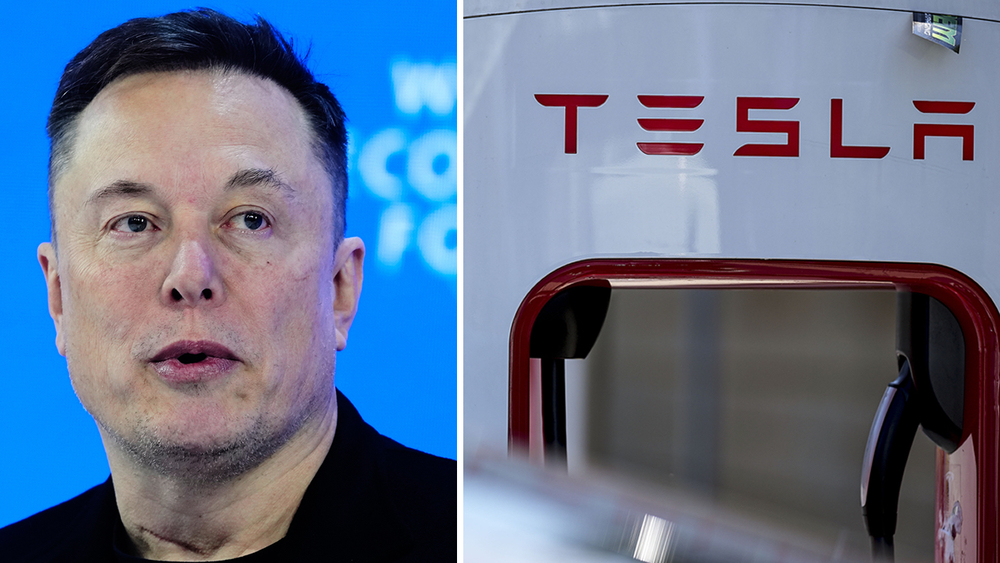
CEO Elon Musk alluded to the move during a stakeholder meeting earlier this week, where the company also announced sales and profits dropped in the latest quarter.
"We are expecting to greatly increase the service area to well in excess of what competitors are doing, hopefully in a week or two," said Musk. "We are getting the regulatory permission to launch in the Bay Area, Nevada, Arizona, Florida, and a number of other places."
Musk projected that autonomous ride-hailing could reach "half the population of the US by the end of the year," pending regulatory approvals.
"We are being very cautious. We do not want to take any chances," Musk said. "But the service areas and the number of vehicles in operation will increase at a hyper-exponential rate."
MORE: CA DMV claims Tesla misled drivers on Autopilot capabilities; seeks to suspend business for 30 days
Tesla's Robotaxi service recently rolled out in Austin, Texas, and began with a safety driver has access to the brake and steering wheel. Eventually the company moved to fully autonomous rides without a safety driver behind the wheel.
Experts say if Tesla is allowed to operate autonomous vehicles in California riders can probably expect the same and it may be a while before public rides are available.
"It seems it's only invite-only. So the general public, it seems, cannot request it, even in Austin right now," said Professor Scott Moura, acting director, Berkeley's Institute of Transportation Studies.
Ahmed Banafa, tech expert and professor of engineering at San Jose State. says even that service in Austin has run into some challenges.
"There's some videos showing Phantom braking, that's when it stopped without any reason. The other one is dropping off the passengers in very dangerous areas, like the intersections, taking wrong turns," Banafa said.
Moura said the permitting process in California is very involved and Tesla's going to have to clear hurdles before it can operate robotaxis without a safety driver.
"What they're testing ultimately is, can they demonstrate a better safety record than human driving?" he said. "That's really what's key."
Moura said it's likely that Tesla moving up the timeline for the testing of robotaxis is also -- in large part -- connected to a global technology race in AI and robotics.
"It's not just strictly providing making money of providing points rides from point A to point B," he said. "It's also about developing physical AI in robotics technology."
ABC7 reached out to Tesla for more information on its plan and is still waiting to hear back.
Full statement from the CPUC:
"What Is Allowed and Not Allowed Under a TCP Permit?
- A charter party carrier (TCP) permit and an autonomous vehicle (also known as AV or robotaxi) permit are distinct authorizations for passenger transportation.
- TCP permits (which Tesla holds from the CPUC) allow a human driver to drive a traditional vehicle (not an AV) for charter services with the public.
- AV authorizations (which Tesla does not hold from the CPUC) allow for the testing and deployment of autonomous vehicles with or without a driver.
- Tesla has not received approval from the CPUC to offer autonomous passenger service to customers, paid or unpaid, with or without a driver (nor has the company applied).
- Tesla does have approval to offer rides to the public in a non-autonomous vehicle (which, of course, would have a driver) through their TCP permit with the CPUC.
- Tesla does not hold a Drivered Pilot AV permit from the CPUC, so it cannot use a drivered AV in passenger service.
- To summarize, Tesla is not allowed to test or transport the public (paid or unpaid) in an AV with or without a driver. Tesla is allowed to transport the public (paid or unpaid) in a non-AV, which, of course, would have a driver.
New Notification by Tesla
- On July 24, 2025, Tesla notified the CPUC that it intends to extend operations under its TCP permit to offer service to friends and family of employees and to select members of the public.
- Tesla said they will also expand its geofence to include the entire Bay Area, from Sausalito and Berkeley down to Los Gatos.
- This is allowed in a non-autonomous vehicle under the company's CPUC-issued TCP permit."
Full statement from the DMV:
"The California DMV is focused on making our roads safer. The Department regularly engages with the autonomous vehicle industry before, during, and after testing. Tesla has held a drivered testing permit since 2014 that allows them to operate autonomous vehicles with a safety driver present, but does not allow them to collect fees for service. These safety drivers must be either Tesla employees, contractors or designees of the manufacturer.
Tesla also holds a Charter-Party Carrier (TCP) permit from California Public Utilities Commission (CPUC). Any questions regarding CPUC permits and its permitting process should be directed to the CPUC.
Recently, DMV met with Tesla to discuss the company's plans to test autonomous vehicles in the state. As of now, Tesla has not applied for a permit for either driverless testing or deployment. For information regarding Tesla's plans for autonomous vehicle testing or deployment, please contact the company directly."

If you're on the ABC7 News app, click here to watch live