Trump heads to UN as future of Palestinian state and Gaza likely to dominate


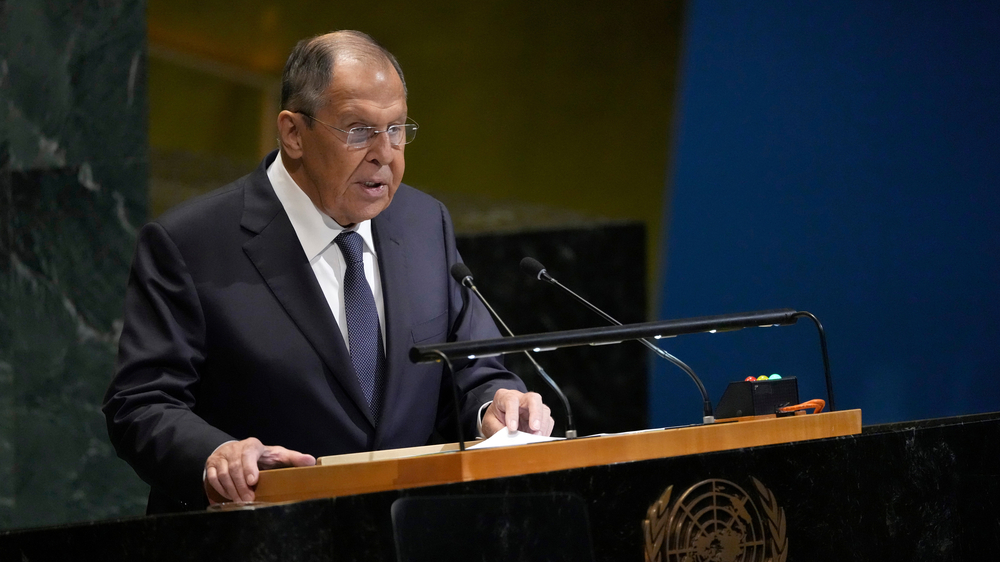
President Donald Trump and foreign world leaders will meet this week at the United Nations General Assembly where Trump is expected to deliver the first address of his second term to the annual gathering of global leaders on Tuesday -- though Trump will largely be isolated from more than half of the member nations and key allies over the war in Gaza.
All eyes will be on Trump, who in recent months has initiated massive cuts to U.S. foreign aid since his return to the White House, eliminating support for U.N. agencies and aid as overseas humanitarian crises continue to grow.
Trump's appearance at the 80th session of the U.N. General Assembly comes as several prominent world leaders -- and key allies -- of the U.S. are set to formally recognize Palestinian statehood as international alarm continues to build over the ongoing war and starvation crisis in Gaza.
As the Gaza war rages on, France recognized Palestinian statehood on Monday at the start of a high-profile meeting at the United Nations aimed at galvanizing support for a two-state solution to the Mideast conflict. More nations are expected to follow, in defiance of Israel and the United States.
French President Emmanuel Macron's announcement in the U.N. General Assembly hall received loud applause from the more than 140 leaders in attendance. The Palestinian delegation, including its U.N. ambassador, Riyad Mansour, could be seen standing and applauding as the declaration was made.
"True to the historic commitment of my country to the Middle East, to peace between the Israelis and the Palestinians, this is why I declare that today, France recognizes the state of Palestine," Macron said.
Andorra, Belgium, Luxembourg, Malta, and Monaco also announced or confirmed their recognition of a Palestinian state, a day after the United Kingdom, Canada, Australia and Portugal did. Germany, Italy and Japan took part in the conference but did not recognize such a state.
The meeting and expanded recognition of Palestinian statehood are expected to have little if any actual impact on the ground, where Israel is waging another major offensive in the Gaza Strip and expanding settlements in the occupied West Bank.
U.N. secretary-general Antonio Guterres said "statehood for the Palestinians is a right, not a reward." That appeared to push back against the Israeli government, which says recognizing statehood rewards Hamas after its Oct. 7 attack that set off the war in Gaza two years ago.
The U.S. will not participate in the conference and was one of only 10 countries who voted against the General Assembly resolution backing the high-level gathering.
Israel, for its part, has vowed to take action in retaliation of the formal recognition, which may include annexing parts of the occupied West Bank.
Israeli Prime Minister Benjamin Netanyahu was unequivocal in rejecting the planned international conference in a statement Sunday.
"I have a clear message to those leaders who recognize a Palestinian state after the terrible massacre on October 7th, 2023: You are giving a huge reward to terrorism," Netanyahu said.
"And I have another message for you: It will not happen. A Palestinian state will not be established west of the Jordan River."
Critics of the recognition -- which include the U.S. and the Israeli governments -- have long condemned the plan, saying it only moves to embolden Hamas and further isolate Israel and the Trump administration on the international stage.
U.S. officials have said the action is largely "performative" and "symbolic" and will do nothing to help mend the relationship between the Palestinians and the Israeli government.
"I think much of that is a reaction to several nations around the world deciding to unilaterally declare a Palestinian state," said Secretary of State Marco Rubio on reports that Israel was seriously debating annexing parts of the West Bank, which some say would be illegal under international law.
"We warned them that we thought that was counterproductive. We actually think its undermined negotiations, because it emboldened Hamas, and we think it undermines future prospects of peace in the region. We thought it was unwise to do that, and I think you're seeing that as a counterreaction," Rubio told reporters last week.
The U.S. -- Israel's main ally -- has opposed the recognition and last month moved to deny and revoke visas to the Palestinian delegation, including for Palestinian President Mahmoud Abbas ahead of Monday's international conference, accusing the Palestinian leadership of undermining peace efforts. The Palestinian state holds permanent observer status at the U.N. and is not a full-blown member state.
But on Friday, the U.N. General Assembly voted overwhelming to allow Abbas to address this week's gathering of world leaders virtually after the Trump administration declined to grant Abbas a visa. The motion passed by a vote of 145-5 with six abstentions. The U.S. and Israel voted against the motion.
On Sunday, the United Kingdom, Canada, and Australia formally recognized a Palestinian state -- three countries who are some of the U.S. and Israel's closest allies. The move came after an official state visit from Trump to the United Kingdom, during which he voiced his disapproval of the plan.
Other experts remain wary of the recognition, suggesting that while the acknowledgment of a Palestinian state is a long-overdue decision, it must be accompanied with more concrete action against the Israeli occupation, which launched a ground invasion last week. Such action could include an arms embargo, sanctions and more support for international tribunals investigating Israel's possible crimes.
Trump is expected to meet with Netanyahu on the sidelines at this year's UNGA.
Trump is also expected to meet with other foreign leaders throughout the week, including Syria's President Ahmed al-Sharaa, who will be a prominent new addition to the gathering. The meeting with Trump will mark their second meeting this year as the Syrian leader confronts the challenges of rebuilding the country after years of civil war under Bashar al-Assad's regime.
Iran's nuclear program will also a top-agenda item this year as sanctions against Tehran that were lifted 10 years ago are set to be reinstated. France, Germany and the United Kingdom moved last month to trigger the "snapback mechanism," which automatically reimposes all U.N. sanctions that were in effect before the nuclear deal.
Trump will also meet with Ukrainian President Volodymyr Zelenskyy on the sidelines this week over promised postwar security guarantees, which Zelenskyy has said are critical to resolving the war with Russia. Russian President Vladmir Putin has so far refused to engage in a good faith effort to end the war after almost four years of fighting.