4 years into Russian invasion, fundamental sticking points on Ukraine peace deal remain
Peace talks have been ongoing for more than a year.


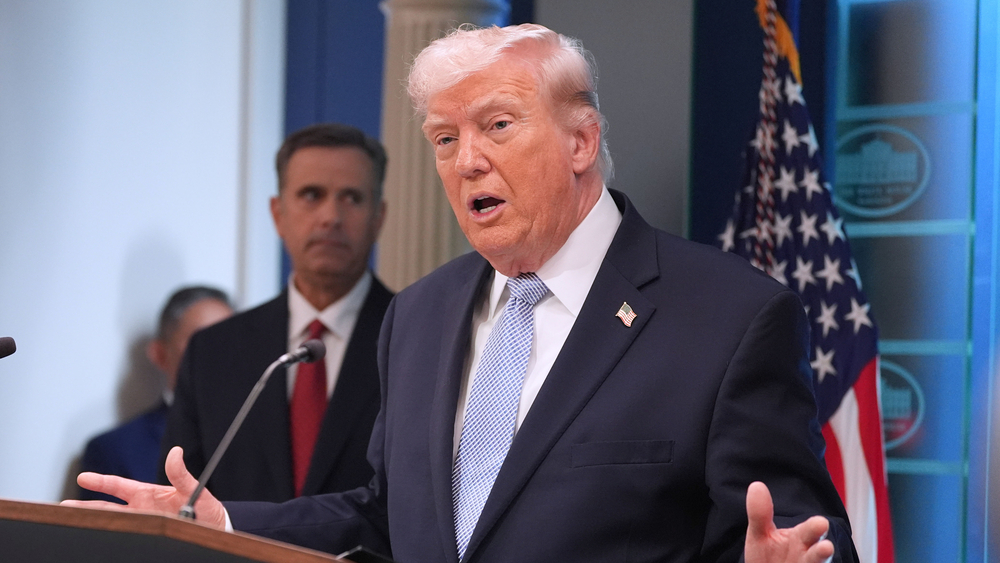
LONDON -- At a joint press conference with Ukrainian President Volodymyr Zelenskyy in December, President Donald Trump touted a potential peace deal to end Russia's full-scale invasion of its neighbor as being "close to 95% done."
But two months on -- and despite several rounds of trilateral U.S.-Ukrainian-Russian peace talks -- the fighting, bombing and killing continue unabated. The most recent round of negotiations in Geneva last week were described by both Zelenskyy and Kremlin envoy Vladimir Medinsky as "difficult."
"The [remaining] 5% is the bulk of the substance," a source close to the Ukrainian government, who did not wish to be named given the sensitivity of the peace talks process, told ABC News. "None of this stuff has been agreed to."
"Forget about the 5% -- the Russians don't even agree on the 95%," they added.
Among the most difficult points are the fate of Ukraine's partially occupied eastern Donbas region, the nature of post-war Western security guarantees for Ukraine and control of the Russian-occupied Zaporizhzhia nuclear power plant in the south of the country.
Referring to those issues, the source close to the Ukrainian government added, "When it comes to all three, the Russians have agreed to none of them. And there's no indication that they're truly open to any of it."
On the campaign trail in 2024, Trump repeatedly said he would end the war within 24 hours of returning to office. Once back in the White House, the president acknowledged the complexity of the challenge. "I thought this would have been an easy one to settle," he said in October.
More than a year of peace talks appears to have achieved little on the most difficult points, while Moscow and Kyiv play a high-stakes blame game under White House pressure.
Donbas red herring
For all Trump's assurances that a deal is close -- and his repeated suggestions that it is Zelenskyy and Ukraine that are the prime obstacles to any agreement -- Russian President Vladimir Putin and his envoys have shown little indication of easing their maximalist demands.
Prime among them is that Ukrainian troops withdraw from four partially-occupied territories -- Donetsk, Luhansk, Zaporizhzhia and Kherson -- that Moscow claimed to have annexed via widely-discredited referendums in September 2022. The Kremlin maintains its claim over all four territories -- plus Crimea, which was occupied in 2014.
In peace negotiations to date, Putin's envoys have demanded that Ukrainian forces withdraw from the entirety of the heavily fortified Donbas -- which is made up of Donetsk and Luhansk -- including parts not occupied by Russia. Kyiv has repeatedly refused.
But the Russian demands are about much more than territory. Ukraine's 34 years of independence have been punctuated by intense bursts of interference from Moscow, as the old imperial hegemon sought to re-establish its sphere of influence after the traumatic collapse of the Soviet Union.
In 2021, Putin published an ahistorical 5,000-word justification of the war to come.
Entitled "On the Historical Unity of Russians and Ukrainians," the article asserted that Russians and Ukrainians were "one people," questioned Ukraine's current borders -- "I am becoming more and more convinced of this: Kyiv simply does not need Donbas" -- and declared that "true sovereignty of Ukraine is possible only in partnership with Russia."
Putin launched his 2022 full-scale invasion with the most ambitious of goals -- to capture Kyiv, kill or capture Zelenskyy and install a Moscow-aligned puppet government in the capital.
The gambit failed spectacularly, but four years on, Putin is still demanding severe limitations on Ukrainian sovereignty. Moscow has demanded new elections in Ukraine, its permanent exclusion from NATO, a cap on the size and capabilities of its military and continued Russian occupation of Ukrainian territory in Kherson and Zaporizhzhia regions.
Indeed, Zelenskyy said this month that Putin "has already started" a Third World War. "Today, we are the outpost stopping Putin," the Ukrainian leader said.
Pavel Luzin, a Russian political analyst at The Fletcher School of Law and Diplomacy at Tufts University, told ABC News he believes Moscow's negotiations with Kyiv are not genuine. He cited the inclusion of ultranationalist Kremlin aide Vladimir Medinsky at the recent trilateral talks in Geneva as evidence of Russia's strategy of "negotiations without negotiation."
Rather, Russia is engaged with the U.S. "to use America as a political leverage against Ukraine," Luzin said. The talks, he added, are intended to achieve in negotiations what the Russian military cannot achieve on the battlefield.
"Russia's goals are still the same," he continued. "These goals include a complete control over Ukraine and dismantlement of NATO's infrastructure in Eastern Europe, among other things."
Moscow, Luzin said, "urgently" needs a pause in the fighting to consolidate its position and refit its exhausted forces. To win that pause, "Russia needs Ukraine's defeat either on the battlefield, or on the diplomatic stage, or both," he added. "Without such defeats, any ceasefire would be clear evidence of Russia's strategic defeat."
Secretary of State Marco Rubio was careful in his assessment of the ongoing process when speaking at the Munich Security Conference earlier this month.
"The good news is that the issues that need to be confronted to end this war have been narrowed," he said. "The bad news is they've been narrowed to the hardest questions to answer, and work remains to be done in that front."
Empty talk?
There appears to be little hope in Ukraine of an imminent end to the war, or a willingness to accept Russia's terms. A January survey by the Kyiv International Institute of Sociology found that only 20% of respondents believed the conflict would end in the first half of 2026.
The survey also found that 52% of respondents were opposed to Moscow's proposal to cede the Donbas in exchange for security guarantees, while 65% said they were ready to endure the war for as long as necessary.
Volodymyr Fesenko, a political scientist and the EO of the Center for Political Studies "Penta" in Kyiv, told ABC News that a focus on the technicalities of negotiations belied a more fundamental problem.
"The main problem now is not the extent of agreement on the peace plan, but that Putin does not want to end the war against Ukraine," he said. "For Putin, peace negotiations are merely a tactical game with Trump, not an attempt to end the war through compromise."
Even in the event of a deal, "there is no certainty that the Russians will implement the peace agreement," Fesenko said, citing Ukraine's "bitter experience" of Russia's past conduct.
A strong army with advanced weapons for retaliatory strikes are thus a necessity for Kyiv, Fesenko said, as are iron-clad Western security guarantees of assistance in the event of repeat Russian aggression.
Publicly, the Trump administration has remained broadly positive on its interactions with Russia despite the Kremlin's apparent obfuscation. Trump again suggested this month, "Russia wants to make a deal, and Zelenskyy's going to have to get moving, otherwise he's going to miss a great opportunity."
Presidential special envoy Steve Witkoff, who with Trump's son-in-law Jared Kushner has been leading much of the process from the U.S. side, said last weekend that Putin had "never been anything other than straight with me."
Such comments win little favor in Ukraine, Oleksandr Merezhko, a member of the Ukrainian parliament representing Zelenskyy's party and the chair of the body's foreign affairs committee, said. He told ABC News that the remaining 5% "is everything -- it's the insoluble issues."
"Putin knows that and deliberately pushes this issue," Merezhko added. "We can't withdraw our troops. If we do, it will undermine unity and stability within society. And of course we will weaken our defense."
As negotiations wear on, it appears that neither side wants to risk Trump's ire. Both have tried to position themselves as the reasonable party, lauding the White House's peace drive and expressing hope for a resolution despite the clear gulf in their positions.
For Kyiv, public negativity "creates problems" with the Trump administration, the source close to the Ukrainian government said. Zelenskyy must also be wary of dissenting factions in Kyiv. "There's not exactly total cohesion around Zelenskyy, either. Some people do want to roll the dice," the source said.
"Zelenskyy is doing what he should be doing, in a sense, which is putting on a smile and being positive," the source added. "The alternative is not good, in terms of his own relationships and interaction with the Trump administration."