Nearly 1 in 5 food stamp recipients could lose benefits under Trump proposal
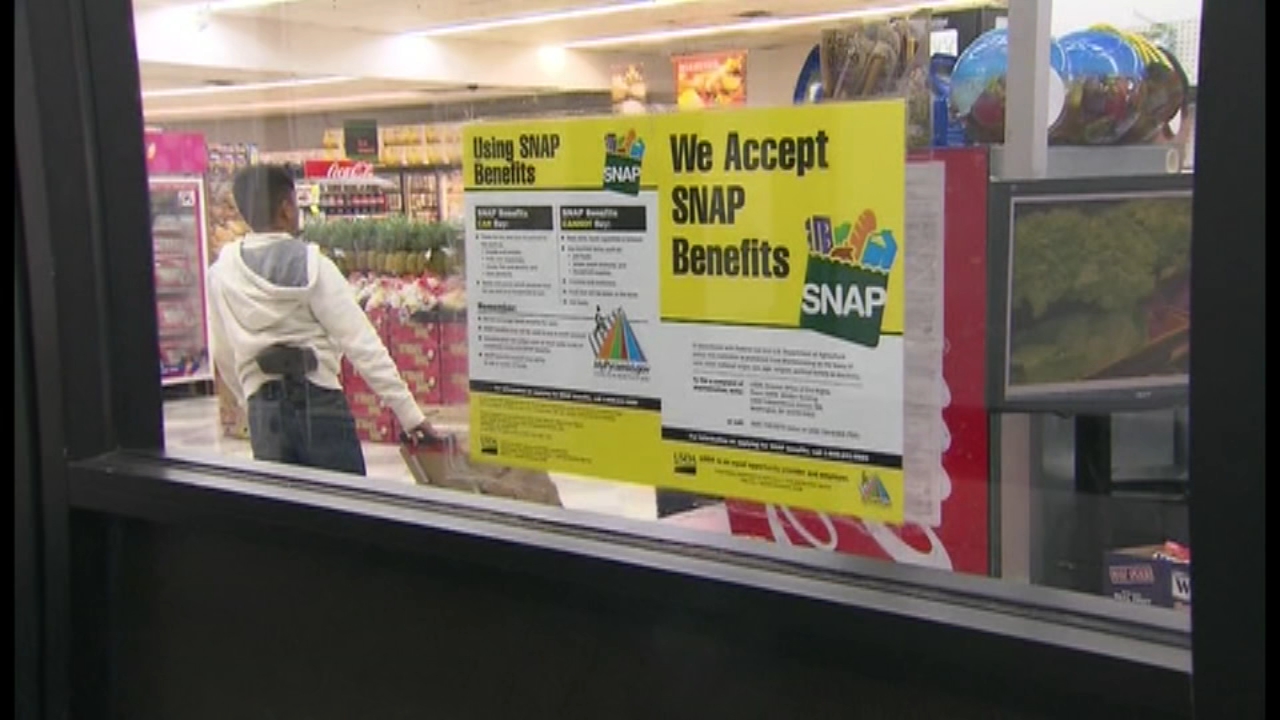

Roughly 6.3 million low-income Americans could lose their food stamp benefits in fiscal year 2029 under a US Department of Agriculture proposed rule released Tuesday. That’s nearly one in five enrollees in the safety net program.
The proposal would end a policy that gives states flexibility in approving applicants for food stamps if they are receiving other public aid, which could have higher gross income limits. The policy, known as “broad-based categorical eligibility,” has long been a target of Republicans.
The affected food stamp recipients would no longer qualify because their income or resources exceed federal limits for the Supplemental Nutrition Assistance Program, or SNAP, the formal name for food stamps, according to the proposed rule.
The move would also have ripple effects across other key nutrition assistance programs, particularly those for children.
About 1.8 million children would no longer be automatically eligible for free school meals if the proposal is finalized, though the USDA said nearly all would still qualify for free or reduced-price meals if they apply separately. Similarly, 16,500 pregnant women, mothers, infants and children would have to apply for the WIC nutrition program, while another 5,500 participants would no longer be eligible for it.
The proposed rule would increase the paperwork burden on enrollees and on state agencies, which could ensnare some eligible participants and lead to their losing benefits, advocates said. Some families, particularly those with immigrant members, are afraid to fill out government paperwork and call attention to themselves.
“Instead of helping families, the administration is making life harder for them,” said Gina Plata-Nino, SNAP policy & advocacy director at the Food Research & Action Center. “These are working families.”



Also, the USDA stopped measuring food insecurity last year, which makes it harder to keep track of Americans’ ability to feed themselves and their families, said Ali Hard, policy director at the National WIC Association.
The USDA defended the proposed rule, noting it would reduce federal spending on SNAP by nearly $45 billion and state spending by $5.2 billion over five years.
“Broad-based categorical eligibility has bloated the welfare rolls for decades. It has allowed States to take short cuts, error rates to balloon, and those with income and assets far above federal limits access to a benefit meant for the neediest among us,” the agency said in a statement. “Correcting this loophole is long overdue.”
The proposed rule comes at a time when SNAP enrollment has plummeted by more than 5 million people — including an estimated 2 million children — since President Donald Trump signed the One Big Beautiful Bill Act in July 2025, according to the left-leaning Center on Budget and Policy Priorities. Advocates attribute the drop to states’ implementing stricter eligibility reviews to avoid payment error penalties and other provisions in the package.
The Trump administration proposed a similar rule ending “broad-based categorical eligibility” in 2019, but it was withdrawn by the Biden administration in 2021.
The-CNN-Wire™ & © 2026 Cable News Network, Inc., a Warner Bros. Discovery Company. All rights reserved.