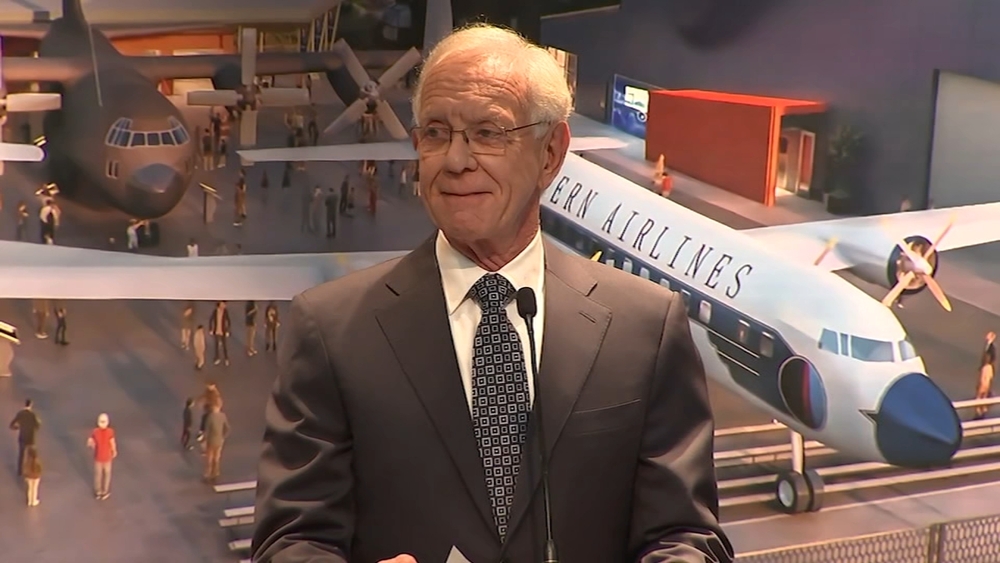
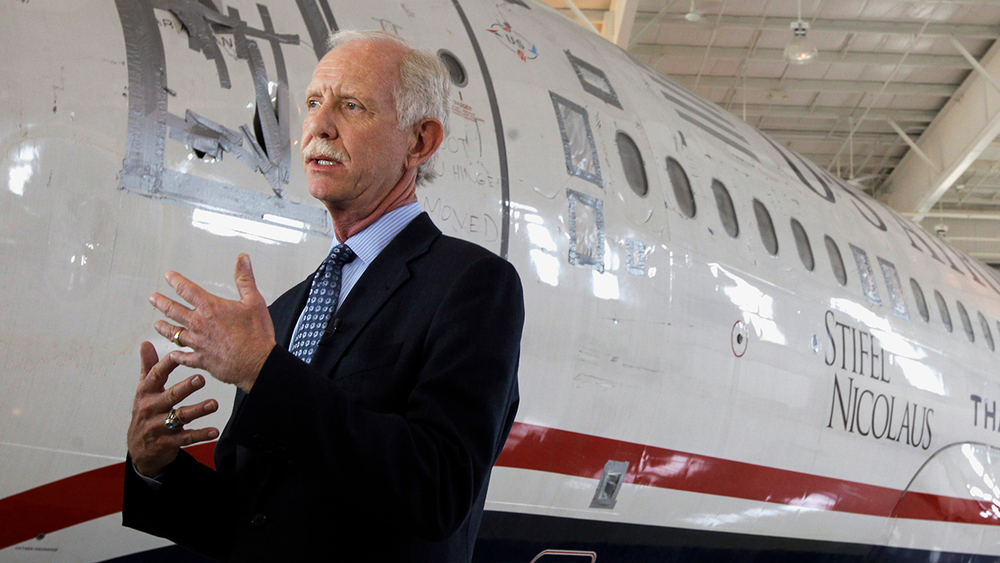
Capt. Chesley 'Sully' Sullenberger shares new details of Alzheimer's diagnosis, his 'last flight'
The famed pilot opens up about his early symptoms, family and what lies ahead.

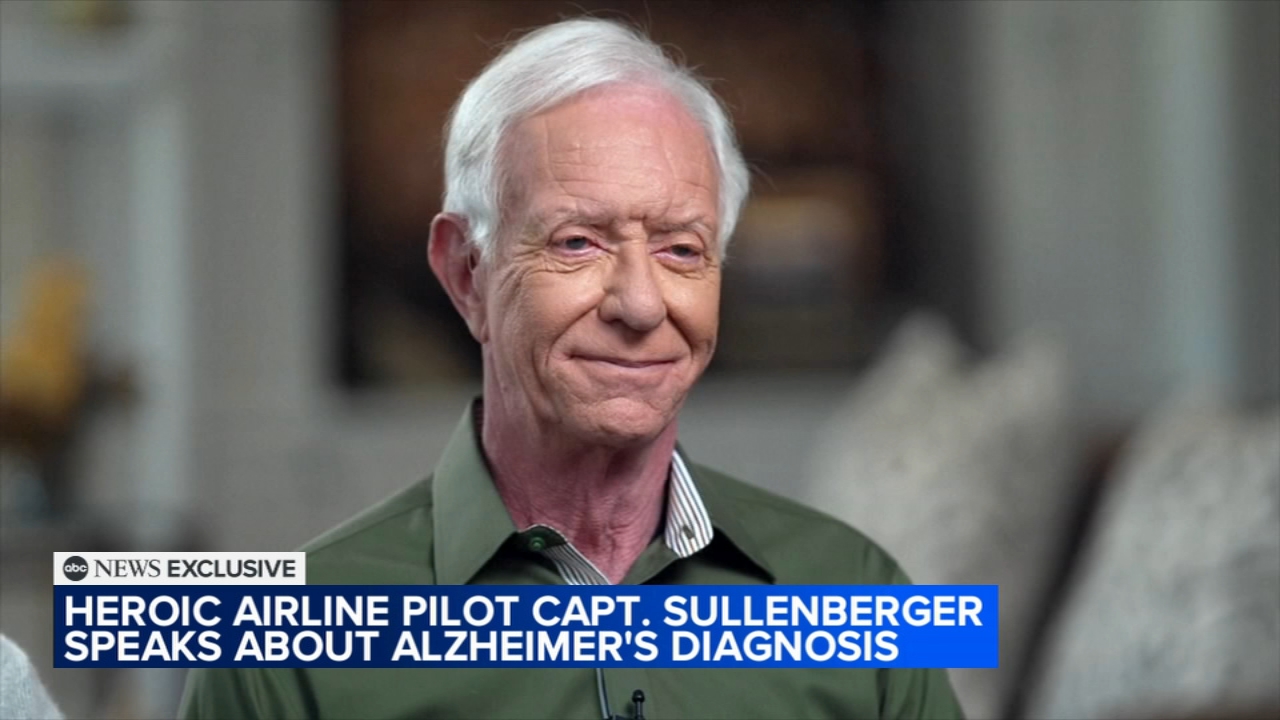
NEW YORK -- Capt. Chesley "Sully" Sullenberger is opening up about his Alzheimer's disease diagnosis, sharing how he and his family are navigating the early stages of the disease.
Sullenberger, 75, alongside his wife, Lorrie Sullenberger, spoke with "Good Morning America" co-anchor Robin Roberts about his early symptoms, treatment and decision to speak publicly about his diagnosis.
Sullenberger -- who became known around the world after safely landing a flight carrying over 150 passengers and crew members in New York City's Hudson River in 2009 --said his experience during the emergency landing has helped him approach his Alzheimer's diagnosis.
"We had to devise a plan, execute that plan flawlessly for the first time, never having done it before, and save every life in 208 seconds," Sully Sullenberger said in the interview with Roberts, which aired Wednesday on "GMA," referring to his 2009 emergency landing. "So I think we're doing the same thing here. We're focusing clearly on the highest priority items first."
Sullenberger revealed in July that he had been diagnosed with early-stage Alzheimer's disease, a progressive brain disorder that causes irreversible damage to the nerve cells in the brain, according to theCenters for Disease Control and Prevention.
Alzheimer's, which impacts approximately 7 million people in the U.S., is the most common form of dementia and the seventh-leading cause of death of adults in the U.S., according to the CDC.
"We felt all those emotions, the shock, the anger, why me?," Sully Sullenberger said about receiving the diagnosis. "We're part of this community who are trying to make the best of a bad situation."
Early warning signs of Alzheimer's, which tend to appear after the age of 60, may include memory loss, having trouble solving problems or finishing everyday tasks, decreased judgement, misplacing items, or mood and personality changes, according to the CDC.
Sully Sullenberger said some of the first symptoms he experienced included forgetfulness, having trouble remembering people's names and repeating himself.
Lorrie Sullenberger said her husband's symptoms were "easy to dismiss" in the early stages.
"A lot of what I think people see in the news are late-stage Alzheimer's symptoms," Lorrie Sullenberger said. "They were so little that it was easy to dismiss in the beginning."
She continued, "And my advice to someone would be, it's what's unusual for your person."
Both Lorrie Sullenberger and her husband said they initially planned to keep his Alzheimer's diagnosis private, but felt it was important to speak out to hopefully help others.
“This is a disease, not a character flaw,” Lorrie Sullenberger said. “I think we need to talk about it more openly, and maybe other people can do the same.”
Nearly three months after publicly revealing his diagnosis, Sully Sullenberger said he is currently undergoing monthly infusion treatment to try to slow the progression of the disease, which currently has no cure.
"It's continuing to progress," he said. "It's inevitable."
The Sullenbergers spoke candidly about what the progression of the disease could mean, especially for Lorrie Sullenberger as a caregiver.
"My plan right now is to just take it one day at a time," she told Roberts. "I have no idea what's coming."
Sully Sullenberger added that he worries about the impact the disease could have on his wife.
"I know what a burden caregivers have," he said. "I think as this progresses, it's gonna be an increasing challenge."
For now, Sully Sullenberger, his wife and their daughter, Kelly, one of the couple's two children, said they are prioritizing time with their family as they navigate the uncertainty of his diagnosis.
"Being together and spending time together has been the priority," Kelly told Roberts. "Our family likes to be prepared and have plans in place. That runs in our blood. And it's something that you can't really plan for."
'My last flight'
The Sullenbergers spoke with Roberts ahead of Sully Sullenberger receiving one of aviation's highest honors.
On Thursday, the retired airline pilot will be inducted into the National Aviation Hall of Fame in Washington, D.C.
Sully Sullenberger described his induction as a "great honor, adding that he hopes that just as "Miracle on the Hudson" landing made a difference in 2009, so too does his decision to speak out publicly about Alzheimer's disease.
In the years following the 2009 landing, Sully Sullenberger became a public advocate for pilot training and aviation safety.
"I felt like after the 2009 flight, that Jeff Skiles and I and others had made a difference," he said, referring to his first officer during the emergency landing, in which everyone onboard survived. "And I think in this regard and with this issue, maybe we can make a difference in this way also."
When Roberts asked Sully Sullenberger about his greatest concern as he looks ahead, he responded with an aviation metaphor.
"That this is my last flight," Sully Sullenberger said. "But if this has to be my last flight, I'm going to go out using full afterburner."