The forgotten Chinese history behind America's railroad

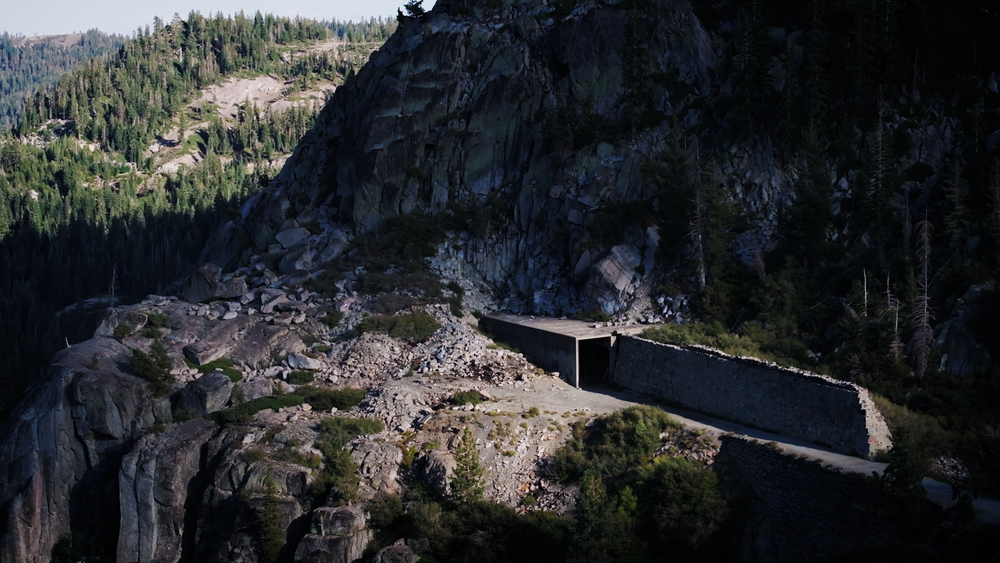
DONNER SUMMIT, Calif. -- Deep in California's Sierra Nevada, a 3,000-foot tunnel carved through solid granite in the late 1860s stands as a powerful reminder of the labor and sacrifice that helped build the United States.
Known as the Summit Tunnel, the site was constructed largely by Chinese immigrants working on the western half of the Transcontinental Railroad a feat historians say was as grueling as it was transformative.
"They were working 24-hour shifts," said Fred Wong with the U.S. Department of Agriculture Forest Service, describing the conditions laborers endured. "They didn't have lights, they had candlelight, it was dark, it was cold and it was wet."
The tunnel, roughly the length of three football fields, was built almost entirely by hand. Workers used rock drills and sledgehammers to chip away at granite, often taking an entire shift to make only a few feet of progress. Explosives were then packed into the rock, a dangerous process that cost many their lives.
"Over 1,000 Chinese died building the transcontinental railroad," Wong said.
Despite their contributions, historians say the role of Chinese laborers has often been overlooked.
Today, the nonprofit 1882 Foundation is working to change that. The organization hosts "Heritage Tours" to the Summit Tunnel near Donner Summit, where guides lead visitors through the historic site built more than 150 years ago.
The foundation takes its name from the Chinese Exclusion Act of 1882 and aims to expand public understanding of that history and its lasting impact.
"Our goal is to publicly expand knowledge and understanding of the exclusion laws, its history and its continuing significance today," said Ted Gong, executive director of the 1882 Foundation.
Through the tours, visitors can walk the same ground where thousands of workers once labored, gaining a deeper appreciation for both the engineering achievement and the human cost behind it.
"If you really want to see the construction, the perseverance, the struggle you would be better off to go to what we call the Summit Tunnel," Gong said.
For many, the experience is deeply personal.
"My uncles are from the area in China that the contractor recruited from," said Janet Tang. "So we always hear all of the family's stories."
Visitors say the site offers a powerful connection to the past.
"You really didn't learn much about our own history," said Reggie Chun, who took part in one of the tours. "Chinese Americans contributed to the foundation of building America they've given their blood, sweat and tears to help build this country."
"You can feel their presence," Chun said. "When your around nature, it feels spiritual, you can feel the past."
With the help of the 1882 Foundation, in 2025 the Summit Tunnel was recognized as a National Historic Landmark, bringing renewed attention to both the site and the people who built it.
"This is a monument to accomplishment, a monumental engineering feat," Gong said.
Organizers say the recognition is not just about honoring the past, but ensuring the story continues to be told.
"America was built because of diversity," Gong said. "People are seeing it. They realize its important and they want to know more."
For those who make the journey to Donner Summit, the message is clear: the railroad that helped unite the country was built by everyday people and their stories are still waiting to be heard.
To learn more about how you can attend the 1882 Foundation's Heritage Tours, visit their website here.