EXCLUSIVE: Cisco president says AI will create more jobs than it eliminates despite tech layoffs
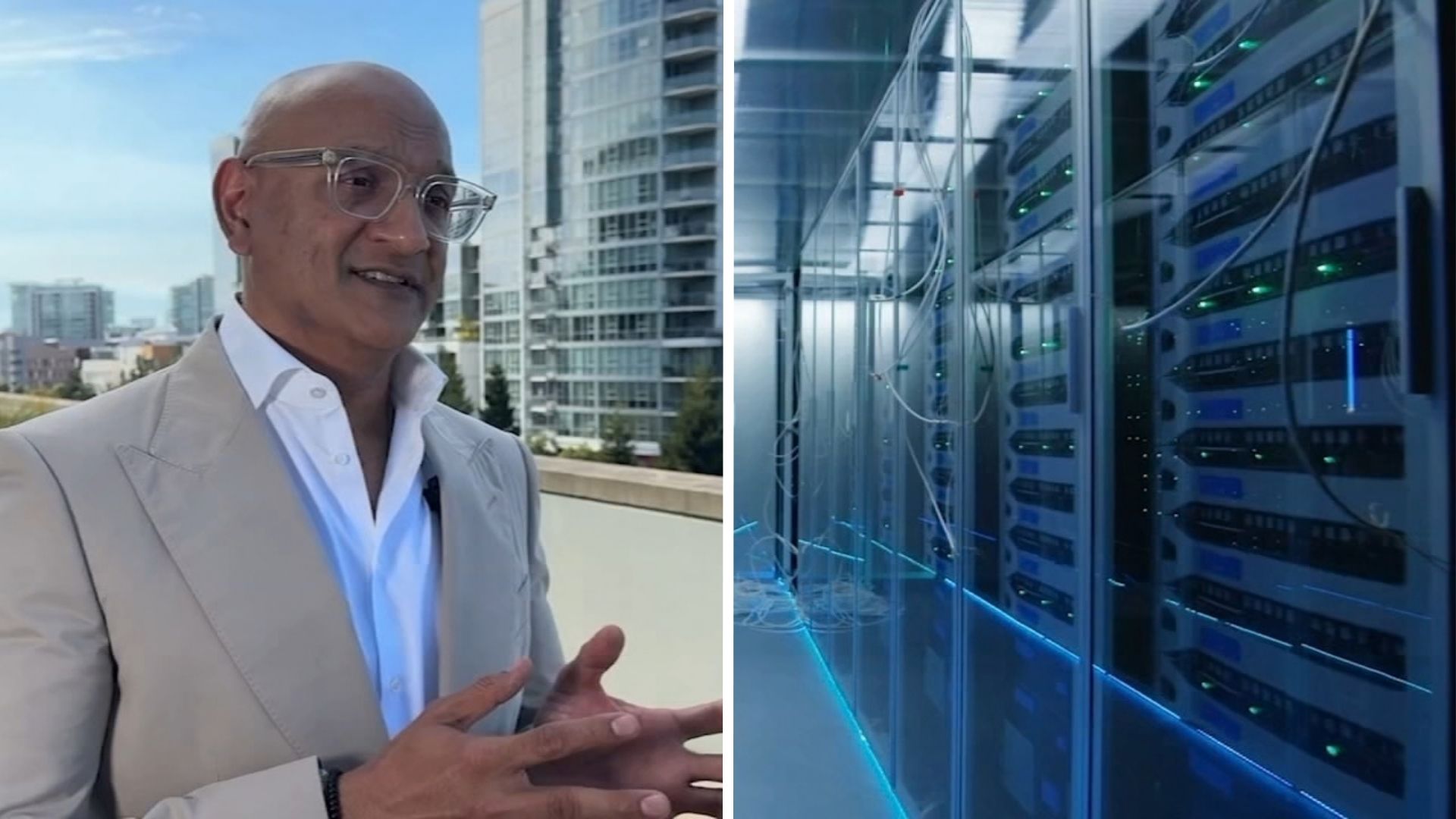


SAN FRANCISCO (KGO) -- San Jose-based global tech giant Cisco is building what it calls the "backbone" of the AI boom through the critical infrastructure it provides. ABC7 Eyewitness News Anchor Nancy Chen sat down with Cisco president and chief product officer Jeetu Patel earlier this month at the company's Mission Bay offices for a local exclusive interview.
Excerpts below have been lightly edited and condensed for clarity.
NANCY CHEN: I've seen Cisco described as the hidden backbone of the AI boom - that if NVIDIA makes the engines, Cisco makes the bridges, the infrastructure. Is that an accurate way of describing Cisco's role?
JEETU PATEL: It is. Think of us as the critical infrastructure for the AI era. And so, if I were to draw an analogy to the gold rush, we would be the picks-and-shovels company. Behind the scenes, you actually don't tend to find as much glory because you're doing the hard plumbing work so that everyone else can do their best work with AI. So that's what we want to do is keep this running so that everyone else could do great work. What's talked about a lot is models, like ChatGPT and Anthropic. And then the other thing that's talked a lot about is the GPUs, the chips from NVIDIA and AMD and others. What's not talked about is those chips, unless they're networked, they don't really produce that much value. And we provide the network to connect the chips together across different racks of servers and across different kinds of data centers. And that's a pretty complicated task that needs to just keep running all the time.
NANCY CHEN: You have said you quote, fundamentally believe AI is the most profound shift we have experienced in humanity. Very big statement right there. You've seen this technology up close. What do you think people are perhaps underestimating right now?
JEETU PATEL: What people tend to think about with AI is they think of it as a productivity tool. And I think that's selling it so short because it's the original insights that AI can generate that allow us to even dream of solving problems we couldn't even fathom solving before, which is going to be its biggest superpower. And I don't think we've fully kind of internalized that. So think about the kind of diseases we can solve. Think about the kind of access to education we can have. Think about the way that we can eradicate poverty, the way that we can solve hard math problems and science problems, and how we can innovate and how a multitude of things that we couldn't even dream of doing before can now happen because these AI models aren't just an aggregation mechanism. Where you collect like a search engine, you collect all the data and say, this is what everyone has said, but it actually produces original insights that didn't exist in the human corpus of knowledge. That, to me, is truly the compounding force multiplier.
NANCY CHEN: This does all come at a cost.
JEETU PATEL: It does come at a cost. I think we would be naive to think that all of this is goodness. I think there's going to be a ton of goodness that comes out of it, but there's a huge amount of risk because all of these technologies can also be used by the bad actors and the adversaries, and these attacks that are happening on our critical infrastructure can cost lives. So, for example, if a hospital gets attacked, someone's not going to get dialysis, and that's going to happen through a cyber attack, not through a physical attack - at least to start with. If a power plant gets attacked, people won't have power in the region. And if you just start to play that out and simulate it, three, four days go by and you don't have power, and all of the sudden, the food supply goes out and it's very hard to maintain law and order. So I do feel like at least the people in the AI community worry a lot about cybersecurity only because the downside implications of these are material and need to be mitigated as you keep thinking about capitalizing on the upside.
NANCY CHEN: Do you think there are jobs that exist today that will not exist in even two to five years because of AI?
JEETU PATEL: Yes, the way I think about this is, there will be some jobs that will be lost; virtually every job will get reconfigured.
WATCH: Full interview with Cisco President Jeetu Patel
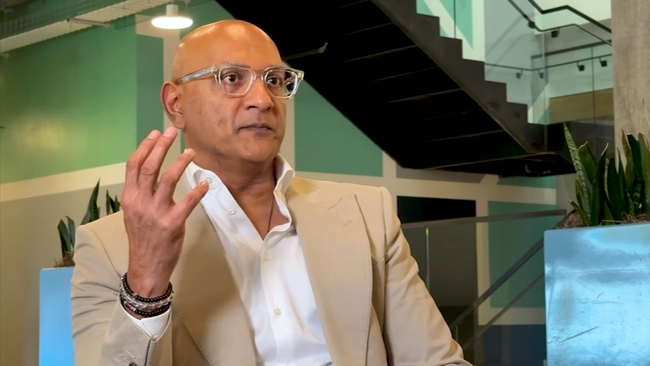
NANCY CHEN: Every job?
JEETU PATEL: Every job will get reconfigured. And entirely new classes of jobs will get created that don't exist right now. And then there's certain jobs. And by the way, this does not mean that humans are gonna be staring at the ocean, not having value to add to society because we will have nothing to do because AI is gonna do it all. I actually reject that notion. I feel like we will; there's a tremendous amount of value that can be added on top of what AI can do for us, but it will be of a very different nature. And the fluency and the dexterity that will be a base requisite for people that need to stay employed is going to be a prerequisite. You will have to be AI fluent.
NANCY CHEN: There is a new report that shows Bay Area tech layoffs so far this year have already topped all of last year's, with many companies tying them to AI-driven restructuring, Cisco among them. As a whole, do you see this as just the beginning of AI-related layoffs in the tech industry?
JEETU PATEL: I actually have a counter-intuitive perspective in this. I think there's going to be more jobs, not less, as we move forward. And I'll give you my personal experience I've had so far. Every major step - like we've been pretty AI-pilled for several years now. Every major step function improvement we've had AI, there's a human bottleneck that's emerged. And you go out and fill that bottleneck, and then another bottleneck emerges. For example, coding got automated and code review was a bottleneck that emerged. Code review gets automated, and then taste and judgment and what to build and what not to build still remains a human bottleneck. I don't really think the way that we can think about this as, well, all jobs are gonna go away; this is just going to be doom and gloom.
In fact, I think there'll be new opportunities. In fact, the people that I know right now that are fluent in AI are making more money than ever before. There's more shortage of those people than ever before, and you're gonna need to continue to make sure - and that group of people will only keep increasing because there are two parts to it. One of them is people that say, hey, you know, I'm not that savvy in technology. Well, in that case, AI is the best for you because it's the first time that a machine is learning how to speak the human language rather than the human learning how to speak the machine's language. If you say, I'm very tech-forward, then AI is amazing for you because you can now do things that you could never even dream of doing before in far more efficient ways than you could do before. So regardless of your tech predisposition, you tend to benefit.

NANCY CHEN: So you think there could be a balance in which the gainers outweigh the people who end up having to shift their jobs or lose their jobs?
JEETU PATEL: I'm hoping that for all of us who are in this industry right now, that one of our jobs is to make it net positive for humanity, not net negative. And I think we owe it to the country, we owe to the world, we owe it to each other to make sure that we can actually make that happen. And yes, will there be fits and starts, and will there be bumps along the way, and will it, at times, will it feel extremely catastrophic, like, oh my goodness, what do we end up doing? Yes, there will be those moments, but I wouldn't be spending so much of my time in it if I didn't feel like there was a huge opportunity for us to be in a meaningfully additive state for humanity.
NANCY CHEN: What would you say to a parent who says, my first grader, my second graders, I don't want their developing brains to be exposed to this?
JEETU PATEL: I'd agree with that. I don't think you should start this too early. I think there should be some foundational value system and principles that should be instilled in kids before you get them exposed to technology... It is a very plausible argument to say, let's not expose them before they've got judgment and maturity. And they need to make sure that there's a base level of exercising of the brain and understanding how you don't want to get intellectually lazy. You want to have AI push your capacity to ingest and absorb.
NANCY CHEN: Just last month, Cisco announced yet another expansion with you calling it, "the beginning of one of the largest data center build-outs in history." Clearly, the demand for data centers is out there and it's growing, yet there's also a lot of concerns from communities who are worried about them being built in their backyards. What is the right balance here?
JEETU PATEL: So why are there so many data centers being built? AI is very compute-hungry. It's very compute-hungry, it's very network-hungry, it's power-hungry. And so when you ask ChatGPT a question, it is actually processing compute cycles, or what they call, flops, in the data center. And so what we have to do is, if you want to have intelligence available for everyone, and not just the elite few, then you want to make sure that you can broadly make token generation something that everyone can have access to. If you want to have token generation for everyone, you're gonna need far more data center capacity tomorrow than what you have today. Because right now, there's probably sub 2% of the world that uses agents in any kind of power user capacity.
And I don't know if you know this, but in February of this year, there was a seminal moment that was reached, which is, AI agents are now consuming more inference tokens than humans. Think about the consequences of that. Agents are now doing work that is consuming more tokens than we are, right? And that's what's up 2% of the people using this in any kind of power user capacity. Imagine when 20%, 30%, 40% of people do that. What happens? You're going to need massive levels of token generation capacity. So you're gonna have to build these data centers. Some of them will be built terrestrially on earth. A lot of them we'll start getting built in space.
NANCY CHEN: Is this a sense of, you can't have your cake and eat it too, of people saying, hey, don't use up my power, don't use up my resources, but at the same time, yes, sign me up for this service?
JEETU PATEL: If you believe that hard problems that can enhance the human existence, and the human potential can be delivered through AI, then data centers are a prerequisite for that happening. And then the question is, well, so data centers can consume a lot of resources, and so what happens in local communities? I think right now, if you think about what's happening in local communities is, electricians and plumbers - and there's a tremendous amount of jobs getting created in the local communities for those folks that are building out these data center shells and so on and so forth.
So I do feel like I think some of it gets hyped a lot with some of these narratives that come about, but we do have to keep in mind that in the absence of a data center,you don't have AI. And in the absent of a sufficient amount of AI, the people that can afford it the most by being the most amount per token are the ones who are going to get it. So if you wanted to have more equal access to everyone then by definition, you have to actually have more supply. Otherwise. It's going to be a supply-constrained world, and then the people who can pay the most are going to get it.
WATCH: Apple executive gives insights on new folding iPhone Duo, emphasizes privacy with Siri AI
NANCY CHEN: Do you think that AI development is moving faster than our ability to govern this technology?
JEETU PATEL: It is at a pace right now that - that is one of the biggest worries of the industry, is the pace at which it's moving. AI's attacks are happening at machine speed and scale. And so far, our defenses have been human speed, and you no longer will be able to have those two coexist because if you're - if an agent's working seven by 24, and if you have a million agents, and they're going out and attacking your infrastructure all day long, even if you had thousands of people, you're not gonna be able to go out and keep up with it. So your defenses have to be at machine speed and scale. And so that is a very valid concern. In order to mitigate that concern, you have to make sure that AI is used in defenses, and safety and security just as much as it's gonna be used by the adversaries for attacking.
NANCY CHEN: So essentially, you have to be able to move fast enough to counter it with more AI.
JEETU PATEL: That's exactly right. I mean, think about, you know, going into a Formula One race with a bicycle. Like, you're not going to win. And you just have to make sure that you have a commensurate vehicle that you can go out and compete with. So I think the commensurate vehicle in this case, if you have AI-based attacks, you are going to need to have AI-based defenses.
NANCY CHEN: Do you think the average American fears AI too much?
JEETU PATEL: The industry has not done a good job on highlighting a balanced view of the positives of AI and the negatives, and I think it's gone very heavily into this very extreme scenario. All jobs will be lost. We as humans will have no value to add to society, it's going to be just benefit accruing to a few. And I think the world, the way that it will probably end up being is going to be much different. I think you will have a fair amount of up-leveling of the kind of things humans can do because the repetitive grunt work will be able to get done with AI. You will always have a companion that you can use as a brainstorming partner. You will be able to go out and have problems that are solved that you could never even dream of solving before and original insights will get generated in very different ways. So I believe we could have a far more balanced narrative than the one that we have right now.
NANCY CHEN: Cisco largely doesn't build most of the AI models themselves, but it does provide the infrastructure for companies to run AI safely and securely. As president of Cisco, how do you guarantee that safety and that security?
JEETU PATEL: I've been in the security business for a long time. One thing that's the known truth in security is you can never eliminate risk, you can only mitigate it. And so, will risk exist? Risk will always exist with AI. But historically, what's happened with AI, is that the attacker has always had the advantage. Why is that? Because they have to be right once. The defender has to be right every single time, right?
This is the first time that we might actually have more data and models that might be available to us before they're available to the attackers, that the defender might, for the very first time, actually construct an advantage for themselves. So there is a silver lining here that if done right and if coordinated effectively, we will be better off with AI and staying more safe and secure than we were in the previous state. But during that transition, there's a lot that could go wrong. And so that's why we have to be extremely careful. What we're trying to do right now in everything that we're doing is making sure that our customers can stay safe and security, and we provide as many vehicles for organizations to say, hey, if you have an agent, how can you make sure that that agent is behaving in the way that you wanted to behave and is not showing drift?