College basketball coaches on the top 2026 NBA draft picks
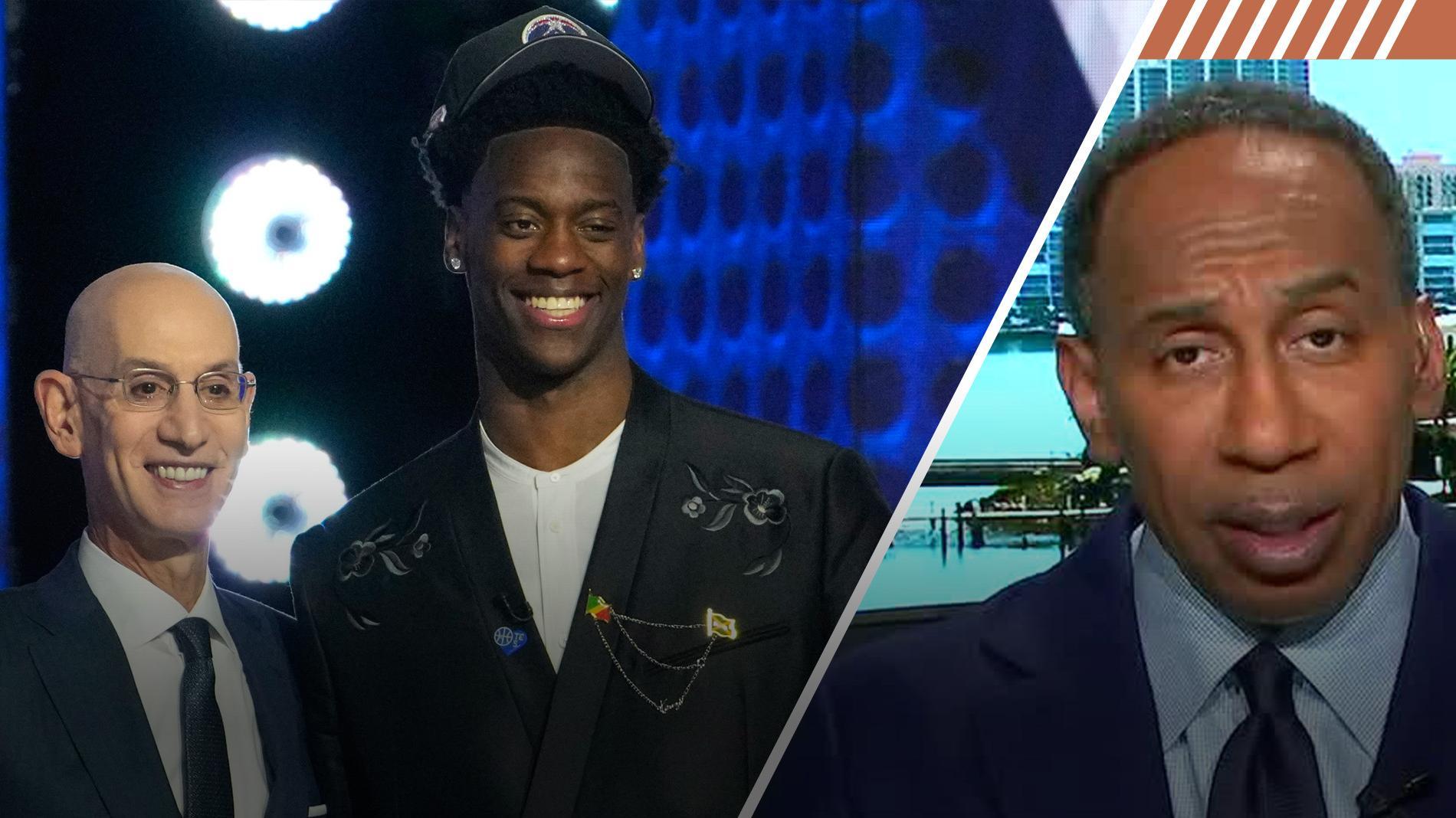

What gives AJ Dybantsa the edge over Darryn Peterson? Did Caleb Wilson belong in the top tier of prospects? Was Mikel Brown Jr. deserving of being drafted ahead of rival point guards? Who were the biggest value picks outside of the lottery?
To answer some of the burning questions following the 2026 NBA draft, ESPN spoke to nearly a dozen college basketball coaches -- the people who have watched and game-planned against these players for the past few years -- about the biggest storylines and top prospects.
Jump to:
The top four picks
The point guard tier
More first-round standouts
Second-round sleepers

THE TOP FOUR PICKS

1. AJ Dybantsa, Wizards
The top overall prospect of the 2025 high school class, Dybantsa has arguably had the inside track to becoming the No. 1 pick since he reclassified back in 2023 -- and checked every box during his lone season at BYU.
Dybantsa led the sport in scoring at 25.5 points per game, finished as a consensus All-American and had eye-opening performance after eye-opening performance. He scored 40 or more points on two occasions, produced a 33-point, 10-rebound, 10-assist triple-double against Eastern Washington in December, set the Big 12 tournament scoring record for a freshman, and became the first freshman to score 30-plus points in his NCAA tournament debut since Stephen Curry in 2007.
"The thing that stood out to me was he guarded our leading scorer the whole game, chased him around," an opposing coach said. "It was really telling to me because you could tell he was just trying to win and he was trying to do everything."
"Dybantsa had every reason to cash it in last year and never did," a Big 12 coach said. "He got better, he got more competitive. He took on more responsibility and had a better output. He was playing his best ball late in the year. His competitiveness is what rang so remarkably loud. He's got an NBA game. He's got prototypical NBA size at a position that has been extremely productive at the NBA level. Jaylen Brown, Jayson Tatum, Kawhi Leonard. These big, oversized, ballhandling wings. Those guys are in high, high, high demand and they've proven to be unbelievably productive."
"We tried to double him on every catch, make him a passer," a third coach said. "But his ability to just rise up and just create his own shot was so impressive. He would make high-level shots in the midrange. He's unbelievable in transition. It was an automatic foul anytime he had the ball in transition. He puts pressure on your defense to get back."
While Dybantsa's ability to make tough shots stands out when watching him, the fact that midrange pullups over defenders were such a prevalent part of his shot diet was also one of the few negatives coaches highlighted. His perimeter shot was inconsistent; he made just 49 3-pointers on 33.1% shooting for the season.
"I think he's just an OK shooter," one coach said. "I don't think -- like, you always think [Darryn] Peterson's ball is going in. AJ, when he's rolling, he can make it. But you don't have to run him off the line. If he beats you making seven 3s, great. But he's usually making just two or three, not five or six."
One of the coaches we spoke with who preferred Peterson to Dybantsa as the No. 1 pick acknowledged that Dybantsa's competitiveness and mindset are more aligned with what we've seen from previous NBA stars.
"I think AJ Dybantsa is very likely a real star in the NBA -- in large part because Dybantsa thinks that," he said. "His unbridled confidence is probably his greatest strength going into this, and I think he's seeking out the responsibility that comes with being the No. 1 pick and taking on that sort of vocal leadership role even as a young player in an organization in the middle of a rebuild. I haven't seen that as much from Darryn."

2. Darryn Peterson, Jazz
Peterson's health and playing status comprisedone of the biggest storylines of the past college basketball season. Speculation about what was going on dominated the discourse whenever he missed a game or sat out a second half. He ended up playing in 24 of Kansas' 35 games, and more than 30 minutes in just 13, though seven of those occurrences notably came over the Jayhawks' final nine games of the season. Eventually, he told ESPN's Ramona Shelburne in May that his debilitating full-body cramping issues stemmed from high doses of creatine.
When the 6-foot-5 Peterson was on the court, however, he demonstrated why he was such a sought-after prospect coming out of high school. He averaged 20.2 points and 4.2 rebounds while shooting 38.2% from 3-point range for Kansas. His January performance against Baylor -- 26 points in 23 minutes on 11-for-13 shooting -- was one of the most efficient individual efforts from any player all season. He also outdueled Dybantsa when Kansas played BYU in January, scoring 18 points in just 20 minutes.
"He still has the most requisite skill set for what you see in the best players on an NBA team," one coach said. "That elite shotmaking, the ball-in-hand capability, his overall offensive package, a play creator. I don't think he showcased the passing at Kansas the way he did in high school. ... When [Peterson and Dybantsa have] been out on the court at the same time, playing in the same game or playing against each other, I think Darryn has exhibited the more complete skill set. And there was no clearer example than when they played this year."
"He's an effortless scorer. It looks like he's thinking, 'I'm going to get to this spot, you have nothing to do with me making or missing it,'" one coach said. "The most impressive thing coming out of high school, he competed on both ends, played defense, would have 10 assists. I think he can do whatever he wants on the basketball court."
A number of the coaches we spoke with also saw Peterson in high school, when he first cemented his status as a next-level playmaker and offensive talent -- including his 61-point performance against Dybantsa and Utah Prep as a senior. Those coaches were surprised by how one-dimensional Peterson played at Kansas, notching just 38 assists all season. Some of that was due to Kansas using Melvin Council Jr.as the team's playmaker for long stretches, but onlookers wanted Peterson to be far more assertive in big games.
"In a sense, it was him saying he's going to play the right way, but it wasn't like they were loaded with offensive talent," one coach said. "If you're the guy, if you're supposed to be generational, throw up more shots. Just say, I'm going to make these shots and wear the other team down."
That was the difference, in some coaches' eyes, between Peterson and Dybantsa.
"What I saw AJ Dybantsa do, on a completely depleted BYU team, he had every reason to go into self-preservation mode and cruise control his way to safety," one Big 12 coach said. "He doubled down and allowed [coach Kevin Young] to play him 39 minutes a night. Sign me up for that dude."

3. Cameron Boozer,Grizzlies
Boozer is coming off one of the most impressive college seasons in recent history, earning consensus National Player of the Year honors after averaging 22.5 points, 10.2 rebounds and 4.1 assists while shooting 55.6% from the field and 39.1% from 3-point range. He was remarkably consistent, never scoring fewer than 13 points or grabbing fewer than five rebounds in a game, tallying 22 double-doubles for Duke.
That season came on the heels of arguably the most decorated high school basketball career of all time. Boozer won four state championships, three Peach Jam championships on the grassroots circuit and two gold medals with USA Basketball -- while winning MVP in both international events.
"Out of these top picks, he probably has the highest floor," one coach said. "He's not going to wow you with his athleticism, but he's bigger in person than you realize. It helps him rebound, helps him get position, around the basket he has good touch. He shoots it better than people realize. That workmanlike attitude, that consistent approach will help him in the NBA. He just goes out and does it.
"What I was most impressed with were his ball skills as a power forward, sometimes small-ball 5. We tried a couple different coverages on him, [Jon] Scheyer would put him at the point, he would play in the ball-screen. We would double him, but he's a really good passer. At minimum, he's a really productive NBA player."
"The one thing I loved about him was every time he got the ball around the rim, he always got a layup," another coach said. "I don't think he ever took a jump hook. He would pivot, find an angle, step through, he rarely if ever took a bad shot at the rim. Another guy is going to shoot a jump hook, he's going to miss, you get to live to fight another day. Boozer can score however he wants to. ... Nothing stood out that he was this crazy alpha, it was just, I'm really good and I'm smarter than everybody and I make the right play every single time."
So, why didn't Boozer go No. 1? Ultimately, it comes down to the out-of-this-world physical tools and positional size that both Dybantsa and Peterson possess -- which give them a ceiling that Boozer might not be able to reach. There were also times last season when Boozer struggled to finish against length around the rim, with an early-season matchup against Kansas' Flory Bidunga and some late-game issues against UConn's Tarris Reed Jr.as standouts.
"He has to work on his foot speed, especially in pick-and-roll coverages. Finishing against length, some of those shot-blocking centers are going to give him some trouble," one coach said. "Explosiveness, athleticism, what [Dybantsa and Peterson] can do with their bodies that Boozer I don't think will ever be able to do. But he was one of the most efficient players in the history of college basketball, and he's done it at every stage of his life so far. I wouldn't bet against the kid."

4. Caleb Wilson, Bulls
Entering this past college basketball season, Wilson was nowhere to be found in the debates and discussions about the top three freshmen and the race for the No. 1 pick. But the top-10 recruit quickly became one of the sport's elite players with performances like his 24 points, seven rebounds, four assists and four steals against Peterson and Kansas. Wilson was also a shoo-in to be a first-team All-American until he broke his left hand in February and his right thumb in March, but he still finished his season averaging 19.8 points and 9.4 rebounds.
"He's taller than you think, he's longer than you think," one coach said. "In the open court, he was down the court in three dribbles. It felt like a college version of Giannis [Antetokounmpo]. Full speed, with the ball in his hands. Is he a finished product? Absolutely not, but that's what's exciting. His skills can still develop. The passes off the dribble in motion, I didn't think he had that in his game. He's just scratching the surface, but his combination of positional size -- can he slide down to the 3, can you play him as a small-ball 5 -- length, athleticism, ball skills, I was blown away.
"Every possession, flying all over the place, blocking shots, getting steals, out on the break."
"He's one of the best movers that I've seen at the college level. In terms of his bounce, second bounce, he's smooth, he gets places quickly," another coach added. "The competitiveness, the chip on his shoulder, the athleticism, all of that gives you a good floor. Caleb Wilson can play in those games that we saw in the playoffs. He's got the body movement, the athleticism, the competitiveness to play in playoff games. If he can figure out the shooting and that opens up more of the driving, slashing, playmaking, now you have yourself a really good player."
While there's an argument that his ceiling isn't far off from the players at the top of the draft -- possibly even higher -- Wilson was perceived as being a half-step below the big three in the eyes of coaches. Among the reasons were Wilson's lack of shooting (he made only seven 3-pointers for the Tar Heels) and off-ball awareness issues on the defensive end despite fantastic defensive playmaking numbers.
"He's got further to go than those other three in terms of consistent impact in the NBA," one coach said. "But I also think his ceiling might be the highest. It's scary if they get it right."

THE POINT GUARD TIER
Outside of the clear-cut top four, the rest of the top 10 had long been expected to be filled almost entirely with point guards. Illinois' Keaton Wagler, Louisville'sMikel Brown Jr., Arkansas' Darius Acuff Jr., Houston's Kingston Flemings and Arizona's Brayden Burries each had moments during their freshman seasons in which they looked like the best prospect of the group.
During the predraft process, no true consensus emerged among NBA decision-makers, and in speaking with college coaches this week, there still wasn't a consensus (though Acuff and Flemings had the most fans among coaches polled).
Note: The following quotes are from opposing college coaches.

Keaton Wagler, No. 5 toClippers(Illinois)
"I give him a lot of credit. There's very few examples in the basketball climate that we all live in now of someone who was so underappreciated as a high school player becoming as impactful a college player as he was in Year 1. He was the fifth pick in the draft after his freshman year.
"He's a really good thinker. A really good processor of the game. He really sees the game well. He's a very dangerous shooter off the dribble. Teams got physical with him, attacked him, took him out of his game, but when he shoots, you're thinking that's probably going in. He's a very dangerous offensive player, 6-5, makes a lot of passes, is a dangerous shooter, and gives effort defensively."

Mikel Brown Jr., No. 6 toNets(Louisville)
"I first saw him at the U19 [World Cup last summer]. Holy smokes, he was incredible over there. And that was with AJ [Dybantsa], that was with Koa Peat. I think what's really exciting about Brown is the positional size. He's a legitimate 6-4, 6-5, might still be growing. His passing is what's most exciting about him. He's a big point guard, pick-and-roll with space, he can really pick you apart. He has to cut down on turnovers and risks. He shot some tough shots; he has to clean some of that up. He has to get a little more physical defensively. But his potential, he can be an All-Star in the NBA. He's got the size, skill and talent.
"He might have the most potential out of any of these point guards."

Darius Acuff Jr., No. 7 toKings(Arkansas)
"Acuff is the guy. From my point of view, you don't see a small guard like that impact the way Acuff does. Everything Arkansas did revolved around Acuff, but he never lost condition, never got rattled, made incredible shots, incredible reads, made others better, played with incredible pace. You felt his drive and his motor, and with the ball in his hands, he's a threat in every way. In transition, he beats you down the court. He was the motor to everything they did. On the ball, in transition, in pick-and-roll, then making plays. He controlled the entire game.
Top Stories
"At some point, talent and ability and playmaking and speed and competitive spirit, he can overcome the size and defense concerns."
READ:Darius Acuff Jr. wants to be the next Jalen Brunson: A star with more heart than height

Kingston Flemings, No. 8 toHawks (Houston)
"I was blown away with Flemings both on film and then seeing it up close in person. He has flashes of God-given athleticism. He's not Derrick Rose, but he has flashes. He's floating through the air, just effortless. Just from a physicality standpoint and an athletic standpoint, with the space you have in the NBA, he's going to be really, really good. The shot is a little funky. It's not pure, but it goes in. People were saying the same thing about [Tyrese] Haliburton. Defensively, he's a dog. Perfect Kelvin [Sampson] guy. He's an absolute dog. He gets joy out of guarding. His ball pressure is incredible."

Brayden Burries, No. 10 toBucks(Arizona)
"I like Burries. He's big, he's strong, he can shoot, he's tough, he's competitive. He's more of a combo 2-guard than those other guys I think. But I thought he deserved greater consideration to go higher in the draft. He doesn't have the speed of Flemings, he doesn't have the dynamic off-the-dribble game that Acuff has, Wagler might be smoother, but I think what he lacks he makes up for in edge. He's a killer. Burries is older, he's stronger and I think it's going to allow for him to stand up to the size and physicality of the game. And I think he's going to shoot it well."
MORE FIRST-ROUND STANDOUTS
The top four of the NBA draft had been seemingly set in stone for months, with the point guard tier taking up most of the draft debate over the past few weeks. But what about the rest of the first round?
Although the number of players opting to return to college hurt the depth of the class a bit, there still was plenty of talent throughout the rest of Tuesday's selections.
A couple of other players mentioned by coaches: Texas Tech's Christian Anderson (No. 18 to Charlotte), Alabama's Labaron Philon Jr. (No. 22 to Philadelphia), St. John's Zuby Ejiofor (No. 23 to Atlanta) and Houston's Chris Cenac Jr. (No. 27 to Boston).

Morez Johnson Jr., No. 9 toMavericks(Michigan)
Johnson, who will reunite with Dusty May in Dallas, received the most attention from college coaches. After spending his freshman season at Illinois before transferring to Ann Arbor, Johnson didn't get the same amount of in-season hype as teammates Yaxel Lendeborg and Aday Mara, but his defensive versatility might have been the key to the Wolverines' dominance on the defensive end.
Exactly half of the coaches we spoke with picked Johnson as their favorite player outside of the top-four and point-guard tiers.
"I love Morez," one coach said. "I've seen him since he was 14, 15 years old. And I've seen him really, really change his game. That's why I've been so impressed with him. He went through a phase in high school when he was trying to shoot 3s, trying to be KD or whatever. Then the summer going into his senior year, he led the EYBL in rebounding, he turned into what he is today. He said, I'm a 4 or a 5, I'm going to impose my will in the paint. He was the key to them winning it."
"I'm buying Morez Johnson," another coach said. "He is so physically imposing, but it's his defensive instincts and his ability to show real offensive skill. As you're watching these playoffs, there's certain guys you can say, he would be awesome in that series. Morez can defend and rebound. If you're a screen door on defense, the other team doesn't have to do anything else. They're just going to run matchup actions at you and they're going to hunt you on every possession until you prove otherwise. You can put Morez in an NBA playoff series."

Aday Mara, No. 12 to Thunder (Michigan)
Johnson's 7-foot-3 teammate, Mara broke out as a junior after transferring from UCLA to Michigan. He measured with a 9-foot-9 standing reach at the combine and was one of the elite defensive players in college basketball. He will now help Oklahoma City try to get back to the NBA Finals after the Thunder selected him at No. 12.
"The thing people don't realize -- yes, he's got great size and finishing ability -- but his ability to pass in the present-day NBA, with spacing, five-out, he's a cheat code with that," one coach said. "His shot will continue to improve. His size, standing reach, length, playmaking on offense is out of this world. The passing really stands out for him. He protects the rim. Mara just opens up so many things."
Ebuka Okorie, No 17 to Thunder (Stanford)
Okorie elicited mixed reactions throughout the predraft process due to his 6-foot-1 size, but multiple coaches who faced him this past season remain impressed by his elite scoring ability. He had a wide range of mock draft projections, but Detroit traded up to select him at No. 17.
"What's the difference between Okorie and some of these higher-ranked guards?" one coach asked. "His film stands out like, holy s---. He had some monster games on a team that was not very good. He didn't have a lot of help and was hooping against defenses that were loaded up against him."

Cameron Carr, No. 24 to Knicks (Baylor)
Perhaps the biggest faller -- and the biggest value -- from the first round was Carr, who was perceived to have boosted his stock with an outstanding showing at the combine but fell to No. 24, where the Lakers traded up a spot to draft him. He began his career at Tennessee before transferring to Baylor, where he broke out this past season (18.9 PPG). He had 30 points in a combine scrimmage and also tested incredibly well from an athletic standpoint.
"He's a legitimate 3-point shooter. He's got really good size for the position, he's got good length, he fits the mold of exactly what teams are looking for," one coach said. "He's a little bit stiff as a mover. I don't think there's a ton of fluidity in terms of can he create his own shot and what's the next thing he can do if teams take away the 3. But I thought for where he got picked, I thought that was a steal for them. He's got the player profile, the physical profile that people are looking for."

Joshua Jefferson, No. 28 to Nets(Iowa State)
Jefferson wasn't invited to the green room but went to the draft anyway and was able to shake commissioner Adam Silver's hand when he was selected. Jefferson started his career at Saint Mary's before transferring to Iowa State, where he showed off a much more expanded and versatile offensive game than originally perceived.
"He's someone that can help someone's roster," one coach said. "It's a lot of intangible things. He has an elite basketball IQ, he's a great passer, he's 6-9 with shoes on. He's going to be a better 3-point shooter with the reps and attention to detail. He has that in his game. He's going to get into someone's rotation. I'm really high on him."
Koa Peat, No. 30 to Suns(Arizona)
Two coaches brought up Peat, who entered his freshman season with top-10 expectations and ultimately didn't even earn an invite to the NBA draft green room. He still went in the first round, with Phoenix trading up to take him at No. 30. There were differing views on his outlook.
"He's big, he's physical. I just don't know what he's going to do in the NBA," one coach said. "He has the mechanics of a 5-man, but he's 6-8 or 6-9. That, to me, will be really interesting."
"Koa doesn't shoot the ball well; he was met with a lot of negativity," another coach said. "The reaction is that he should've gone back to college, and maybe he should have. But for someone with his ability level and accomplishment level to be the 30th pick, that's a job well done by Phoenix. Plus he's home."
Second-round sleepers
Jalen Brunson's incredible playoff performance in leading the New York Knicks to a championship was a reminder that there are always potential game changers waiting in the second round. Who were some of the coaches' favorite picks on Wednesday?
The headliners entering Round 2 were Duke's Isaiah Evans (No. 33 to Timberwolves), Arkansas' Meleek Thomas (No. 34 to Cavaliers) and North Carolina's Henri Veesaar (No. 52 to Hawks). All three were projected first-round picks who opted to turn pro with college eligibility remaining, but all three dropped to the second round -- with Veesaar's fall to the Hawks arguably the biggest storyline Wednesday night.
Multiple coaches singled out the value Minnesota got with Evans falling to Day 2. The 6-foot-6 guard took a huge step forward in his second season with the Blue Devils and shot 38% from 3 in his college career.
"He's big, athletic, can shoot, can guard," an ACC coach said. "I think that dude is going to help a playoff team within a couple of years. He's got legit size, he's a little bit thin, but he can guard, he can shoot. Like, if you're comparing Isaiah Evans to Meleek Thomas, I don't think it's that close."
Two coaches highlighted Houston'sEmanuel Sharp, who went No. 45 to the Kings. Sharp started 105 games for Kelvin Sampson's Cougars over the past three years; coaches cited the value of experience in the most recent NBA postseason as a reason they see him making an impact.
"You can't tell me Emanuel Sharp can't do what Jared McCain was doing. And he has defensive attributes that McCain didn't have coming out of college," one said. "He can really, really shoot it. He's proven throughout his career he's fearless in big moments."
BYU's Richie Saunderswas one of the best shooters in the country the past two seasons, averaging 16.5 points on 43.2% 3-point shooting as a junior and 18.0 points as Dybantsa's sidekick last season. But he suffered a torn ACL in February, dropping to the second round as a result. The Grizzlies took him at No. 32, which could wind up being a steal when he returns to 100%.
"Saunders could end up being a value play," one coach said. "He'll probably miss the upcoming year, or at least most of it. But had he not gotten hurt, he would have been a first-round pick. The shooting, the size, I think he's got a little bit more pop. If he was healthy, he would have gone way earlier. There's something there."
Three more veteran guards who spent four years in college also earned mentions: Ohio State's Bruce Thornton (No. 31 to the Rockets), Louisville'sRyan Conwell (No. 37 to the Heat) and Arizona's Jaden Bradley (No. 50 to the Raptors).
Thornton was a three-time All-Big Ten selection who finished his career as Ohio State's all-time leading scorer.
"I don't see how that dude doesn't make it," one coach said. "Maybe not as a starting point guard, but he's going to be a backup point guard for 10 years. He can score, he's smart, he's got a sturdy body. He scored a ton of points; he can run a team. He's reliable. Coaches will like him. I think he will fit in the locker room."
Conwell played at four different schools in his four seasons, with his head coach leaving after each of his first three seasons in college.
"The shooting speaks for itself," one coach said. "He's an exceptional winner, he cares about the game, he can fit any role. He's older, he gets his role. I see the [transferring] as a feather in the cap for him. He's been through different systems, he's adapted, and people speak really highly of him. He's a really, really smart player. Combine all that, I think that's going to win out in any system."
And Bradley actually beat out Dybantsa for Big 12 Player of the Year honors, leading the Wildcats to Big 12 regular-season and tournament championships and a 1-seed in the NCAA tournament.
"I love Jaden Bradley," one Big 12 coach said. "Dude is just a winner. He was just playing a different game when we faced him. He's been through so much, went to a Final Four at Alabama, took Arizona to another one. He's not super explosive, he doesn't have great shift, he just does whatever it takes to win. I didn't feel that from him two years ago. You could tell this year he was in command of the game, 100%, at all times."
Other players whom coaches liked in the second round included Virginia's Ugonna Onyenso(No. 53 to the Pistons) and Northwestern's Nick Martinelli(No. 55 to the Clippers).
Finally, one storyline college coaches highlighted during the second round was the impact NIL and the growing salaries of college players had on the talent level available Wednesday night -- and with the new age-based eligibility rules coming into play, the second-round options are likely to get worse next year as fourth-year seniors are allowed to return to school for a fifth year (and potentially millions of dollars).
"There were a lot of awesome four-year college players drafted [tonight] that are not NBA players," one coach said. "And none of these guys will be in the draft next year."
"[Picks] 45-60 is the worst I can ever remember," another coach said. "It's a product of NIL. Everything sort of builds on itself. There's probably 10 guys that would have been picked [Tuesday] night that are going to be back in college. That bumps everybody down. The depth isn't there anymore."
]
Related Topics
- SPORTS
- ESPN
- OKLAHOMA CITY-THUNDER
- KANSAS JAYHAWKS
- DUKE BLUE-DEVILS
- ILLINOIS FIGHTING-ILLINI
- WASHINGTON WIZARDS
- LA CLIPPERS
- STANFORD CARDINAL
- ARIZONA WILDCATS
- MEMPHIS GRIZZLIES
- NBA DRAFT
- CHICAGO BULLS
- BAYLOR BEARS
- DALLAS MAVERICKS
- HOUSTON COUGARS
- MINNESOTA TIMBERWOLVES
- BYU COUGARS
- SACRAMENTO KINGS
- HOUSTON ROCKETS
- NBA
- MENS COLLEGE-BASKETBALL
- BROOKLYN NETS
- NORTH CAROLINA-TAR-HEELS
- UTAH JAZZ
- NEW YORK-KNICKS
- ARKANSAS RAZORBACKS
- LOUISVILLE CARDINALS
- MILWAUKEE BUCKS
- IOWA STATE-CYCLONES
- MICHIGAN WOLVERINES