College football's backup quarterback talent drain

Ole Miss' coaching staff searched all over the country and could not find a No. 2 quarterback.
In December 2024, the Rebels flew in Mikey Keene, Beau Pribula and Anthony Colandrea for visits. The sales pitch was clear: Bet on yourself. Come in and compete. Lane Kiffin will play the best guy. If you don't win the job, you'll get developed and get good tape in the blowout wins.
They all knew deep down, no matter how the staff tried to spin it, that Austin Simmons was going to be Ole Miss' starter. All three chose better offers elsewhere. Pribula and Colandrea landed starting opportunities at Missouri and UNLV, respectively, and Keene went to Michigan to try to beat out Bryce Underwood.
"Everyone was excited and said it wasn't about money -- until it was about money," one former Ole Miss staffer said.
The Rebels eventually found their guy four months later, a Division II transfer who looked like he was heading to Temple for $300,000 until the Rebels doubled the offer. Within three games, Trinidad Chambliss was QB1. And the rest is history.
Neat story, right? At pretty much every other major college football program, that's not really how it goes these days. Finding, signing and keeping a quality No. 2 quarterback has become one of the trickier aspects of this constantly evolving era of roster building.
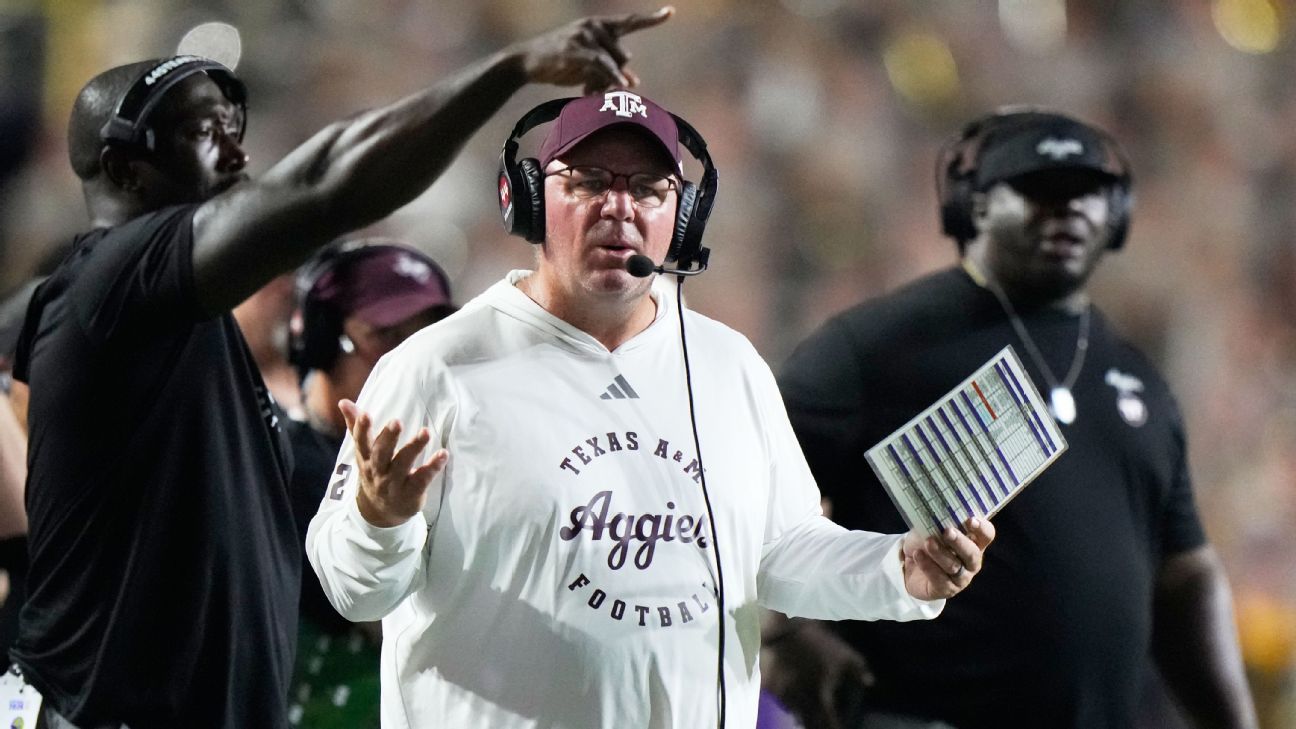
Oklahoma, Texas A&M and others are struggling early on this season with experienced starters who have not played up to expectations. Brent Venables and Mike Elko are in tough spots and both decided against benching their QB1 last week. They must coax better production and confidence out of their guys because they don't have alternatives.
When a reporter asked Elko how challenging it is to recruit quarterback depth behind an established starter like Marcel Reed, the head coach didn't mince words.
"Oh, I think it's impossible," Elko said. "I don't think anybody anywhere is recruiting depth out of the portal. I don't think there are SEC-level players in the country that are trying to go places where you have an established starter. I don't think that's a real thing."
General managers and front office staffers surveyed by ESPN generally agreed with Elko's take. In the NFL, there's no shortage of veterans like Case Keenum who can be called up at a moment's notice for heroic cameos. In college, if they're not starting, they're leaving.
Oregon getting a masterful performance out of Dylan Raiola off the bench at USC was remarkable to watch, but Raiola is one of the rare exceptions among his peers as a former two-year starter at Nebraska who was willing to take a pay cut and sit behind Dante Moore for a season. Very few programs have the luxury anymore of a backup they'd trust to go win a game.
"I think in this modern day of college football, where we're at right now, that's an outlier," Venables said.
While Venables considered benching John Mateer at halftime of the Sooners' 41-13 loss to No. 2 Georgia, it's no surprise he's sticking with him in preparations to face No. 1 Texas on Saturday.
Venables had a solid backup plan for the past two years in Michael Hawkins Jr., but he waited his turn long enough. Now he's starring at West Virginia in a run-heavy offense that plays to his strengths. Oklahoma didn't bring in a transfer to replace him and its top backups this season, junior Whitt Newbauer and freshman Bowe Bentley, have played a combined 35 snaps for the program.
When asked last week what makes it so hard for everyone but Oregon to have an established backup, Venables offered a simple reply: It's the money. Quarterbacks want to go where they can play more and earn more.
"Somebody willing to go somewhere and maybe not be the guy guaranteed right away, it's a little harder [to find] than you want it to be," Venables said.
The economics of this don't make it easy, and not just because most Power 4 starters are earning $2-3 million or more. A survey of Power 4 general managers this offseason found the average pay for a No. 2 quarterback this year is more than $550,000, sources told ESPN.
Utah's Byrd Ficklin is believed to be among the highest-paid backups in the country, sources familiar with the situation told ESPN, as coach Morgan Scalley and the Utes prioritized retaining both starter Devon Dampier and Ficklin entering 2026. A few major programs like Alabama (Austin Mack) and Tennessee (George MacIntyre) had to pay to keep two QBs going into offseason competitions, while others are heavily invested in blue-chip freshmen.
The accelerated talent drain at the position certainly looms over all this decision making. The death of the one-time transfer rule in 2024 inevitably led to more QBs making moves early in their careers. The days of keeping a QB in your building until he becomes a grad transfer are long gone.
In the 2022 recruiting class, only four of ESPN's top 50 quarterback recruits stayed at one school for their entire college career: Cade Klubnik (Clemson), Ty Simpson (Alabama), Drew Allar (Penn State) and Gunner Stockton (Georgia).
In the 2023 class, Clemson's Christopher Vizzina was the only top-50 QB recruit willing to stick around and wait until his fourth year to become a Power 4 starter. He's already been benched for a freshman. Only a handful of major programs -- Clemson, Alabama, Georgia and Michigan -- have been able to maintain a steady streak of high school signees developing into starters in recent years without turning to transfers.
The class of 2024 quarterbacks are in their third year of college, and only 14 of the top 50 are still at their original school. The turnover is about to speed up for the 2025 crop, especially since only five of the 26 who made the ESPN 300 are currently starters.
For them, it's not just a matter of money and the potential to make a lot more elsewhere. They need to see a viable path to playing. In fact, 27 quarterbacks who earned starting jobs at Group of 6 programs this season were former Power 4 backups.
These trends have front offices thinking more practically when they recruit the position. If they're going to chase four- and five-star quarterbacks and make major investments in incoming freshmen, there needs to be confidence on their end that the player is capable of playing early.
"We can't get in these high school battles for guys who are going to come sit on the bench," a Big 12 personnel staffer said. "We can't have $1 million parked on the bench next year. They're being paid for their potential."
Add up all these factors and you can see why college GMs and scouting staffers are all hunting for a certain type of backup in the portal. One SEC staffer described the landscape of backup options as four buckets.
There are the quarterbacks who failed at their previous stop but might succeed with better coaching and circumstances. There are the young QBs who were highly regarded recruits but haven't played much yet. There are raw passers who can do one thing really well (like rushing) and can execute a package or a reduced playbook.
The last one? It's the one everybody would love to discover right now. The player transferring up from the G6, FCS or D-II who's experienced, affordable and so competitive that they don't care who's supposed to be ahead of them.
"Everyone's going to try to find the next Trinidad, which is really hard," an SEC staffer said.
Kiffin is hoping he found a similar candidate in Elon's Landen Clark, who was one of nearly a dozen FCS quarterbacks who transferred up to be Power 4 backups this offseason. Arkansas took a Division II transfer and Penn State landed one from D-III. Kentucky even found a backup QB from Canada.
In all, close to 60 players transferred to be P4 backups. And several of them -- Isaac Wilson (Colorado), Holden Geriner (Pitt), Keyone Jenkins (UCF) -- have already been thrust into starting roles.
Syracuse coach Fran Brown had to play four different quarterbacks in 2025 and went from 3-1 to 3-9 after losing Steve Angeli to a season-ending injury. He said he wasn't going to make the same mistake twice. So he brought in three experienced passers via the portal in January to challenge Angeli.
Last week, it was Amari Odom's turn. The Kennesaw State transfer replaced Angeli and put up 335 passing yards and six total touchdowns while leading the Orange to a dramatic overtime victory at UConn.
The moral of the story? Brown offered it up with candor and a chuckle at ACC media days in July, when a reporter asked what lessons he'd learned.
"To have backup quarterbacks," he said.br/]
Related Topics
- SPORTS
- ESPN
- TCU HORNED-FROGS
- CINCINNATI BEARCATS
- KANSAS JAYHAWKS
- VIRGINIA TECH-HOKIES
- ILLINOIS FIGHTING-ILLINI
- FLORIDA STATE-SEMINOLES
- PITTSBURGH PANTHERS
- PENN STATE-NITTANY-LIONS
- AUBURN TIGERS
- CLEMSON TIGERS
- TEXAS TECH-RED-RAIDERS
- WASHINGTON HUSKIES
- NEBRASKA CORNHUSKERS
- MIAMI HURRICANES
- BOSTON COLLEGE-EAGLES
- USC TROJANS
- NORTHWESTERN WILDCATS
- GEORGIA TECH-YELLOW-JACKETS
- BAYLOR BEARS
- HOUSTON COUGARS
- PURDUE BOILERMAKERS
- MARYLAND TERRAPINS
- MISSISSIPPI STATE-BULLDOGS
- NORTH CAROLINA-TAR-HEELS
- CALIFORNIA GOLDEN-BEARS
- MISSOURI TIGERS
- DAILY
- ARKANSAS RAZORBACKS
- SMU MUSTANGS
- NC STATE-WOLFPACK
- IOWA STATE-CYCLONES
- MICHIGAN WOLVERINES
- FLORIDA GATORS
- UTAH UTES
- OREGON DUCKS
- OKLAHOMA SOONERS
- DUKE BLUE-DEVILS
- MINNESOTA GOLDEN-GOPHERS
- STANFORD CARDINAL
- ARIZONA WILDCATS
- OLE MISS-REBELS
- TEXAS LONGHORNS
- WAKE FOREST-DEMON-DEACONS
- VIRGINIA CAVALIERS
- SYRACUSE ORANGE
- RUTGERS SCARLET-KNIGHTS
- KANSAS STATE-WILDCATS
- SOUTH CAROLINA-GAMECOCKS
- INDIANA HOOSIERS
- OHIO STATE-BUCKEYES
- IOWA HAWKEYES
- COLLEGE FOOTBALL
- GEORGIA BULLDOGS
- BYU COUGARS
- OKLAHOMA STATE-COWBOYS
- KENTUCKY WILDCATS
- VANDERBILT COMMODORES
- WEST VIRGINIA-MOUNTAINEERS
- NOTRE DAME-FIGHTING-IRISH
- TEXAS A-M-AGGIES
- COLORADO BUFFALOES
- LSU TIGERS
- LOUISVILLE CARDINALS
- WISCONSIN BADGERS
- MICHIGAN STATE-SPARTANS
- ALABAMA CRIMSON-TIDE
- ARIZONA STATE-SUN-DEVILS
- TENNESSEE VOLUNTEERS
- UCF KNIGHTS
- UCLA BRUINS