Concerns grow over more gray whale deaths in Bay Area and climate change's contribution

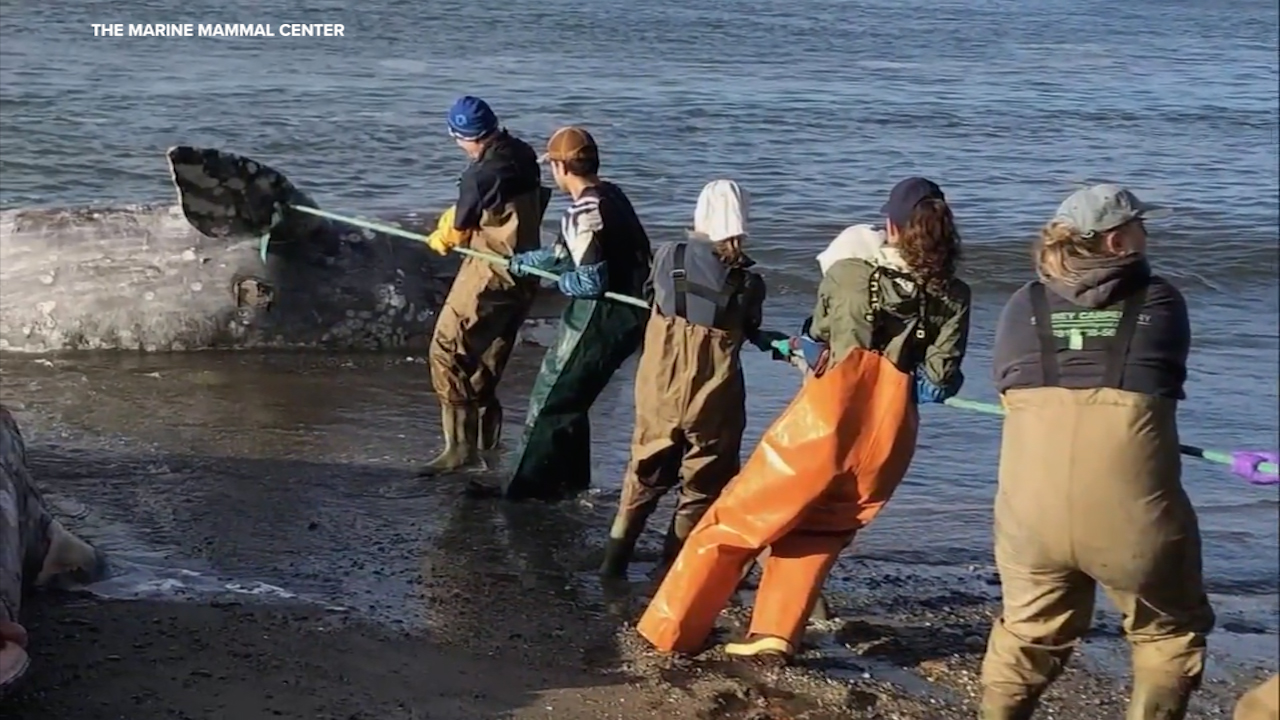
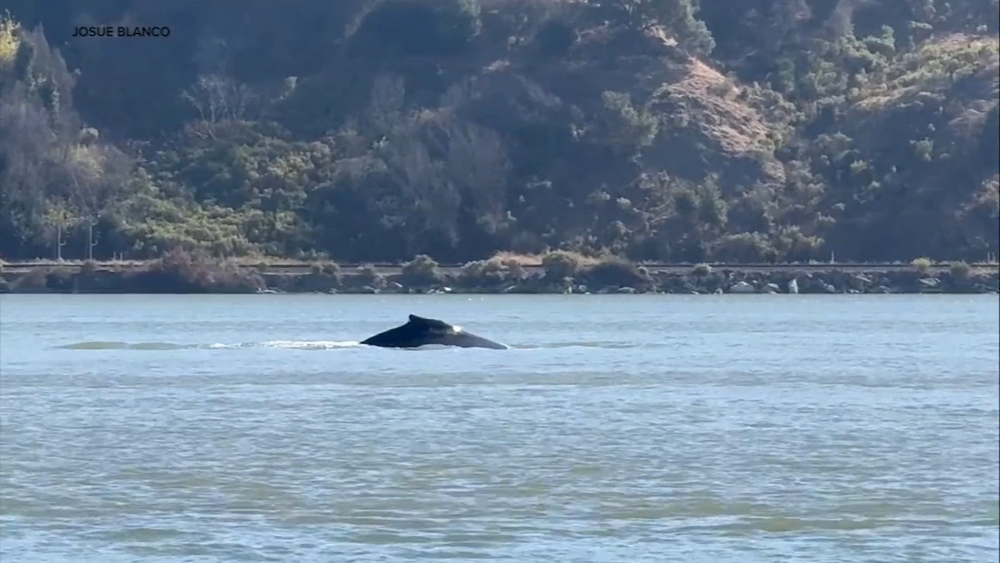
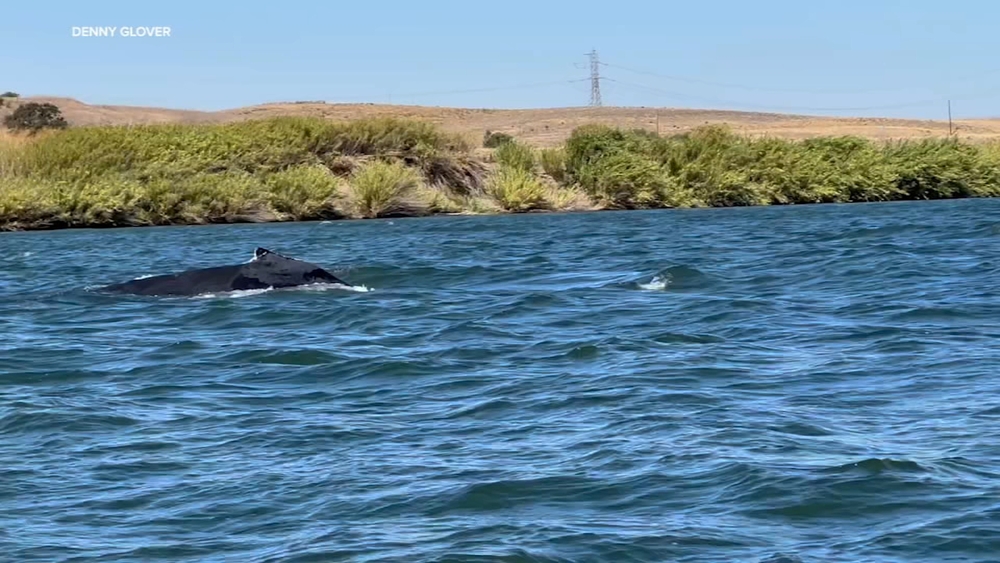
SAN FRANCISCO (KGO) -- We've been tracking the movements and, unfortunately, the deaths of gray whales in and around San Francisco Bay.
For researchers, those events are part of an effort to better understand changes in the marine environment, sometimes thousands of miles away from the Bay. And as expected, climate change could be a driving factor.
A sudden surge in gray whale sightings and gray whale deaths is throwing the spotlight on the San Francisco Bay. But piecing together the possible causes requires environmental detective work on a global scale.
Matthew Savoca, Ph.D., is a researcher at Stanford's Hopkins Marine Station on Monterey Bay. He's studied food chain threats facing other whale species and says unraveling the forces affecting the grays is tricky.
"It's a complex story, but ultimately it comes down to one point, and that's climate change. The actual way by which climate change is affecting gray whales is complex and only partially understood, but we know it is the effects of climate change in the Arctic that's affecting these gray whales here off our coast," Savoca said.
First, it helps to understand that we're just one stop on one of the longest migrations of any whale species, essentially from the Arctic to Mexico and back. And like any vacation road trip, you want to load up on fuel first. But researchers believe melting ice sheets in the Arctic could be disrupting the normal food chain down to the seafloor, where grays typically feed.
MORE: Gray whale found dead near Alcatraz as CA expands program to slow down ships
"If that's the case, and that's just a theory, that's just a hypothesis. But if that's the case, then even though there might be more places in the Arctic that gray whales can forage, perhaps those places are not as good to forage as we initially thought they might be," he said.
And starting back in 2019, ABC7 Eyewitness News began tracking a massive die off-of grays along the west coast, known as an unusual mortality event, or U.M.E. At the time, many of the animals were malnourished to the point of starvation.
And while the U.M.E. was declared over several years ago, might this be another bad omen? Giancarlo Rulli of the Marine Mammal Center says once again, it's complicated.
"In the years since the closure of the mortality event, it's been quite a mixed bag in terms of what we have seen locally here in San Francisco Bay. For example, in 2024, there are only six gray whales that access the bay the entirety of that season," Rulli said.
But last year, the number of grays entering the bay jumped again to 36 individual sightings with 21 dead animals discovered either in or around our coastline. Rulli said researchers are working to piece together clues from Alaska to Baja. One recent study looked not only at the number of Grays visiting the Bay Area, but also their behavior.
MORE: Windsurfer collides with gray whale on SF bay; scientist raises concerns over marine life safety
"Big picture. Some are in the bay for a few days, and then may exit the bay and continue their northern migration. But we are seeing gray whales on a whole staying longer, sometimes months in the bay, during this late winter early spring time period," he said.
Still, one thing is clear: temperatures in the Arctic are facing some of the fastest warming on the planet.
Stanford's Matthew Savoca said the melting ice may even be linked to the historic re-appearance of gray whales on the East Coast of the U.S. for the first time in hundreds of years -- since being hunted out of the region.
"There is an ice-free Arctic in the summer now, for the most part. And so, the gray whales can actually transit across the Arctic and come down the eastern seaboard. It remains to be seen if they're going to recolonize the eastern seaboard or not," Savoca said.
It all adds up to historic changes to a remote habitat and potentially an historic challenge to researchers tracking the health of a magnificent species that migrates along our coastline.