What do Fisherman's Wharf modernization efforts mean for SF's fading fishing hub?
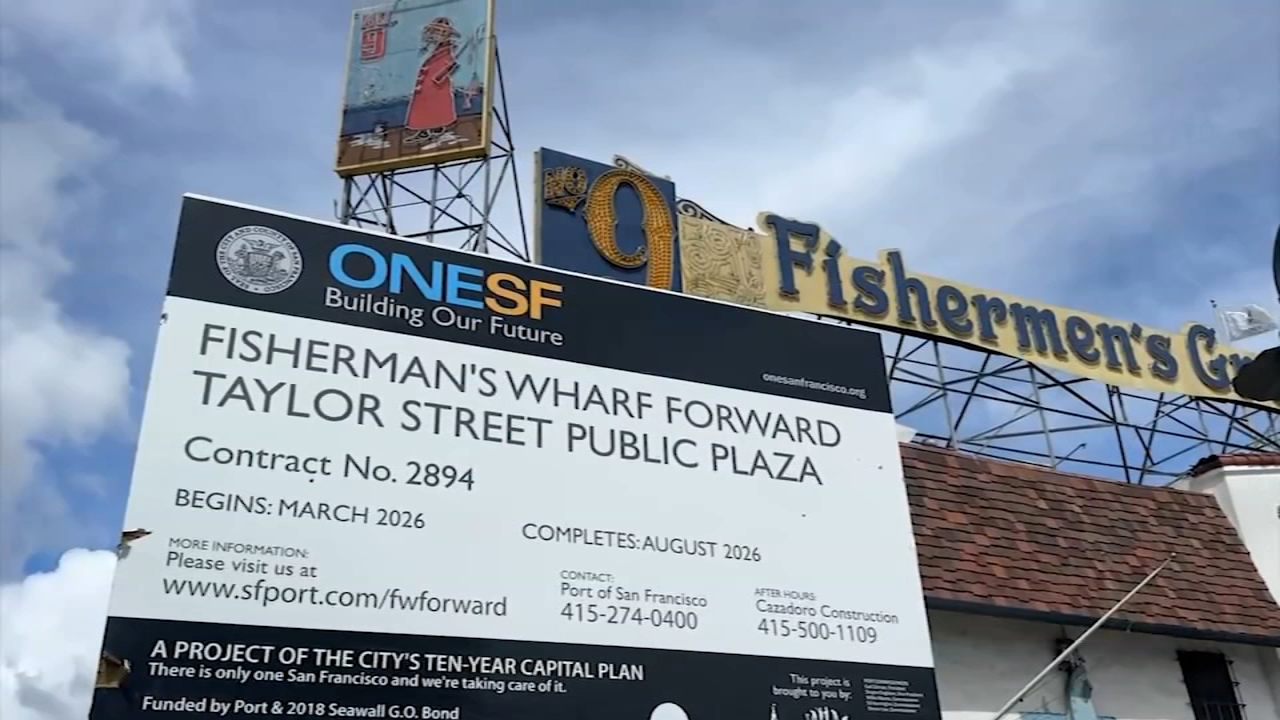

SAN FRANCISCO (KGO) -- Fisherman's Wharf is undergoing a transformation into a modern public space, but commercial fishermen worry the changes will push them further to the margins of a waterfront that was once the heart of their industry.
Tourists from around the world visit the wharf for Dungeness crab and seafood, an attraction fishermen say would likely not exist without an active commercial fleet. The waterfront was first set aside in 1900 for commercial fishing boats, and several years later, Italian immigrant fishermen dominated the area using Monterey clipper boats.
One of those fishermen was Nino Alioto, once seen repairing his nets on the wharf.
On Monday, his great-grandson was found cleaning the same boat Nino used, The Golden Gate. Sal Alioto, Nino's grandson, showed a photograph of the vessel carrying five tons of herring.
The Monterey clippers were once built and maintained at a machine shop on Fisherman's Wharf. That shop is no longer there, a loss that fishermen say has had lasting consequences.
MORE: SF's Fisherman's Wharf gains momentum as revival unfolds | Here's why some are voicing concerns
"Don't have a machine shop. Don't have a shop that we could do some woodworking on our boats OK. Besides the machine shop, we need a shop that we can work on our boats," Alioto said. "These are wooden boats. They don't last forever. These boats are almost 100 years old, and they need love. They need care."
We asked Alioto where they took them.
"There's only one place," he said.
That place is between the Mission Bay and Dogpatch neighborhoods, where boat owners must haul their vessels out of the water for repairs -- an added expense they would prefer to avoid.
During the 1970s and 1980s, Fisherman's Wharf shifted into a tourist destination.
MORE: SF's iconic Fisherman's Wharf is getting a $10M makeover. Here's what it will look like
Since then, fishermen have said coexisting with increased foot traffic has been a challenge.
"If you are driving a trailer full of gear down the highway or down one of these roads, and there's Waymo cars stopping and pedestrians crossing the street, it can take you a long time just to navigate the local roads," said John Barnett, president of the Crab Boat Owners' Association.
Operating from the wharf has grown even more difficult in recent years. There is currently no functioning fuel dock, after a diesel leak in 2020 forced its closure -- and cleanup is still underway.
For the past six years, fishermen have relied on a diesel truck that makes repeated trips to supply fuel to their boats. The San Francisco Port has said the fuel dock is expected to be operating again by spring 2027.


Ice production is another concern. Fishermen say freshly caught fish must be placed on ice immediately to avoid spoilage, but the wharf's aging ice machine is difficult to maintain.
MORE: Alioto's restaurant, landmark building in heart of SF's Fisherman's Wharf, set to be demolished
"They're just trying to keep it going, but the parts have to be fabricated. You can't order a part. It has to be made. It's that old," Barnett said.
Fishermen say the port is trying to help, but equipment failures mean fish markets often produce their own ice on a small scale. There is also no full-time specialized diesel mechanic stationed at the Wharf, as there once was.
"What we have are people who know how to fix diesel engines, sort of. They do it as a hobby, not as a real mechanic that used to be here. We also don't have a chandlery where you can actually go in and buy fishing gear and materials that you need for your boat," Alioto said.
The old chandlery used to occupy an entire block. Today, it is downsized with T-shirts and hoodies as the main items, and fishing supplies relegated to the back.
Fishermen also say they need larger storage facilities, noting that some are forced to keep gear outdoors, where it can be damaged by the elements. With so many challenges, fishermen question whether the wharf can ever return to its former role as a commercial fishing hub.
"To get it back to where it used to be will never happen; that, we have to realize. To get it back as best we can, a long run, we have to wait and see," Alioto said.
Last week, commercial fishermen attended a presentation on the port's $10 million plan to modernize the wharf and how the changes could affect them. The plan includes demolition of the iconic Alioto's restaurant to make way for a public plaza, while the future of other older businesses remains uncertain. The port has promised to support the fishing industry by upgrading some facilities.
Barnett said cooperation will be necessary as the area continues to change.
"I'm not sure what the future brings, but we do have to work together with the port and with the tourism part or aspect of the harbor as well," he said.
Like many fishermen, Barnett declined to speculate that the transformation could mark the end of a storied era for commercial fishing on Fisherman's Wharf.