Prosecutors cite DNA evidence, defense questions investigation as Faith Hedgepeth trial goes to jury


DURHAM, N.C. -- After nearly 14 years of waiting, Faith Hedgepeth's family is once again looking for answers.
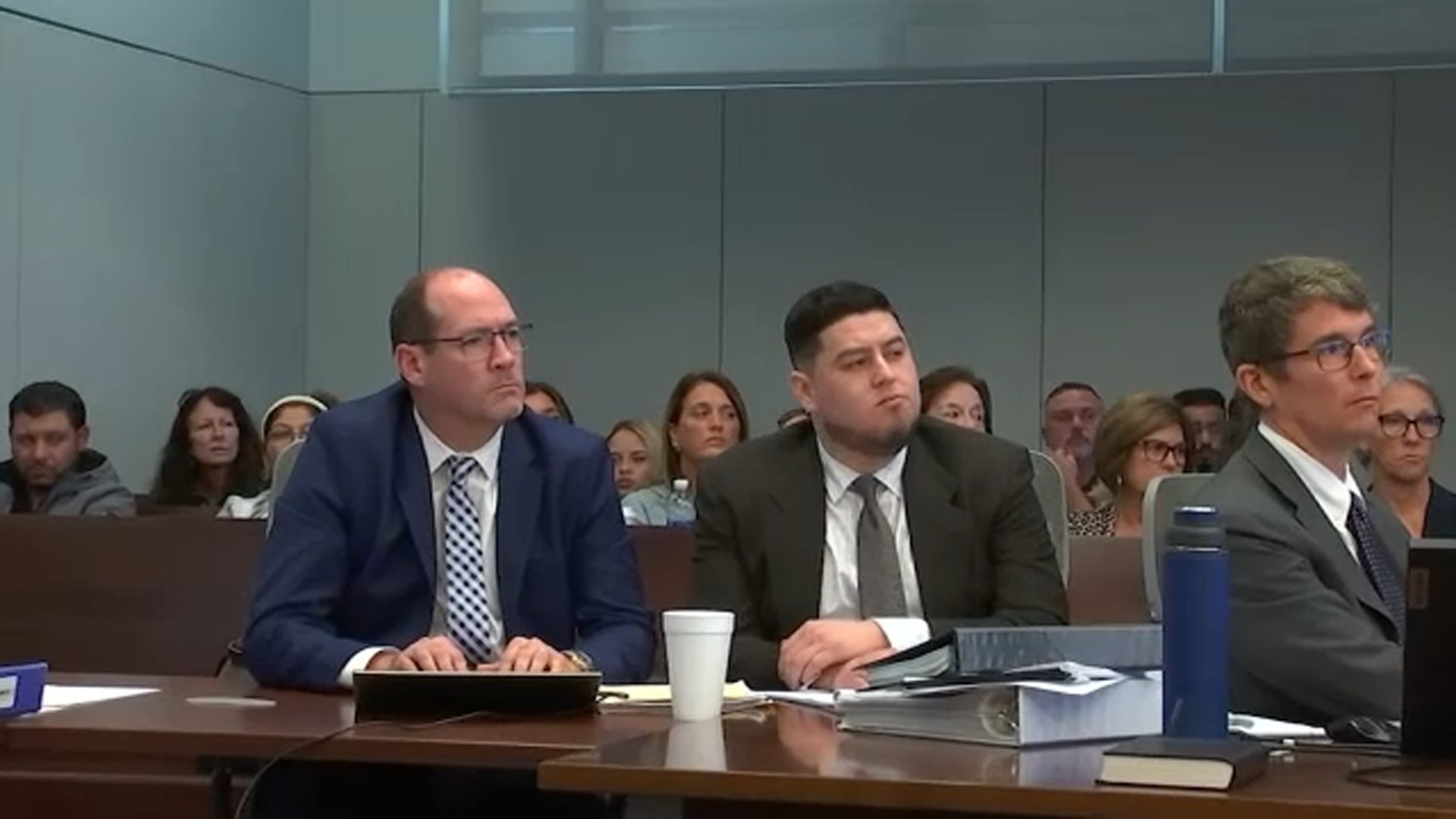
Jurors began deliberating Thursday afternoon in the murder trial of Miguel Salguero Olivares following emotional and often contentious closing arguments from both sides. There were tears and hugs inside the courtroom as the case was finally handed to the jury.
The courtroom was packed shoulder-to-shoulder throughout the day. Hedgepeth's loved ones occupied three rows of seats, while Olivares' mother and other supporters also attended the proceedings.
The state began closing arguments by telling jurors that Olivares left his DNA "like confetti" at the crime scene.
Prosecutors pointed to DNA evidence found on a blue Riesling wine bottle, a Bacardi rum bottle and on Hedgepeth's body. They also highlighted fingerprint evidence recovered from the bottles.
Olivares is charged with first-degree murder, first-degree burglary, first-degree forcible rape and first-degree sexual offense.
Prosecutors argued the forensic evidence overwhelmingly points to Olivares as the person responsible for Hedgepeth's death. They told jurors he broke into Hedgepeth's apartment, sexually assaulted her and then beat her to death.
Using an easel in the courtroom, prosecutors walked jurors through each charge and explained why they believe the evidence supports a conviction.
At one point, Senior Assistant District Attorney Angela Garcia-LaMarca told jurors the case comes down to a single question: whether they believe the forensic evidence.
"There's really just one question that y'all need to answer, and that is, do you believe the forensic evidence in this case?" Garcia-LaMarca said. "Do you believe the scientifically reliable, otherwise unexplained, consistent, credible DNA and fingerprints? Those are two totally separate things. One or the other would be enough. We have both."
Garcia-LaMarca argued that if jurors reject the forensic evidence, they must acquit Olivares.
"If you don't, then you have to find him not guilty and let him walk out the door with you," she said.
"But if you do, and you believe all of the other evidence that is consistent with and corroborates the DNA, if the forensic evidence is credible and believable, then you have to find him guilty."
Prosecutor Lisa Coltrain also challenged any suggestion that Hedgepeth and Olivares had a consensual encounter before her death.
Coltrain told jurors there was no evidence the two knew each other and argued investigators found no digital connection between them after identifying Olivares through DNA evidence.
"Faith didn't speak Spanish. We know he was taking English classes, which is real helpful when you need to write a note. Faith is not going out to hook up with this guy," Coltrain said.
Coltrain noted that investigators reviewed Olivares' phone records, social media accounts and other evidence after identifying him as the source of the DNA.
"Every guy that could be tracked down, that Faith was somehow involved with was an African American man," Coltrain said. "Does it mean people can't date outside their type? But Faith had a type."
She argued there was no evidence connecting Hedgepeth and Olivares through friends, phone records or social media.
"There is absolutely no digital overlap," Coltrain said. "Once they finally figured out who that single-source DNA belonged to, once they finally figured it out and they got his cell phone and they got his numbers and they got his social media, nothing, nothing overlapped."
"Not between Faith and him. Not between Faith and anybody in his social circle and her social circles. Nothing."
Coltrain also addressed criticism of the investigation, telling jurors that mistakes made during the yearslong case do not negate the physical evidence.
"No matter what kind of mistakes were made or things that were missed, it doesn't erase the palm print," Coltrain said. "It doesn't somehow lift the DNA out of Faith. That evidence still exists."
She argued that despite questions raised by the defense, investigators ultimately identified the correct suspect because of the forensic evidence.
"They still got the guy," Coltrain said. "Because he left his DNA like confetti all over that room."
Prosecutors also showed jurors a photograph of Hedgepeth and spoke about her aspirations, describing her as a young woman whose dreams of becoming a success story for her family were cut short at age 19.
During her argument, Coltrain walked toward Olivares as he sat beside his attorneys and pointed toward him while addressing the jury.
"All these people have wracked themselves with guilt. The guilt lies right here with this man," Coltrain said.
"He's been here since Sept. 7. It remains here now. The evidence is loud. It is clear, and it is shouting at you that this defendant sexually assaulted Faith Hedgepeth. The evidence is loud, it is clear, and it is shouting at you that he raped Faith Hedgepeth. It is loud. It is clear. It is shouting at you that he murdered Faith Hedgepeth. Do not get distracted by the noise."
The state also appealed to jurors' emotions, focusing on the years of pain endured by Hedgepeth's loved ones as they searched for answers.
"For parents to lose a child and not know what happened or who did it is unbearable," Garcia-LaMarca said. "Now we know. We know what happened. The forensic evidence in this case is screaming the truth. We know what happened. We know who did it."
She continued:


"The forensic evidence is screaming his name. Miguel Enrique Salguero Olivares. We know who did it."
Prosecutors acknowledged that one question may never be fully answered.
"What we don't know, and maybe we'll never know, is why," Garcia-LaMarca said.
The defense countered by urging jurors to focus on what attorneys described as shortcomings in the investigation, arguing evidence was missed, mishandled or inadequately reviewed.
Defense attorney James Rainsford challenged testimony related to crime scene reconstruction.
"You had someone say they were a crime scene reconstruction expert," Rainsford told jurors. "You hadn't heard from that person in that discipline in this case. You did hear that people looked at these photographs and drew conclusions."
Rainsford also sought to raise doubts about how evidence was vetted and analyzed during the yearslong investigation.
"You have to forgive me if that creates a little bit of a lack of confidence in the state's vetting of its evidence that it is presenting to you in this case and asking you to rely on to reach a verdict of guilt in a murder and rape case, a life sentence," Rainsford said.
He questioned how investigators processed digital evidence.
"What else did they miss? What else with the computers? We downloaded lots of cell phones. Who downloaded them? What programs did they use? Who were the team members? What were the parameters for the searches?" he asked.
Rainsford told jurors that the defense's role is to test the state's evidence and determine whether prosecutors met their burden of proof.
"We are here to test the state's evidence and say, what does it mean?" Rainsford said.
He argued jurors were left with unanswered questions about key pieces of evidence, including the note found at the crime scene.
"What can you draw from? Have you been given enough to make a determination about what you think about who even sent that message? I would say no."
Rainsford argued it was the state's responsibility to eliminate alternative explanations and resolve remaining questions.
"It's up to the state to rule these things out, to close these things down."
He acknowledged the loss suffered by Hedgepeth's family while urging jurors to focus on the evidence presented at trial.
"This is a tragedy. Someone has lost their life and that will not change."
The defense also argued Olivares and Hedgepeth could have had consensual sex and told jurors that male DNA can remain inside a woman's body for days.
Defense attorney Jason Murphy urged jurors to consider whether investigators developed tunnel vision and ignored other leads.
"Why is he some strange angry monster across the street, catcalling? And maybe not just a teenage boy?" Murphy said.
Murphy pointed jurors to testimony involving Hedgepeth's roommate, Karena Rosario, who testified for the prosecution and has not been charged with or accused of a crime.
"You have to have tunnel vision because what is being ignored? What is being ignored?" Murphy said. "The person who was reported to have literally left the apartment with blood on her hands. That's being ignored."
Murphy added:
"The turn of phrase we use to indicate when someone's guilty: blood on their hands."
In his final appeal to jurors, Rainsford argued the state failed to meet its burden of proof.
"They have not proved their case," Rainsford said. "Hold them to their burden. My client is not guilty."
Jurors appeared attentive throughout the day's proceedings. One juror held her cheeks during portions of the state's closing argument, while another clenched her jaw as prosecutors discussed the evidence.
The 12-member jury that will decide the case is made up of nine women and three men. The panel includes five Black women, four white women, two Black men and one white man.
Juror No. 11 was selected as the foreperson and will oversee deliberations.
The jury deliberated Thursday afternoon before being sent home for the day without reaching a verdict.
Before leaving, jurors requested additional information from the court. They asked to review latent fingerprint and DNA report summaries introduced during the trial.
The requests could provide some insight into the evidence jurors are focusing on as deliberations get underway.
As verdict watch begins, Hedgepeth's family faces another wait in a case that has stretched across nearly 14 years.
A verdict had not been reached by the end of the day. Deliberations are scheduled to resume Friday morning.