How NBA championship rosters are built: Spurs are an outlier

What is the value of a top NBA draft pick?
Very high, in one sense. Top picks are the most likely young players to develop into stars. Teams throw away entire seasons for the mere chance of landing one. And fanbases dream about high draft picks turning into cornerstones who can lead their teams to championships and one day see their jerseys raised to the rafters.
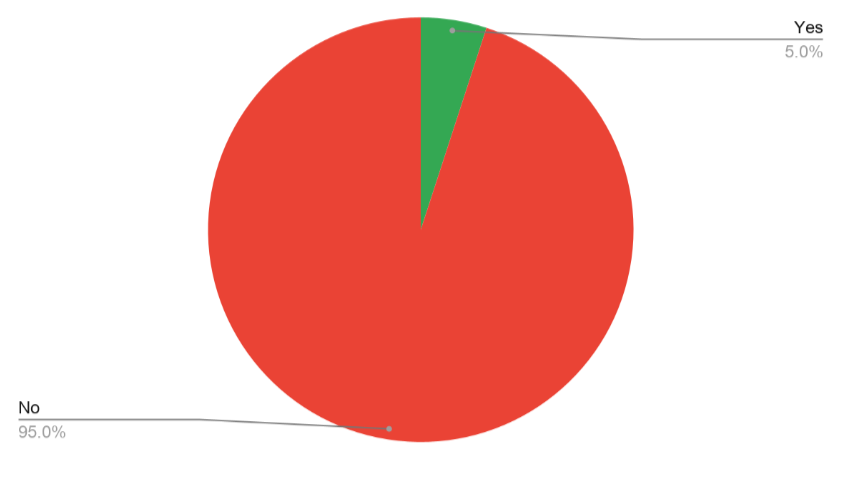
But that potential doesn't often turn into reality. In the 21st century, a majority of top-five picks haven't even won a single playoff series for the team that drafted them (or traded for them on draft night), and a vanishingly small percentage have won a championship.
Did your top-five pick (from 2000-19) help your team win a title?
As the NBA considers dramatic lottery reform, with a board of governors vote scheduled for May 28 on a proposal that would curb the ability for teams to tank for guaranteed top draft picks, it's worth exploring just how valuable those selections actually are -- and just how much they've helped teams climb from the bottom of the standings to the top.
Let's find out how championship rosters are built.
Jump to a section:
How championship rotations have been built
Why the Spurs are a massive outlier

Future outcomes for top picks
Out of the 100 players who were top-five picks from 2000 to 2019, 44 won a playoff series as a rotation player for their original team. That leaves 56 who never fulfilled their team's heavy draft investment with even a single playoff advancement.
(I'm defining rotation players as those who averaged at least 20 minutes per game. Without this criterion, four more players would count as winning playoff series: Darko Milicic for Detroit, Dante Exum for Utah, Markelle Fultz for Philadelphia and Tyrus Thomas for Chicago.)
This chart shows the full breakdown of the 100 players' postseason outcomes. The most frequent was zero series wins, followed by just one.
Playoff series wins with original team for top-five picks (2000-19)
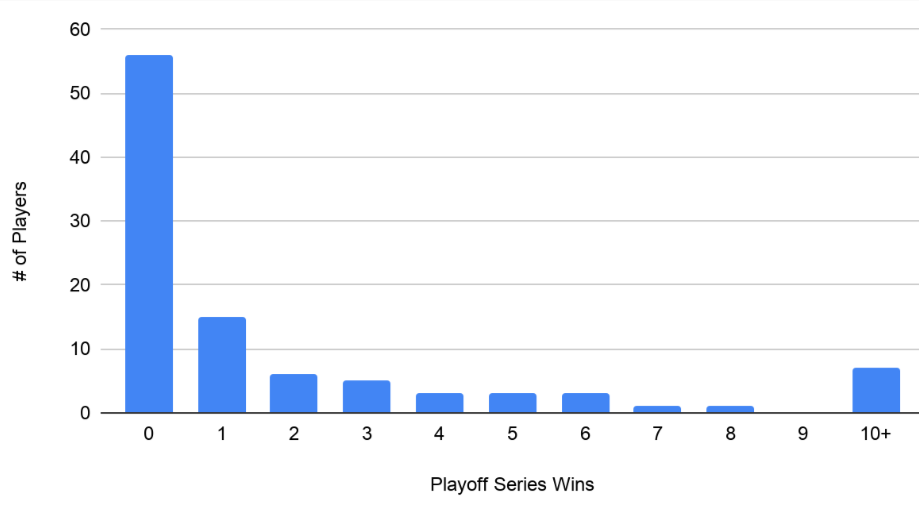
Put another way: On average, the draft's top five will have three players who never win a playoff series for the team that drafted them, one player who wins one or two series and one player who wins three or more.
The player in this group with the most playoff series victories with his original team is No. 5 pick Dwyane Wade, with 22 over 13 seasons in Miami before he left in free agency. (Jayson Tatum and Jaylen Brown have 15 in Boston and could eventually catch him.) But there are far more top picks with trajectories like Nikoloz Tskitishvili, Raymond Felton and Shelden Williams, who were all picked No. 5 in the 2000s but never won a playoff series with their original team, than multitime champions such as Wade.
The dream of a decade-plus of production for a franchise cornerstone also doesn't materialize very often. On average, top-five picks from 2000 through 2019 lasted 5.1 seasons with their original team, with 56% lasting until their fifth year (and their second contract) and 44% leaving before then. Only 6% played at least 10 seasons with their initial team. (Tatum will bump that figure to 7% next season.)
And for now, only five of the 100 top-five picks in that period are still with the team that drafted them: Tatum and Brown in Boston, Joel Embiid in Philadelphia, Zion Williamson in New Orleans and Ja Morant in Memphis.
Championship roster origins
If top picks rarely reach the NBA Finals with their original team, then where do championship players come from? The answer, unsurprisingly, is a mix of free agency, trades and the draft -- though not often top picks within the draft.
As The Athletic's John Hollinger noted earlier this month, recent Finals teams -- even the small-market ones -- have "relied very little on tanking" to reach the promised land.
No. 2 pick Chet Holmgren is the only player on Oklahoma City's roster who was acquired directly by landing a top pick, while the best two players in last year's Finals -- Shai Gilgeous-Alexander and Tyrese Haliburton -- changed teams via trade. Boston, the 2024 champion, nabbed its top two players (Brown and Tatum) with a trade for picks years in advance. Nikola Jokic won Finals MVP for Denver in 2023 after being selected 41st. And so on.
Looking back with a wider lens, only three out of 26 Finals MVP trophies this century have gone to players who landed on a team via its own top-five pick. Here's the full accounting:
- 11 via free agency or sign-and-trade: LeBron James (4x for three teams), Shaquille O'Neal (3x), Kevin Durant (2x),Andre Iguodala, Chauncey Billups
- Four via draft pick trade: Kobe Bryant (2x), Jaylen Brown, Kawhi Leonard (for Spurs)
- Two via trade: Shai Gilgeous-Alexander, Kawhi Leonard (for Raptors)
- Three via top-five pick: Tim Duncan (2x), Dwyane Wade
- Three via later lottery pick: Stephen Curry, Dirk Nowitzki*, Paul Pierce
- Two via post-lottery first-round pick: Giannis Antetokounmpo, Tony Parker
- One via second-round pick:Nikola Jokic
(*Nowitzki was traded on draft night, but the Mavericks used the No. 6 pick to acquire him at No. 9, so he counts for the purposes of this exercise.)

More broadly, only five players who landed on a team with its own top-five pick have even been rotation players for championship teams this century. Duncan (four times) and David Robinson were No. 1 picks for the Spurs in 1997 and 1987, respectively; Wade (three times) was a No. 5 pick for the Heat in 2003; Tristan Thompson was a No. 4 pick for the Cavaliers in 2011; and Holmgren was a No. 2 pick for the Thunder in 2022.
(James doesn't count on that list because he never won a title in his first stint in Cleveland, only doing so after he left and returned in free agency. Even if you include his 2016 triumph, under the logic that he wouldn't have returned to Cleveland if he hadn't first landed there in the lottery, it wouldn't change the overall takeaways here.)
Look at those draft years again: Between Wade in 2003 and Holmgren in 2022, Thompson -- a role player who averaged 6.7 playoff points for the 2016 Cavaliers -- was the only player drafted in the top five with a team's own pick who helped that franchise win a title. That's astounding.
Here's the full breakdown of how every championship rotation player this century -- defined as playing 20 minutes per game or starting at least half of a team's games in the playoffs -- was acquired. (I also examined all rotation players on teams that reached the conference finals, and the percentages were very similar across the board.)
Top-five picks are the smallest group on the chart.
That's not to say lottery picks don't matter in the title race. But plenty of the lottery picks that have yielded the most championship equity arrived via trade rather than a team's own losing effort. That list includes Brown and Tatum for the Celtics, Jalen Williams for the Thunder, Kyrie Irving for the Cavaliers and Jamal Murray for the Nuggets. Kobe Bryant andKawhi Leonardwere picked in the teens and quickly dealt -- to the Lakers and Spurs, respectively -- for veterans.
That chart also underscores that building a roster capable of capturing a title requires hitting on a lot more than just the draft. More than half of the typical championship rotation comes from trades and free agency
It's possible that proportion changes in the NBA's second apron era, as stacking big contracts becomes more difficult and fewer stars reach free agency, but it hasn't so far. The final pieces Oklahoma City needed to win a championship were Alex Caruso and Isaiah Hartenstein, who arrived via trade and free agency, respectively. Boston traded for Jrue Holiday and Kristaps Porzingis (and Derrick White and Al Horford, a couple of years earlier) to take its final steps to a title. Denver traded for Aaron Gordon and Kentavious Caldwell-Pope, and signed Bruce Brown in free agency.
This general finding continues when looking at this season's conference finalists. The Thunder are built the same way they were last season, with Holmgren as the only high draft pick.
The Knicks' starting lineup was constructed entirely with external transactions: They signed Jalen Brunson in free agency and traded for Karl-Anthony Towns, OG Anunoby, Mikal Bridges and Josh Hart.
The Cavaliers drafted Evan Mobley at No. 3 but traded for Donovan Mitchell, James Harden and Jarrett Allen.
And the Spurs -- well, the Spurs traded for De'Aaron Fox, but they're an exception who deserve a section unto themselves.
A Texas-sized caveat
The NBA's newest contender stands as a counter to most of the trends discussed thus far. The Spurs are going toe-to-toe with the Thunder in the Western Conference finals, down 3-2 as the series shifts back to San Antonio.
And their core was built with a dose of smart management and a heavy helping of lottery luck, as San Antonio landed Victor Wembanyama (at No. 1), Stephon Castle (at No. 4) and Dylan Harper (at No. 2) in consecutive drafts from 2023 to 2025. In Game 1 of the conference finals, that trio became the youngest in NBA playoff history with double-doubles in the same game.
Remember that only five top-five picks playing this century have been rotation players for a championship team after they landed on that team following a tank (and two were also Spurs centers drafted at No. 1). But this San Antonio group could add three more by itself if it wins a title.
In that way, the Spurs offer an example of what the draft can accomplish for a rebuilding team. It's not remotely likely, but it's possible, and that's why team executives and fans alike carry such hope for their lottery odds -- in much the same way average people hope for the implausibly remote possibility that they could become centimillionaires through a real-world lottery. All you need is a ticket and a dream.
Yet this specific Spurs path might be impossible to replicate in the future, as the NBA's new lottery rules would forbid a team from picking in the top five in three consecutive drafts. And crucially, it's not as if this Spurs outcome is the norm for teams with three top-five picks in a row, either.
There have been 23 occasions in the lottery era in which a team picked in the top five in three consecutive drafts, per ESPN Research. More than half of those cores never won a single playoff series together, including recent examples of the Suns with Dragan Bender, Josh Jackson and Deandre Ayton from 2016 to '18, and the Magic with Victor Oladipo, Aaron Gordon and Mario Hezonja from 2013 to '15. Some teams have landed four or even five top-five picks in a row and still not parlayed that luck into playoff success.
To this point, only two of those cores ever made a Finals trip. One was the Thunder, who famously draftedKevin Durant, Russell Westbrook andJames Hardenfrom 2007 through 2009. And the other was the Cavaliers, who drafted Irving, Thompson, Dion Waiters, Anthony Bennett and Andrew Wiggins (whom they immediately traded for Kevin Love) from 2011 through 2014 -- and still neededLeBron Jamesto return in free agency to attain a winning record, let alone reach the Finals.
So the Spurs, once again, stand as an outlier; even if they don't reach the Finals this season, they're a strong bet to do so at least once in the years to come.
But more broadly, the observed outcomes from the past quarter-century of NBA roster-building show that tanking rarely translates into titles.
With new lottery rules in place, teams wouldn't be able to lose their way to contention anymore -- but it turns out they never really could do that, anyway. This "one simple trick" to NBA prosperity is just as flawed as any other get-rich-quick scheme, and removing that path shouldn't stop the franchises that are actually built to succeed.
]