How 1st-in-the-state technology is harnessing energy from East Bay water pipes


PIEDMONT, Calif. (KGO) -- Deep in the Piedmont Hills, Gregg Semler and Casey Leblanc are checking up on what could be described as the Bay Area's newest and smallest hydroelectric power plant.
Semler is the founder and CEO of Bay Area-based InPipe Energy. He says InPipe's technology is a first of its kind in California.
The team installed the miniaturized turbine in a pipeline connecting part of the East Bay Municipal Utility District's water distribution system. It takes the place of the normal water pressure regulator, housed in a small building next door. But instead of just controlling the flow, they say it harnesses it to produce electricity, spinning the turbine-driven generator.
MORE: Trump administration cuts nearly $8B in clean energy projects in blue states
"We've developed essentially a rig that taps into those pipelines and generates a new source of renewable energy," Semler said.
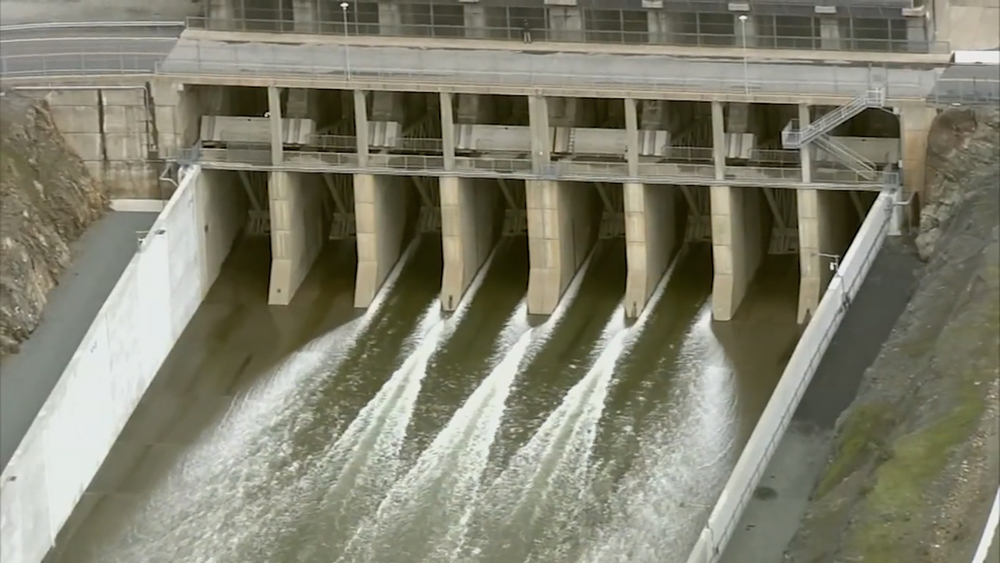
While the technology is compact, he says it helps to think of the massive hydroelectric projects that work on the same principle. The difference is the reversed scale. Instead of one project costing billions, the company envisions thousands of small ones.
"So water under pressure in pipelines happens everywhere in the world," Semler said. "There are literally millions of miles of water pipelines in cities, in agricultural facilities and hydropower facilities, data centers where they're receiving water in pipelines. And when the water is moving through the pipeline, that's hydraulic electricity. And hydroelectricity is the lowest cost source of renewable energy."
East Bay Municipal Utilities District engineer Casey LeBlanc showed ABC7 News the control center where the power gets transferred onto the PG&E grid. He says the pilot project already generates about six times as much power as a solar panel system would in a similar space.
"So here's a diagram of the pilot, and what you can see here is that the customers in the pressure zone are using enough water for the valve to be 100% open," LeBlanc said. "They're therefore generating as much electricity as possible right now."
MORE: East Bay landfill produces fresh source of renewable energy for customers

But rather than selling power to their customers, the East Bay Municipal Utility District gets a break on their own energy costs instead.
"So when we're able to generate electricity from this pilot facility, we're able to offset a portion of our operating costs. And so not only does it improve our environmental sustainability and improves our financial sustainability, too, by lowering costs for our customers," LeBlanc said.
For InPipe it's also an opportunity to prove a technology, they believe, can transform the nation's energy grid, one pipeline at a time.
"Our projections are that we could reduce energy costs by 10 to 15% for most of these very large energy users," Semier said. "So that's megawatt of free, low cost electricity that's flowing underneath our streets every moment of every day."
The East Bay Municipal Utility District says the system is part of its broader goal of becoming carbon neutral by 2030.