The legal battle behind why Berkeley has been unable to remove large homeless encampment
Homeless advocates have now blocked the city from taking down the encampment for the fifth time.

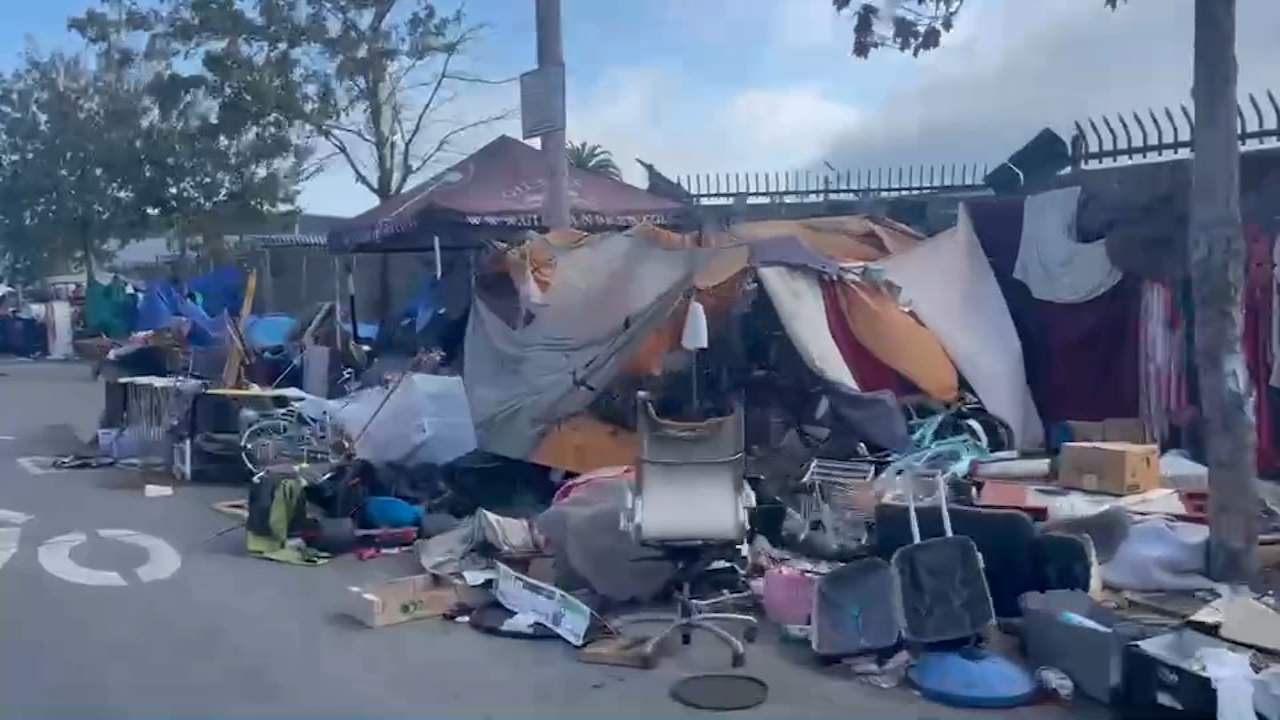
BERKELEY, Calif. (KGO) -- A sprawling homeless encampment in West Berkeley has drawn widespread attention after video of the site went viral on social media, prompting questions about why the city has been unable to remove it despite recent court decisions that have allowed other cities to crack down on encampments.
City officials say the answer lies in ongoing litigation that has temporarily blocked cleanup efforts.
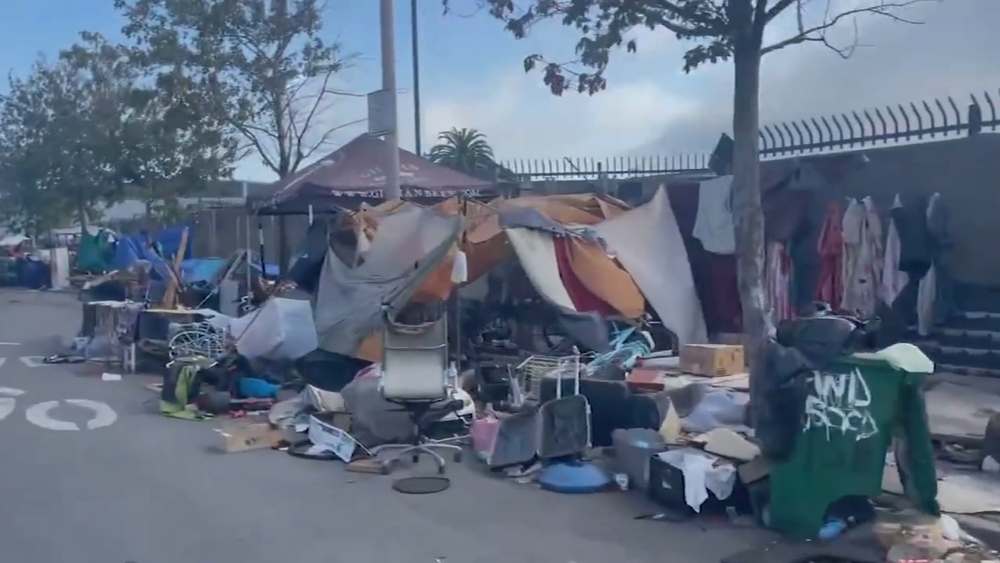
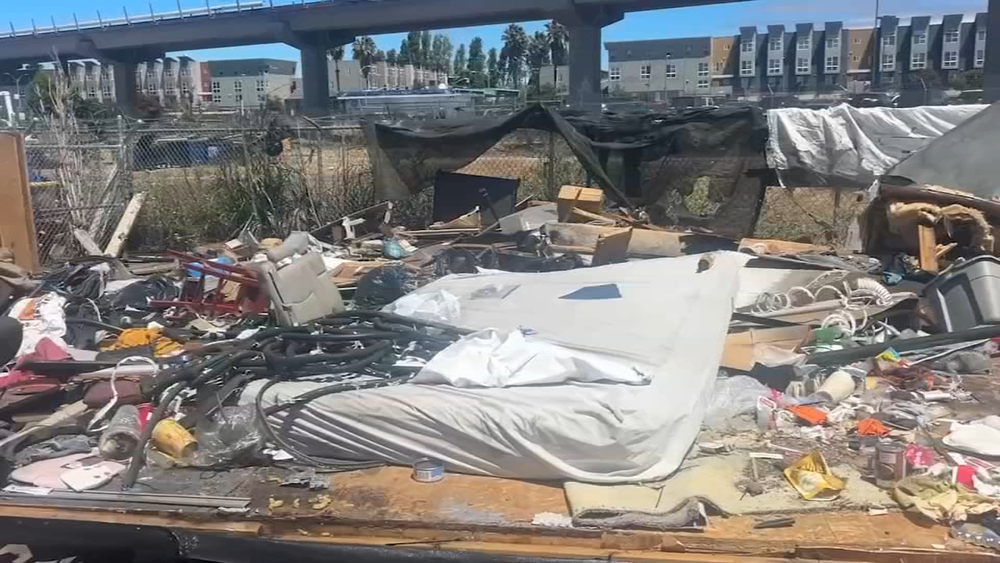
The encampment, located near 8th and Harrison streets in an industrial area of West Berkeley, has existed for years. Residents live in tents, vehicles and makeshift structures amid piles of belongings and trash that spill onto surrounding streets.
RELATED: Viral video sparks new debate over homeless encampment near UC Berkeley housing
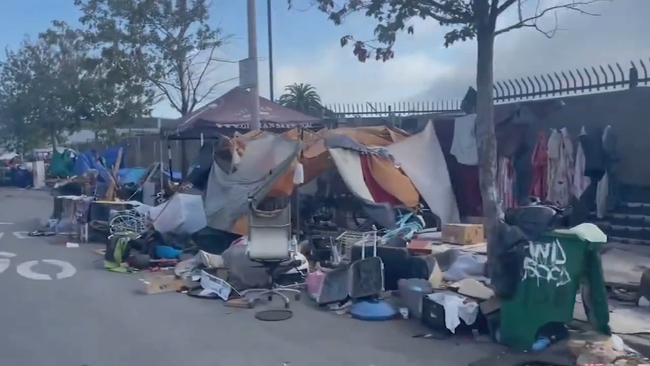
Many of the people living there say they ended up at the site after facing economic or personal hardships.
"I've been out of work for awhile and I'm just going through some stress and some mental health problems of my own," said Ramondo Mackey, who has lived at the encampment for a year.
Jasmine Blau said she and her partner moved there after losing access to their vehicle.
"We've been here for less than a month because our car was impounded right on 7th street, so we were living in our car before that," Blau said.
The size and persistence of the encampment have frustrated nearby businesses and generated criticism of Berkeley's response.
"The city is working really hard to solve this. It's been incredibly litigious. We are still in an active litigation," Berkeley City Manager Paul Buddenhagen said.
The legal dispute is occurring despite a 2024 U.S. Supreme Court ruling that allowed cities to enforce anti-camping ordinances without violating constitutional protections against cruel and unusual punishment.
MORE: Federal judge rules some people can stay at Berkeley homeless encampment
However, Berkeley differs from many other cities because it does not have a local ban on camping.
In July, Berkeley posted notices ordering residents to vacate the encampment, but those efforts were halted after the Berkeley Homeless Union filed a lawsuit.
"Unfortunately, in this current situation with the courts, it's been very hard for us to get things done," Mayor Adena Ishii said.
U.S. District Judge Edward Chen issued a temporary restraining order preventing the city from removing residents' belongings. The Berkeley Homeless Union argued that the city should identify alternative locations where members with disabilities could legally camp.
According to the city, it has offered replacement tents in residents' preferred sizes to all encampment residents regardless of disability status.
The encampment's location has added complexity to the issue. While most of the site lies within Berkeley, it sits near student-family housing on Monroe Street, just across the border in Albany. Albany officials emphasized that the encampment falls under Berkeley's jurisdiction and that Albany is not a party to the lawsuit. The city also noted that Monroe Street is under the jurisdiction of UC Berkeley, meaning campus police patrol the area rather than Albany police.
In a statement, UC Berkeley said, "We continuously educate and advise our residents on safety best practices, and how to notify appropriate resources when they observe suspicious or dangerous activity."
A 33-year-old man was arrested in January 2025 in connection with an attempted sexual assault near the student-family housing complex. Officials said there have been no reported incidents there so far this year.
Berkeley officials maintain that shelter and housing opportunities have been offered to people living at the encampment.
"Initially, people in the encampment were offered housing and declined," Buddenhagen said.
Some residents acknowledged turning down available shelter options. Blau told ABC7 Eyewitness News it was rules keeping her from going into a shelter and others said accessing services can be difficult.
City officials remain confident that the encampment will eventually be removed once Berkeley satisfies the court's requirements.
"We are working to comply with the judge's orders, at which point our plan is to remove the tents," Buddenhagen said.
For now, the legal battle continues, leaving unresolved the central question that follows nearly every encampment cleanup effort: where the people living there will go once the site is dismantled.
EDITOR'S NOTE:
On Tuesday, Berkeley put up notices saying they plan to close the encampment on September 8. The Berkeley Homeless Union is pushing back against plans to clear the site, saying they'll ask a judge to intervene.
This is the fifth attempt to block the city of Berkeley in the courts. If the judge allows this sweep, it will be done, according to the judge, in "short order," and certain guidelines must be followed.