Marine Mammal Center preparing for extended wave of sea lion rescues: Here's why
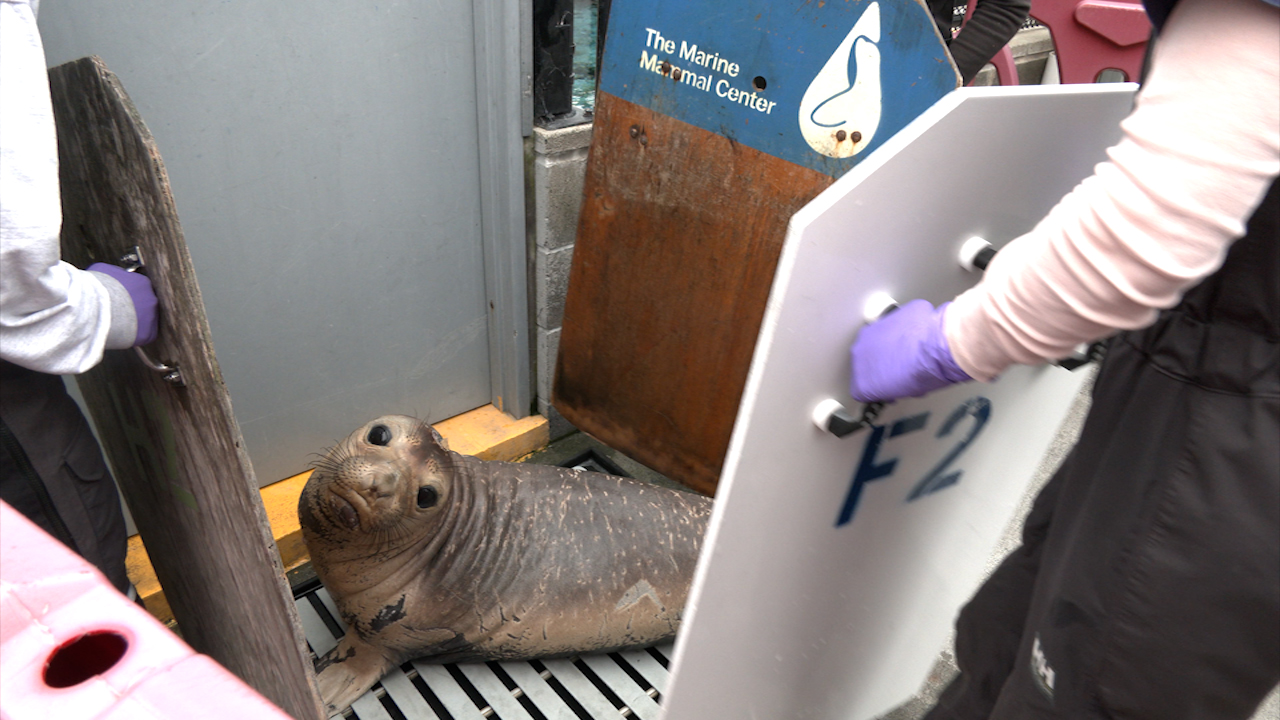

SAUSALITO, Calif. (KGO) -- Medical teams at the Marine Mammal Center in Sausalito have been struggling for months, rescuing and treating dozens of sea lions that are suffering symptoms consistent with domoic acid poisoning.
It's a toxin released by an ocean alga that can cause seizures, neurological damage and, in some cases, can be fatal.
"And that biotoxin is a really nasty one. It binds to receptors in our brains and in our hearts, both in these animals and including in people. And it causes seizures, and can even cause heart failure," says Dr. Cara Field, DVM, Ph.D., director of conservation medicine.
We watched as teams tested some of the sickest animals, rescued from the beaches around Monterey Bay north, hoping they're strong enough to respond to treatment.
"I will say that's really difficult," Field said.
MORE: Sick sea lion dies on SF beach in latest neurotoxin case connected to warmer waters
They're concerned that upcoming months could be even more challenging. While the causes of ocean algal blooms can be complicated, experts point to especially deadly years like 2015, when a marine heatwave, followed by a strong El Niño, saw thousands of sea lions stranded up and down the Pacific coast. If current predictions of a potential super El Niño unfold, the Marine Mammal Center's Giancarlo Rulli fears a critical strain on manpower.
"The need for volunteers is urgent. This is very physical work. It's taking anywhere from four to six volunteers and a 100-pound carrier, sometimes walking upwards of a mile to two miles out to an individual animal to rescue them," Rulli said.
The organization is already training extra volunteers, bolstering a rescue force that could be pushed to capacity up and down the coast.
"I think our collectively biggest concern is that we will see huge numbers of animals stranded and not be able to get to them in a timely manner and have that animal suffering and their welfare being compromised," Field said. "We're also very worried that this could go on for a long time. And so, you know, it's not just a battle, it's really a war."
The Marine Mammal Center estimates that it's already rescued some 150 sea lions already this year suffering from domoic acid, with most of those being discovered over the last two and a half months.