Bay Area research team identifies toxic metals tied to Moss Landing battery storage facility fire


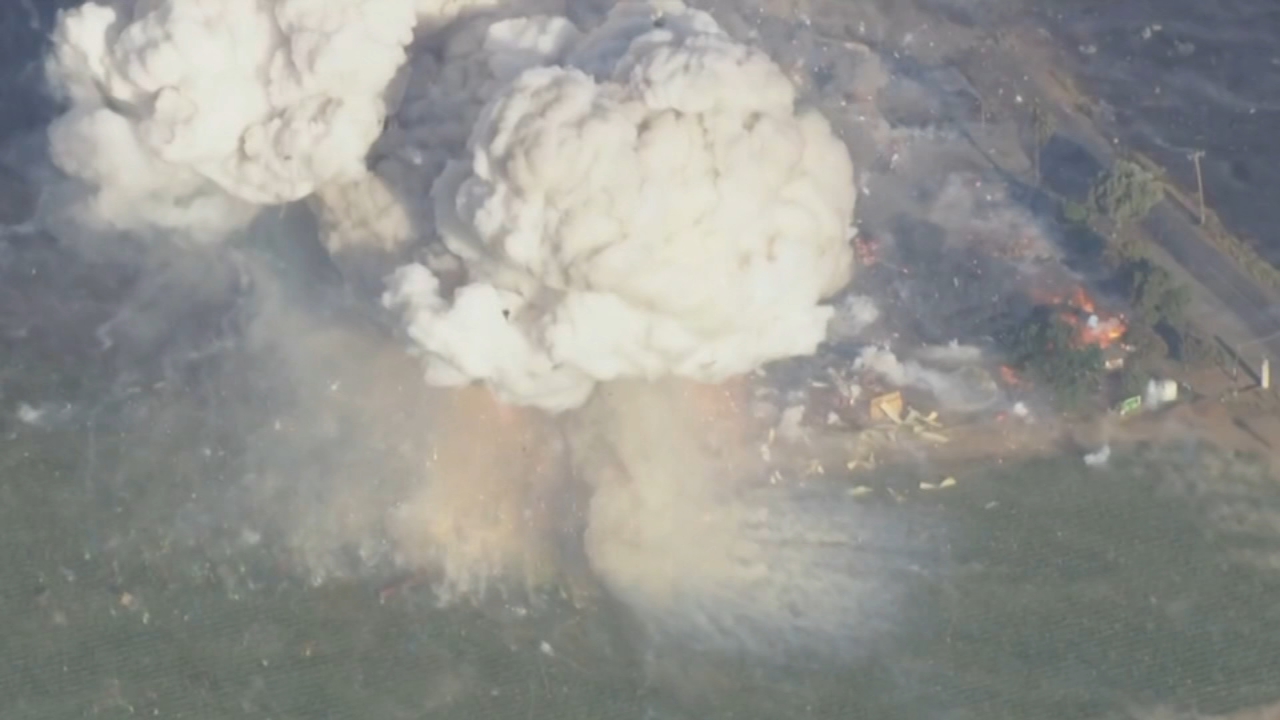
MONTEREY COUNTY, Calif. (KGO) -- When smoke poured out from a fire at a battery storage facility at Moss Landing in January, nobody knew how far it would travel or the toxic particles it might carry with it. But now, researchers from the San Jose State University Moss Landing Marine Lab are isolating clues in an environmentally sensitive waterway known as Elkhorn Slough.
"If you think about those particles being airborne, you know, just think about having a box of confetti that explodes. And so they will, you know, they will fall, they will settle away from the from the area where they're coming from, which is what's happening with the smoke plume," said marine geologist Ivano Aiello, Ph.D.
Aiello said the ash spread across the nearby slough in a thin, patchy layer. He and his team were able to compare the material they recovered to soil samples they'd collected before the fire. Using an X-ray fluorescence detector, they identified increased levels of three different metals: nickel, manganese and cobalt.
"This is really a unique ratio between the nickel and cobalt, which we use as a way to fingerprint the battery source. So, we see that signal. But, yet, we don't understand what are the effects of, you know, potential effects on the ecosystem," Aiello said.
VIDEO: Monterey Co. battery plant fire raises air quality, toxic metal concerns as images capture aftermath

And questions remain: did the bulk of the metals wash away with the winter rains, or did they find their way into the soil and the ecosystem's food chain? Elkorn Slough is classified as a research reserve and is home to wildlife ranging from otters to crabs and native oysters.
Amanda Khan, Ph.D., is a marine scientist with the lab. She and her colleagues are testing tissue samples from several species to identify early clues.
"And so, the ratio of nickel to cobalt was different in January than what we saw in February. But notice I'm not saying that we can say that we detect battery metals in the tissues. And that's because, you know, we just know that those two metals correlate. And so, the interesting thing will be to ask how those ratios may change over time. You know, biology is messy," Kahn said.
She cautioned that the results showing traces of the metals in tissue samples are extremely preliminary. And it could take many more months of research to determine if they're linked to a lingering threat from the battery fire.
MORE: Deal reached to clear burned batteries from Moss Landing plant months after fire
"I wish I could say that we know if these metals would accumulate, but we don't. We're coming up on a year pretty soon. And so, as we analyze those later samples, I think the question about accumulation, it's going to take that time to see, you know, from the lower levels of the food web. Does it just cycle through or does it transfer up to the predators of them?" Kahn said.
She said the lab has helped assemble a research team known as EMBER to monitor Elkhorn Slough moving forward, watching for any evidence that toxic metals could be moving from the soil and water into the food chain and surrounding wildlife.
"And those things can take a lot of time. Animals are slow. But that's part of what our monitoring longer term should be able to help us identify," Kanh said.
The EMBER team also includes members from the Elkhorn Slough National Estuarine Research Reserve, the Amah Mutsun Land Trust, Marine Pollution Studies, California State University Monterey Bay and the Monterey Bay Aquarium.
Still, organizers say there is a cost factor as well. So far, the work is being supported with private donations and is not receiving funding from the EPA.