As public worries about AI grow, Newsom's political calculus is changing
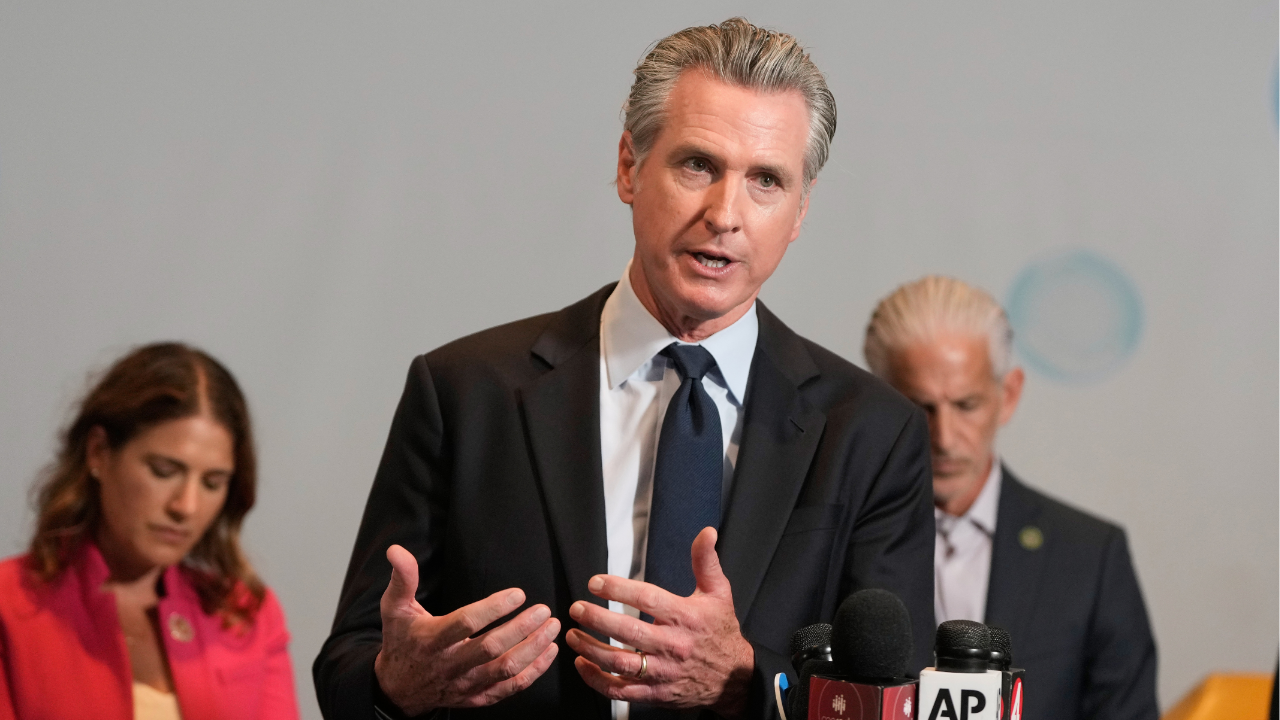


SAN FRANCISCO (KGO) -- Gov. Gavin Newsom spent years promoting California as the epicenter of artificial intelligence innovation.
Now, as concerns about AI safety, energy consumption and economic disruption gain traction with voters, the governor is increasingly positioning California as a leader in regulating the technology.
A recent Public Policy Institute of California survey found nearly three-fourths of likely California voters oppose new data centers in their communities, underscoring growing skepticism about the infrastructure powering the AI boom.
In recent weeks, Newsom has signed a series of AI oversight bills and called for stronger safeguards as some of the industry's own leaders warn about the risks of increasingly powerful AI systems.
The governor has also accelerated efforts to explore an AI "kill switch," a concept that could require developers of advanced AI models to maintain emergency shutdown capabilities.
"This is a huge deal," said Ray Wang, founder and CEO of Constellation Research. "This is a race with China for AI dominance."
Wang said governments are trying to balance national security concerns with public demands for more oversight.
MORE: Newsom signs executive order to consider AI regulation, including proposal for 'kill switch'
"China has 500 data centers today, and they're trying to build another 500," Wang said. "And really to not only control people but also compete with the U.S."
The rapid evolution of AI has created unusual political challenges, forcing leaders to respond to a technology that many voters worry is advancing faster than government can keep up.
Wang questioned whether some of the recent political rhetoric reflects policy changes as much as changing political incentives.
"It's important to be adaptive in the environment," he said. "But what we see here is posturing."
Others see Newsom's evolution differently.
Melissa Michelson, a political science professor at Menlo College, said the governor's shift mirrors broader public concerns about artificial intelligence.
"If you evolve in your messaging, are you flip-flopping, or are you just responding to changes in public opinion?" Michelson said.
MORE: Trump says he will form new 'AI Force' but continues to call AI fears a 'hoax'
As voters become more concerned about AI, Michelson said politicians are increasingly finding political value in addressing those concerns directly.
"Folks who are speaking to that and who are saying, 'I understand that there are concerns, I understand that even the industry is asking for regulation, and I'm going to move forward on that,' those are probably the politicians who are resonating with the public," she said.
The debate arrives as the technology itself continues to evolve.
On Monday, Nvidia announced new tools designed to monitor AI agents in real time and quarantine them if they cross certain boundaries, one of the latest examples of technology companies trying to address growing fears about AI safety.
For Newsom, the challenge is one many elected officials across the country now face: responding to public anxiety over artificial intelligence while preserving a competitive edge in a global race for technological leadership.
Wang argues that balance will be critical.
"You want to make sure that you build things with security by design," he said. "But you don't need a heavy-handed approach to get there, because we still haven't won this race in AI."