Rain gardens can help filter out toxic pollution in Bay Area cities, new study shows

SAN FRANCISCO (KGO) -- A popular design innovation that's adding green space across Bay Area cities could also be providing a major health benefit.
A new study found that rain gardens may help clean up toxic pollution.
Teams of researchers from the San Francisco Estuary Institute work almost non-stop to identify dangerous pollutants and toxic chemicals carried into the Bay by stormwater runoff: pharmaceuticals, pesticides, microplastics, just to name a few.
Senior Scientist Rebecca Sutton, Ph.D., says the list of sources can vary widely.
MORE: San Francisco scientists testing water samples to find invisible microplastic particles
"So, all the water flowing through our streets during our rainfall in the winter definitely has a lot of different chemicals in it. Some of these chemicals are regulated, and some of them are what we call emerging contaminants," Sutton said.
And a big challenge has been finding ways to keep pollutants from reaching creeks, streams and sewers systems in the first place. But now in a new study, the Institute is documenting the effectiveness of an increasingly popular strategy for urban design: rain gardens.
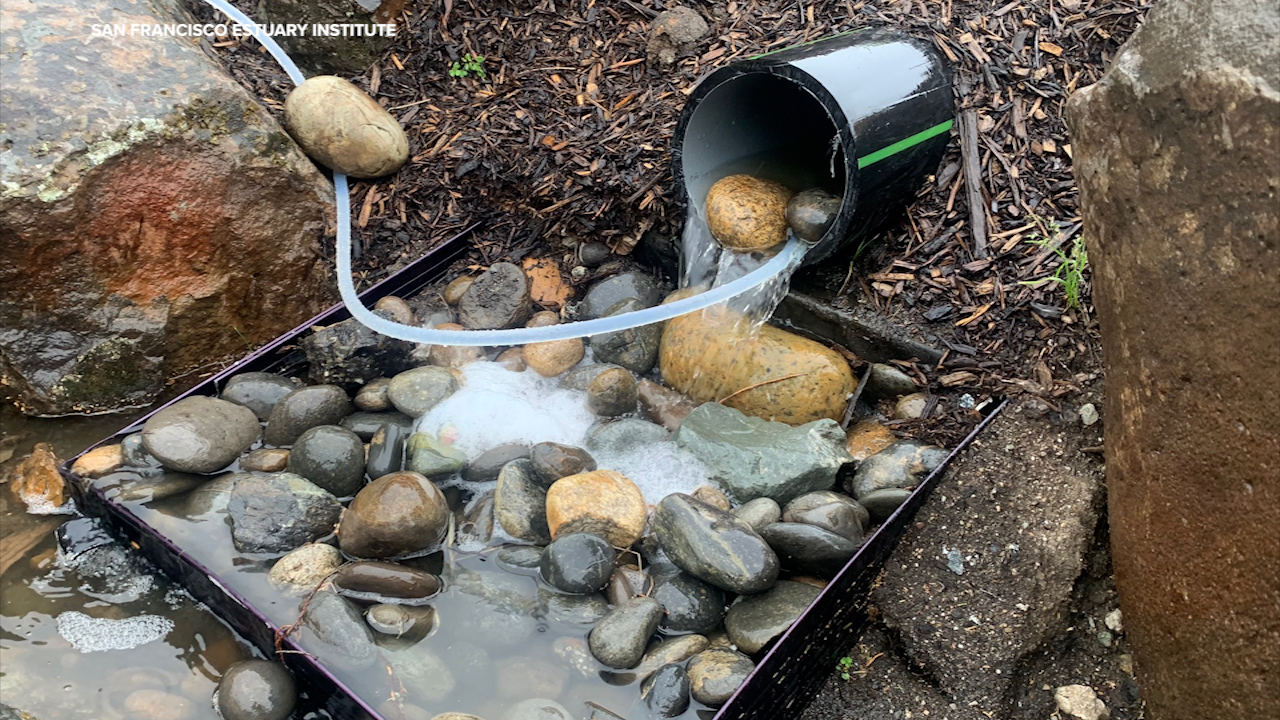
Melissa Foley, Ph.D., directs the institute's Resilient Landscapes Program. She says the team sampled stormwater running both into and out of rain gardens at four locations around San Francisco to test how effectively the soils and plants could filter out pollutants. They found the gardens substantially reduced levels of 21 different contaminants, with most levels cut by 90% or more.
But even more encouraging was the wide range of different pollutants. From regulated substances like PCB's and Mercury to the unregulated category known as emerging contaminants
MORE: Toxic pollutant from car tires reaching San Francisco Bay, scientists say
"We were looking at how do these rain gardens do with emerging contaminants that they weren't actually designed to intercept and to filter out? And what we found is that they actually do a pretty good job for most of them, which I think is really exciting and sort of a bonus add to these rain gardens," Foley said.


Foley and Sutton point to examples of emerging pollutants like recently documented microplastics, which include a substance shed by car tires that's toxic to several species of fish.
"So, this was actually a really exciting co-benefit that comes with this, with this type of technology where we're actually removing all kinds of additional chemicals and seeing a lot of more positive than we even knew were true of these rain gardens," Sutton said.
San Francisco now has nearly 600 rain gardens planned or built, with a goal of capturing roughly a billion gallons of water annually by 2050. The Estuary Institute team hopes the data will also encourage other cities to invest in the technology, creating a natural line of defense to better protect San Francisco Bay and our water system.