Siberian lab death sparks plague fears, but Bay Area experts say there's no need to panic
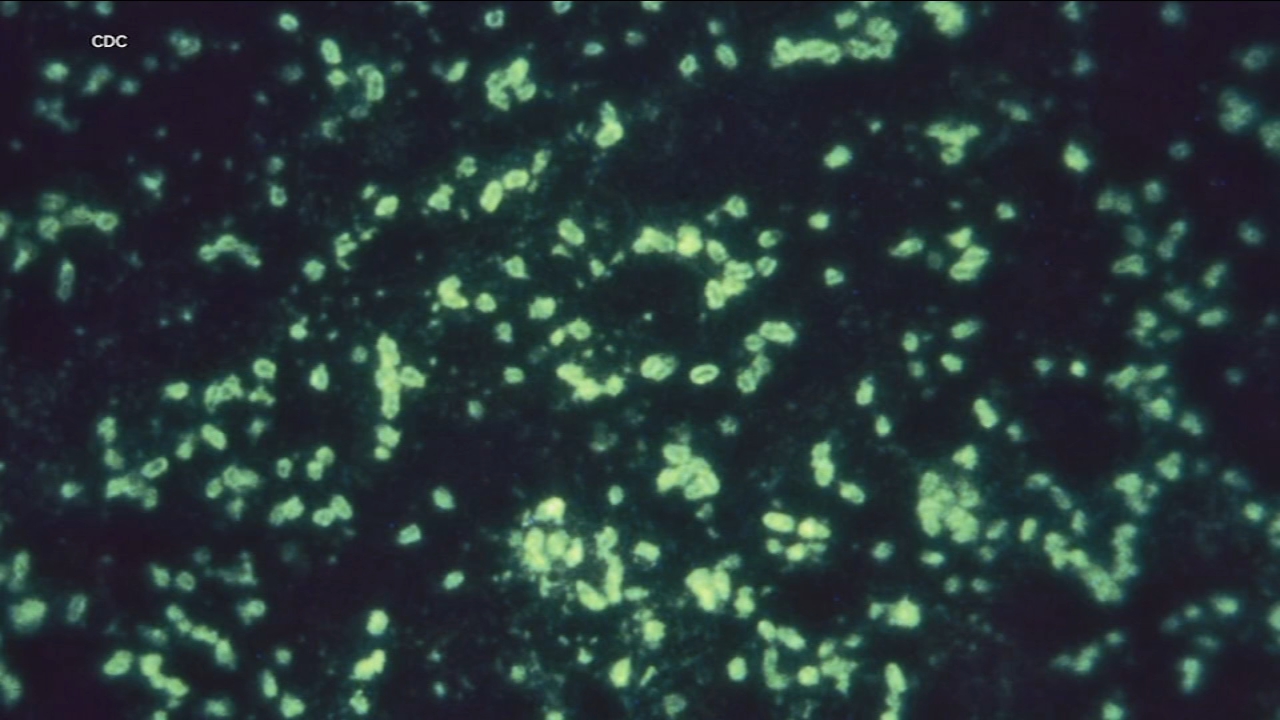

SAN FRANCISCO (KGO) -- Ever since the death of a 28-year-old woman who worked at a research lab in Siberia, fear about the suspected plague that's believed to have killed her has exploded.
Russia has only said she was diagnosed with "pneumonia of an unknown cause."
Some are even worrying this could be the start of a new pandemic.
RELATED: Russia reports worker at Siberian plague institute got pneumonia from unknown cause and died
But for now, those fears are overblown, says UCSF infectious disease expert Dr Peter Chin-Hong.
"It's not another COVID for several reasons," said Chin-Hong.
Chin-Hong says those reasons include the plague being harder to spread than coronavirus and us having more knowledge about the disease and effective ways to treat it.
"I'm crossing my fingers that it will sort of fizzle out and I'm thinking that's what most people are thinking," he said.
Russian officials have denied reports of an accident in the lab and say the situation is stable.
ABC News has confirmed at least three hospitals in the region have been quarantined, and around 200 people are said to be under observation.
In California, experts say Russia needs to be open about what was happening in the lab and the woman's official cause of death.
"I think what is disappointing about these incidents is that there is no transparency or little transparency here and that sort of clouds the whole field," said Melanie Ott, the director of the Gladstone Institute.
Here's what to know about the case and how experts are mobilizing after the death:
Pneumonic plague is a form of the disease that affects the lungs
The incubation period for pneumonic plague — which means lung-based, and is the most virulent form of the disease — can be as short as 24 hours, according to WHO. It's a less common but severe form that can spread between people through respiratory particles.
If untreated, the illness can be fatal, but recovery rates are high if detected and treated in time, WHO says.
Symptoms include shortness of breath and coughing, often involving the coughing up of blood.
The more common form of plague — bubonic plague — is caused by the bite of an infected flea, and can develop into open sores filled with pus.
Pneumonia is a form of acute respiratory infection that is mostly caused by viruses or bacteria, and is spread generally through contact with infected people or from airborne droplets. WHO says pneumonia is the single largest infectious cause of death in children worldwide.
What Russian officials are saying about the case
Through an international health alert system, Russian health officials on Tuesday said a full range of preventive measures had been carried out — including tracing of the deceased woman's contacts, medical monitoring and lab tests.
"Test results showed no presence of dangerous infectious disease pathogens in any of the contacts," said the note from Russian authorities, which was relayed to The Associated Press by WHO.
"Based on available data, laboratory test results, and health status, medical monitoring for 100% of the contacts has now been concluded," it said. "The epidemiological situation is stable and remains under monitoring."
The woman died at a hospital in Shelekhov, a town just outside the city of Irkutsk, and its mayor said the hospital was placed under quarantine. The top officials from Russia's national public health watchdog traveled to the region Friday.
On Monday, Kremlin spokesman Dmitry Peskov advised the public to follow official statements from the watchdog agency, Rospotrebnadzor, rather than "rumors or speculation."
WHO has mobilized its own experts to look into the case
Lindmeier, the WHO spokesman, told a U.N. briefing Tuesday that the institute where the woman worked "studies dangerous pathogens," including plague in a part of Siberia where the disease "occurs naturally in wild animals."
He said Russian officials have not yet asked for WHO experts to deploy to Russia, where authorities are "looking into whether pneumonic plague caused her death."
Russian authorities later told WHO that no case of plague has been recorded in Irkutsk, Lindmeier said.
"According to the authorities, the woman's illness initially presented as a typical acute respiratory viral infection," he said. "No case of plague or other high threat pathogen has been found."
Trump and Rubio comment on the case
U.S. President Donald Trump said Monday that he was watching the situation with concern and that the United States would be willing to help, though he said he had not spoken to Russian President Vladimir Putin about the case.
Asked about Trump's remarks, Kremlin spokesman Peskov said Tuesday that "it is always very good when mutual assistance is offered." He wouldn't elaborate further, deferring to Rospotrebnadzor.
U.S. Secretary of State Marco Rubio urged Russian authorities to share more information.
"Maybe there's nothing there. Maybe it's bigger than we thought. We don't know," he said at a news conference in Iceland.
"We encourage Russia to be more transparent and share more information with the world," Rubio said, adding this has so far been "quite limited, but hopefully that will change in the next few hours and days."
Ian Jones, professor of virology at the University of Reading, said that "plague carries a huge history and is still present in many parts of the world, including Russia," although because of modern living conditions and antibiotics, its potential was limited.
Dr. Glenn Wortmann, at the MedStar Washington Hospital Center, said the bacteria that cause plague don't "travel very far" and a person would "really need to be face-to-face" with an infected person to get pneumonic plague.
"The chance of this spreading widely in Russia and then extending here to the U.S. will not happen, not with this type of bacteria, because it's not spread easily and we have antibiotics to stop it from spreading," he added.
The Associated Press contributed to this story.