Study finds San Jose has highest infrastructure, capital asset burden in US

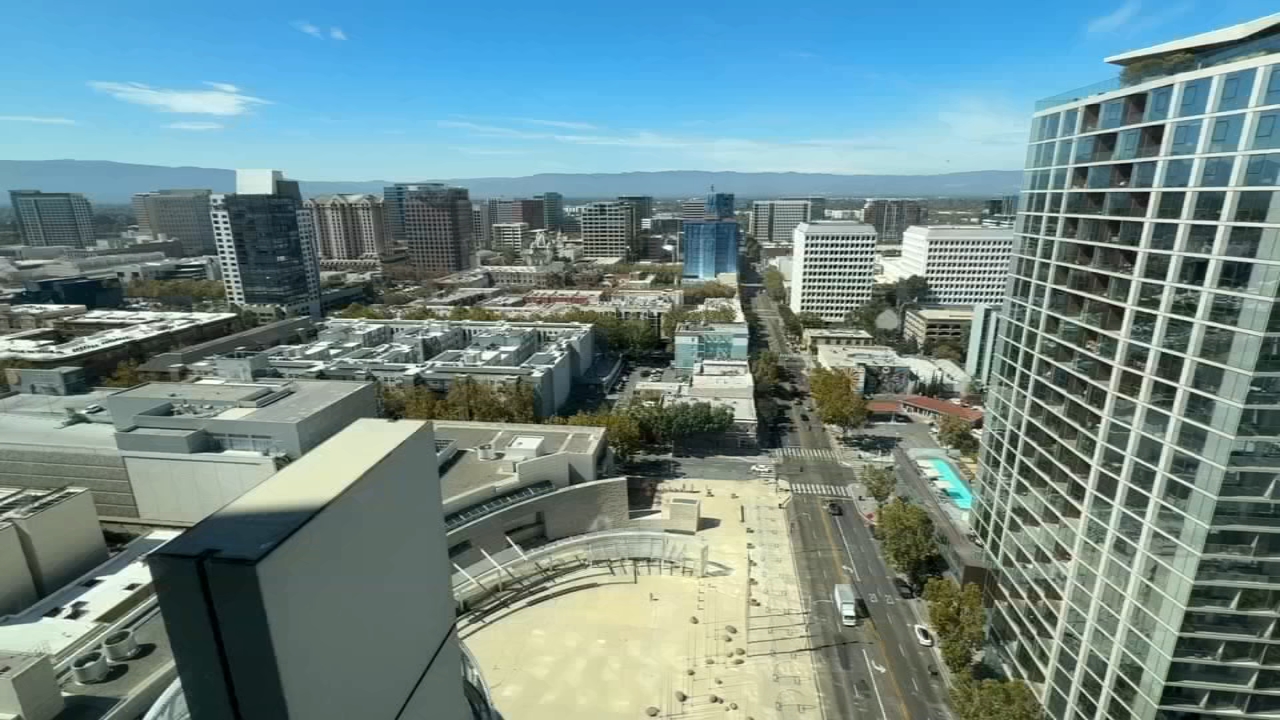
SAN JOSE, Calif. (KGO) -- Despite being one of the nation's wealthiest large cities, San Jose faces a multibillion-dollar infrastructure backlog that city officials, researchers and residents say has left roads, bridges and parks in need of significant repairs.
The problem is visible in neighborhoods across the city, where aging roads continue to deteriorate as officials struggle to keep pace with maintenance needs.
"It's a bumpy road like this, and when people come over they ask why is this road so bumpy?" said San Jose resident Ayesha Qazi. According to city officials and researchers, San Jose's infrastructure challenges stem in part from a longstanding fiscal imbalance.
The issue was examined in a 2016 study by the San Francisco Bay Area Planning and Urban Research Association, known as SPUR.
"Really trying to understand how had San Jose, which at that time was one of the wealthiest cities in the United States, gotten itself into a situation where it was really struggling fiscally," said Egon Terplan, SPUR's former regional planning director.
The study concluded that San Jose generates less revenue than many comparable cities.
MORE: San Jose open space to remain intact as power reliability plan gets approved
One reason, researchers say, is that the city has a large residential base but comparatively fewer major commercial employers to generate sales and business tax revenue.
As a result, less money flows into the city's general fund, which helps pay for road repairs, bridge maintenance, parks and emergency services.
The challenge has been compounded by decades of rapid growth. Unlike denser urban centers, San Jose expanded across a broad geographic area, increasing the amount of infrastructure the city must maintain.
"And one of the issues is, when you grow a lot and you grow horizontally in terms of spreading out a bit more, you're spreading your infrastructure costs out over a population that is not as dense," Terplan said.
The scale of the system is significant. San Francisco maintains approximately 1,260 miles of roads, while San Jose's street network exceeds 2,500 miles.
Residents say the effects extend beyond roadways.
"Also, a lot of littering out here, a lot of trash out here. Kids are playing around and they are picking up trash or they are not able to use certain equipment out here," said San Jose resident Octavio Gonzalez.
MORE: San Jose pilot program using AI to detect roadway obstructions sees positive results
City officials acknowledge the scope of the challenge. A report from San Jose's Department of Public Works identified a substantial deferred maintenance backlog.
"In that report we announced, through all the different bits of infrastructure, where we think we are short over the next 30 years, it's a very large number.

"What is that number?" ABC7 Eyewitness News reporter Lyanne Melendez asked.
"It's about $2.2 billion," said Matt Loesch, the city's director of Public Works.
Independent research has also highlighted the issue. Merritt Research Services found that San Jose carries the highest infrastructure and capital asset burden among large U.S. cities included in its analysis.
"The longer you wait to address your capital needs, the more expensive it is. At the same time it's becoming less reliable and potentially less safe," said Richard Ciccarone, president emeritus of Merritt Research Services.
City leaders point to progress made since voters approved Measure T, a $650 million infrastructure bond measure, in 2018. "We've done about 1,000 miles of our roads," Loesch said.
MORE: San Jose celebrates city's 1st green stormwater infrastructure project
The bond funding has also supported projects including fire stations, the city's emergency operations center and a new police helicopter hangar.
"We have built out fire stations, we've built out several pieces of key buildings whether it's our emergency operations center, a hanger for our police helicopter that is coming online in the next month or so," Loesch said.
Measure T funding has also been used for bridge improvements, including rehabilitation of the Cropley Avenue overpass.
Transportation officials say the additional funding has significantly improved bridge conditions citywide.
"Before we had that Measure T money, 11% of our bridges were in the 'poor' category. Since we've gotten that funding, we've been able to bring that up so that we only have 1% in the 'poor' category," said Colin Hayne of the San Jose Department of Transportation.
Even with those improvements, city officials acknowledge that fully addressing the backlog will require substantial additional investment.
As San Jose continues to grow, leaders say future bond measures or new revenue sources may be necessary to tackle the remaining infrastructure needs and prevent maintenance challenges from worsening.