Here's where Scott Wiener, Connie Chan stand in SF congressional race to succeed Nancy Pelosi



SAN FRANCISCO (KGO) -- For the first time in nearly four decades, San Francisco voters are preparing to send someone other than Nancy Pelosi to Congress.
The race to succeed the former House speaker has become one of the nation's most closely watched Democrat-on-Democrat contests, pitting two San Francisco lawmakers against each other in a battle over the future of the Democratic Party.
State Sen. Scott Wiener and San Francisco Supervisor Connie Chan share many of the same progressive priorities, from expanding access to health care to more government investment in housing.
But with Election Day approaching, their differences are becoming increasingly apparent, particularly over how aggressively to regulate the technology industry, how to address California's housing shortage and whether taxing billionaires is the answer to the state's health care funding crisis.
In separate one-on-one interviews with ABC7 Eyewitness News reporter Monica Madden, both candidates laid out their priorities for Congress and made their cases for why they are best equipped to represent San Francisco in Washington.
VIDEO: One-on-one with Scott Wiener
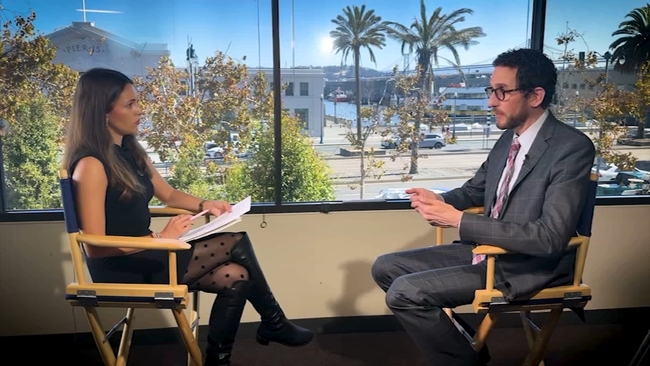
For Wiener, the argument centers on his legislative experience.
"I'm the only candidate in the race with a track record of, getting big things done," Wiener said.
VIDEO: One-on-one with Connie Chan
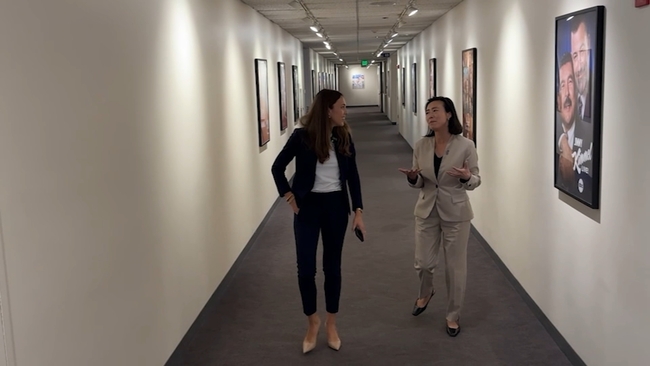
Chan, meanwhile, is campaigning as a labor-backed progressive who says she will challenge the influence of wealthy donors and corporations.
"I work for the people, not the billionaires," Chan said.
AI regulation: Two approaches to Silicon Valley
Perhaps nowhere are the candidates' differences more pronounced than on artificial intelligence, an industry reshaping San Francisco's economy and emerging as a defining issue in the congressional race.
Both candidates believe the federal government has failed to adequately regulate the technology. But their proposals reveal competing approaches to managing its risks.
Chan is calling for a national moratorium on new data centers powering AI until Congress establishes stronger safeguards.
She also wants the federal government to take a more direct role in approving AI technology before it reaches consumers, comparing the process to how the Food and Drug Administration evaluates medications.
"Very similar to the way that we approach FDA approval for any medications, be it during the experimental phase, be it when it's actually launching—there's a there's a process, a rigorous process, for approval and inspection," Chan said when asked whether government agencies should approve updates to AI systems before their public release.
Chan said the length of a data-center moratorium would depend on how quickly Congress establishes those regulations. She clarified that her proposal would focus particularly on facilities powering AI.
Wiener, who authored the first-in-the-nation regulations for AI safety, also supports stronger federal oversight but has emphasized balancing public safety with technological innovation.
He wants Congress to establish safety testing and auditing standards, whistleblower protections, emergency shutdown requirements and a federal regulator capable of keeping pace with the industry.
"Bottom line, AI needs to benefit humanity, not harm humanity," Wiener said.
He also wants to expand access to AI development beyond the largest technology companies, pointing to his work establishing CalCompute, a public computing resource intended to support researchers and smaller developers.
"I think we should embrace the benefits, but we must get ahead of the risks," Wiener said.
Chan has criticized Wiener's signature AI legislation, SB 53, as insufficient, arguing that regulators should intervene during the development process rather than relying on safeguards designed to respond to dangerous outcomes.
The candidates also addressed concerns that the AI boom could become an economic bubble, with potentially significant consequences for California.
Chan said the federal government should not rescue companies if the industry experiences a downturn.
"We should not bail out the AI industries," she said.
Wiener instead emphasized preparing workers for potential job displacement, warning that the country's limited social safety net could leave Americans particularly vulnerable to economic disruption.
"We need to be, having smart regulations to protect the public, to protect public health and safety. And we also need to get ahead of job losses," he said.
Where do they stand on housing?
Housing is another major dividing line, particularly given Wiener's record of pushing legislation in Sacramento to accelerate construction.
Wiener said his first bill in Congress would focus on housing affordability and expanding the federal government's role in construction.
Among his proposals is a program that would pay cities $10,000 for every new home actually built, rather than simply approved. He said the money could be used for local infrastructure improvements, including transportation, sewer systems and water infrastructure.
Wiener also wants to expand social housing, a mixed-income model in which rents are tied to household income.
"I would like to see something called social housing, which is mixed income housing where people pay rent as a percentage of their income. It's very successful in parts of Asia and Europe," Wiener said.
He proposes financing a broader federal housing initiative by reversing tax cuts for wealthy Americans and corporations enacted under Trump and former President George W. Bush.
Chan also supports expanding federal housing investments, including rental assistance, first-time homebuyer programs and tax credits to encourage construction.
But she places greater emphasis on affordability requirements and helping existing residents remain in their homes.
The candidates' disagreement extends to Chan's record on the San Francisco Board of Supervisors.
Critics have pointed to the Richmond District, which has recorded the fewest new housing approvals of any supervisorial district since Chan took office, according to the San Francisco Planning Department.
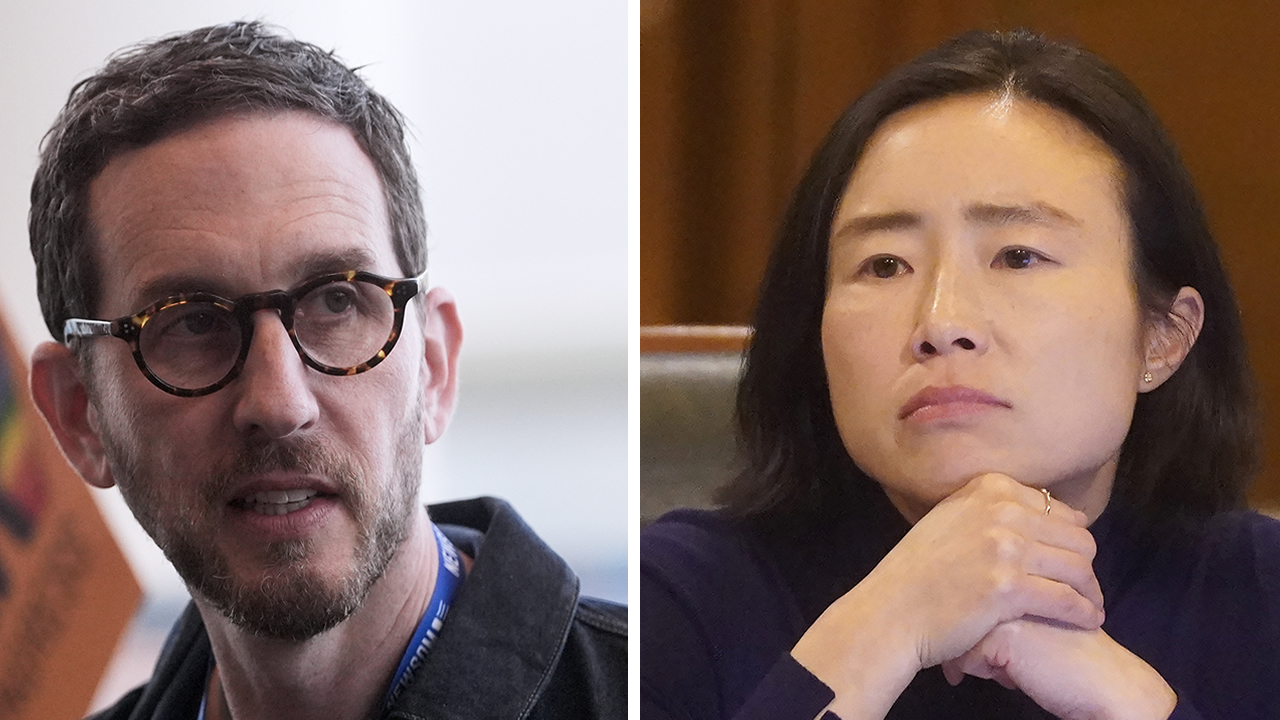


Asked about that disparity, Chan pointed to a 98-unit affordable housing development for seniors and another 76 units in the pipeline at the former Alexandria Theatre.
"We're really excited about the housing that we're building, in the Richmond. But we also know that it is important to help people to stay housed," Chan said.
She also cited expanded rental subsidies and support for small businesses.
Asked whether she would support federal conditions requiring cities to build more housing, Chan said she would support requirements focused on ensuring new housing is affordable to middle-income residents.
Wiener, meanwhile, has directly criticized Chan's housing record, arguing that San Francisco needs a representative willing to champion new construction.
"My opponent has been the top obstructionist of new housing and public transit improvements in San Francisco," Wiener said.
Healthcare: Shared goals, sharp disagreement over Proposition 40
Both candidates support moving toward a Medicare for All system, but they disagree over a proposed California billionaire tax intended to help offset federal health care cuts.
Proposition 40 would impose a one-time 5% wealth tax on California residents with at least $1 billion in assets.
Chan supports the measure, arguing that California needs immediate funding to protect health care services threatened by federal cuts.
"Well, look, we are actually having a health care crisis right now because, again, Trump's cuts to our health care system in California, and if we can actually problem solve this crisis at this moment with one time, 5% on 200-something individuals, and so that we can ease and protect millions of Californians is absolutely the right thing to do right now," Chan said.
She acknowledged the need for a longer-term solution, arguing that Congress must ultimately reverse the federal cuts.
Wiener opposes the measure, despite supporting higher taxes on wealthy individuals and corporations.
His concern is that using a one-time revenue source to finance ongoing health care expenses would create uncertainty once the money runs out.
"I'm not supporting Prop 40 because it is a one-time wealth tax to fund, health care, which is a very not one time expense," Wiener said. "So it creates instability and it will create a cliff. And then what are we going to do?"
Both candidates say reversing Trump's Medicaid cuts would be a top priority in Congress.
But their proposals also differ when it comes to more immediate health care reforms.
Wiener wants to expand California policies he helped enact, including a $35 monthly cap on insulin copays and stronger requirements for insurance coverage of mental health and addiction treatment.
He also supports reducing prior authorization requirements and cracking down on pharmacy benefit managers, the intermediaries involved in negotiating prescription drug prices.
Chan wants to challenge insurance company monopolies, expand prescription drug price negotiations and restore federal support for medical research.
She also envisions a public insurance option as a step toward a single-payer health care system.
Corporate money and the Democratic Party's direction
Beyond specific policies, the race has become a contest over the direction of the Democratic Party itself.
Chan has made her refusal to accept corporate campaign contributions a central part of her campaign, contrasting her approach with what she describes as the influence of wealthy donors and the technology industry.
"I'm not a corporate Democrat," Chan said.
"I have not and will not take any corporate, money."
Wiener has focused less on donor politics and more on his record of passing legislation, arguing that Democrats must demonstrate they can deliver tangible improvements to people's lives.
He said rising housing, health care, child care and energy costs have contributed to Americans' frustration with government.
"When people decide and conclude that government is failing them and that government is not, taking action to lower their cost of living to make their lives more sustainable, they may take a risk on someone like Trump," Wiener said.
The two candidates also recently split over the leadership of the San Francisco Democratic Party.
Chan called for party Chair Nancy Tung to resign following the party's endorsement of District 8 supervisorial candidate Manny Yekutiel, after he ended his campaign amid sexual assault allegations.
Wiener defended Tung, calling Chan's demand a political attack while acknowledging that the party needs to reform its process for handling sexual misconduct allegations.
Chan argued that apologies are insufficient and party leaders must face greater accountability.
The disagreement underscores the increasingly personal and ideological divisions within San Francisco's Democratic establishment.
Foreign policy: A divide over military aid to Israel
The candidates also differ on U.S. military support for Israel, although both expressed concern about civilian casualties and the destruction of communities in Gaza.
Chan supports a full arms embargo on Israel and argues that American foreign policy should prioritize humanitarian assistance, diplomacy and self-determination.
Wiener opposes U.S. funding for Israel's military and the sale of offensive weapons, including bombs, but supports allowing Israel to purchase defensive systems intended to protect civilians.
He also expressed support for continued U.S. assistance to Ukraine and Taiwan in defending themselves against potential aggression.
Both candidates said the United States should support countries defending themselves against invasion, but their positions differ on where to draw the line between defensive and offensive military assistance.
Who can succeed Nancy Pelosi?
The race is also testing the political influence of Pelosi, whose endorsement of Chan gave the supervisor one of the most coveted endorsements in California Democratic politics.
Wiener has secured support from other prominent Democrats, including former Rep. Katie Porter, reflecting divisions among party leaders over who should represent San Francisco in Congress.
And after nearly 40 years of Pelosi representing San Francisco, the answer will help determine not only who speaks for the city in Congress, but what kind of Democrat voters want representing them in the next chapter.