AI boom brings new wealth to Bay Area, and new worries about growing affordability crisis


SAN FRANCISCO (KGO) -- Jennifer Lum has a good job in tech, a two-year-old and a front-row seat to the extraordinary wealth being created by the artificial intelligence boom.
But like many working people across the Bay Area, she's thinking carefully about what the region's next chapter could mean for her family.
"We have a unique housing situation that allows us to live here," said Lum, a senior account executive at Slack Salesforce. "But if it were to fall through, I could see us having to move."
That tension was difficult to miss at Dreamforce, Salesforce's annual conference in San Francisco that was held this month -- where artificial intelligence dominated conversations about the future of work and technology.
EXCLUSIVE: Salesforce CEO Marc Benioff touts AI for all as Dreamforce returns to San Francisco
Outside the conference halls, another transformation is unfolding alongside it.
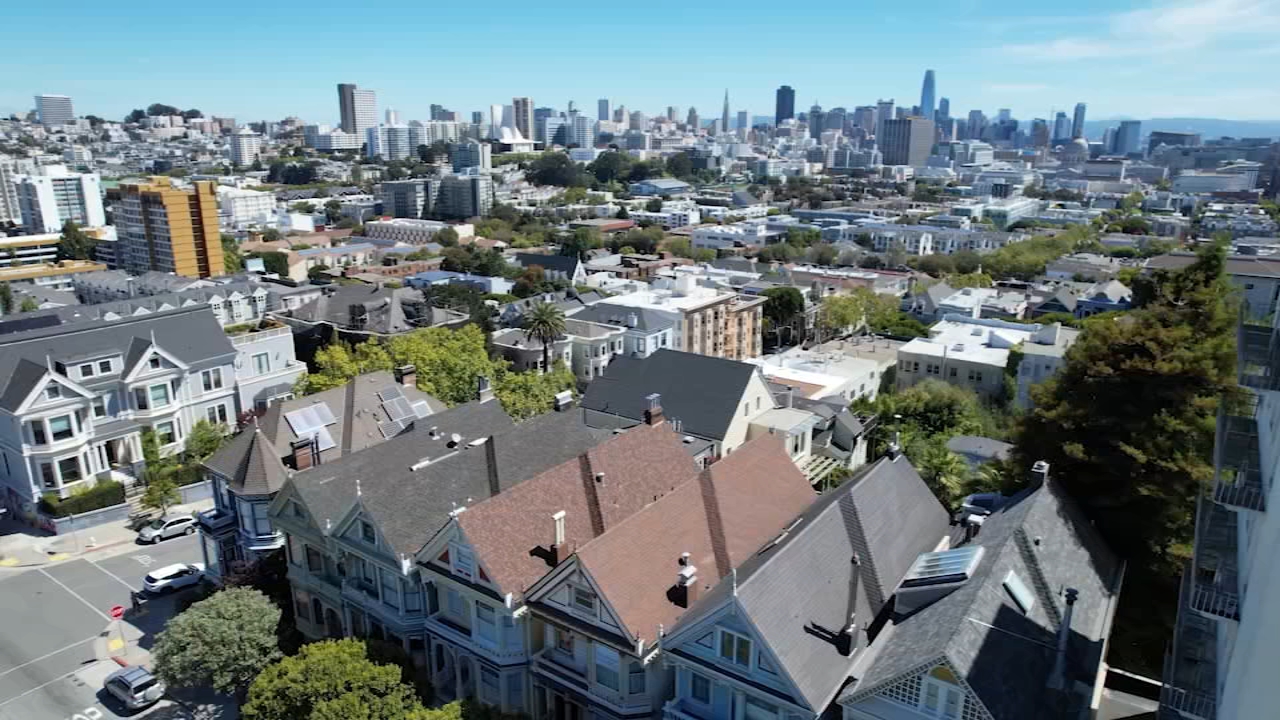
The Bay Area is bracing for a potentially enormous influx of wealth tied to private AI companies. Redfin estimates current and former OpenAI and Anthropic employees hold nearly $200 billion in after-tax equity at the company valuations modeled in its analysis. That estimated wealth is equivalent to roughly 29% of the value of all residential real estate in the San Francisco metro area, according to Redin's analysis.
The comparison is illustrative, not a prediction that AI employees will buy anything close to that share of the region's homes. But Lum said she is already seeing the effects of private tech wealth firsthand.
"I'm also seeing people buying houses with pre-IPO stock," she said. "So it's going to get interesting."
MORE: Buying homes with pre-IPO OpenAI stock? New trend going viral in San Francisco
For a region that has lived through multiple technology booms, the dynamic is a familiar one: enormous new wealth arriving in a place where housing was already scarce and expensive.
Jesus Oroseo remembers the last time it happened.
As a Bay Area native and longtime software developer at Salesforce, he lived through the dot-com boom and bust. He sees similarities in the frenzy surrounding AI, though he remains relatively sanguine about the technology itself.
"There's been a lot of craziness then and it seems like it's happening again," Oroseo said. "We're going to get through this, and we're going to come out on the other side."
His concern is less about whether AI survives the hype cycle than what happens to the people trying to live alongside it.
MORE: AI IPO boom set to transform San Francisco, starting with soaring real estate prices
Oroseo bought his Fremont home about 25 years ago, a decision that now puts him in a dramatically different position from younger workers trying to enter the Bay Area housing market.
"I'm on the lucky side," he said. "I just wonder how people can make it with those kind of prices."
Some of his colleagues haven't.



"There's people who can't make it or it's just too expensive to make it," Oroseo said. "And I've had some friends who have packed up and left."
That experience complicates a familiar image of the Bay Area's affordability crisis, one that places highly paid tech workers exclusively on the winning side of rising housing costs.
MORE: 'A million dollars over asking': AI wealth is fueling housing market frenzy in San Francisco
Oroseo doesn't describe himself as financially struggling.
"I'm certainly not underpaid by any means," he said. "And it gets tough."
Neither does Nakul Srikanth.
He is a Salesforce software engineer in his 20s and the most unabashedly optimistic of the three workers ABC7 News interviewed at Dreamforce. While Lum described having "a bit of an existential crisis" over a technology she initially embraced, Srikanth rejects much of the apocalyptic rhetoric surrounding AI.
"I don't really buy the whole doomsday stuff," he said. "It feels like a lot of fun. We're helping people."
MORE: Heads of AI firms tell United Nations Security Council that it could be a risk to all humanity
But his optimism about the technology doesn't extend neatly to the economy it could create around him.
"Even someone like me who has a good job would probably get priced out too," Srikanth said.
Their concerns come as affordability remains top of mind for voters across California.
A new Public Policy Institute of California survey found 70% of likely voters believe California is divided into two economic groups: the "haves" and the "have-nots," as affordability remains a central issue heading into the November election.
For Lum, the contradictions leave her somewhere between enthusiasm and apprehension. While she still believes the technology has the potentially for helping humanity, she has deeper concerns about how it will be deployed and who might get left out.
"It's not like the genie is going to go back into the bottle," Lum said. "But hopefully us normal people can use it to our benefit."