From Puerto Rico to North Carolina: The workers who helped build Fort Bragg

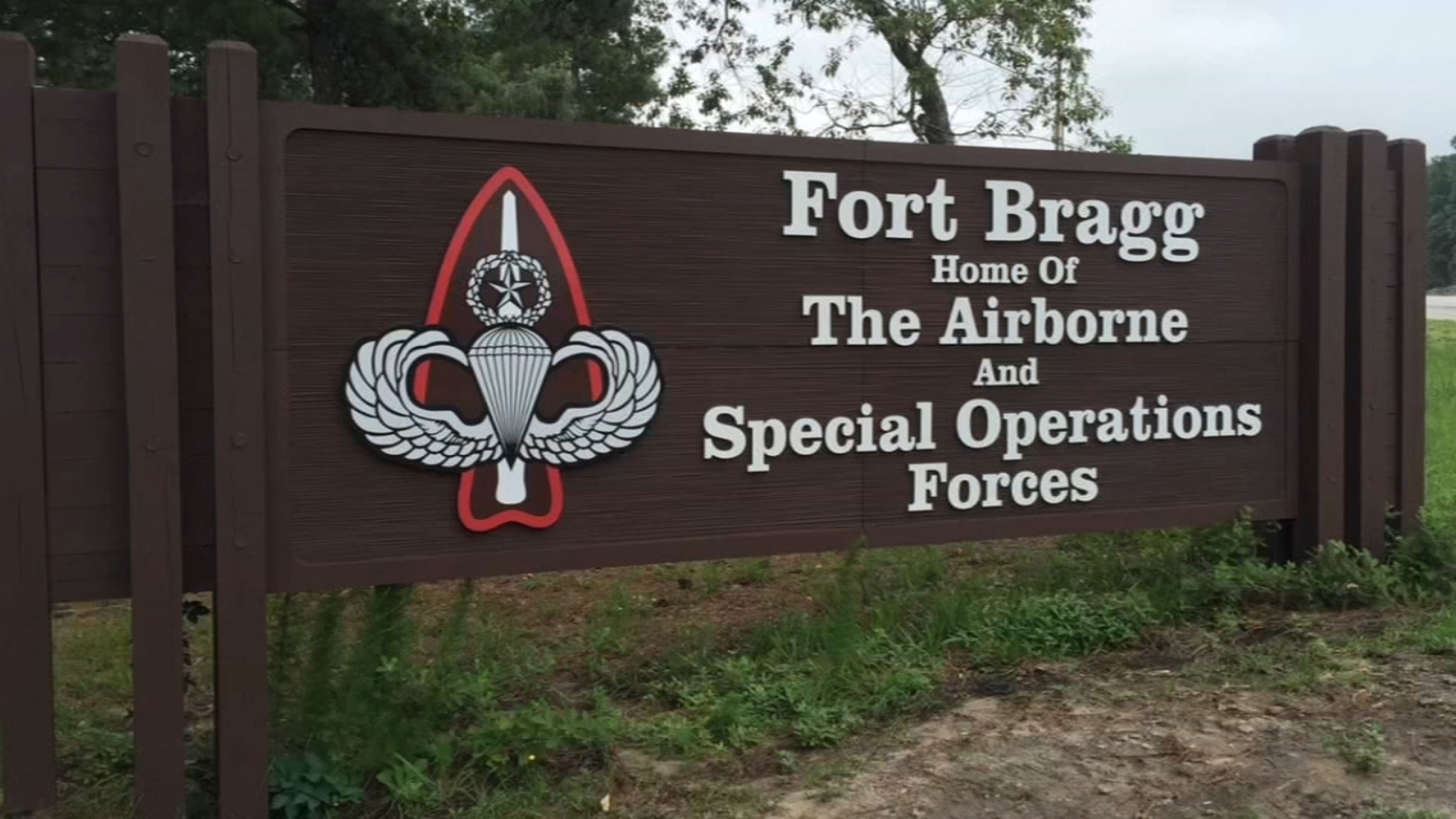
FORT BRAGG, N.C. -- More than a century ago, Puerto Rican migrant workers played a pivotal role in building what would become one of the U.S. military's largest installations.
Their skill, labor, and resilience helped shape the foundation of Fort Bragg and left a lasting legacy that continues to be felt today. Their names may not be the ones most often associated with Fort Bragg, but their work and legacy remain an essential part of the installation's foundation.
"There's a lot that Camp Bragg, which becomes Fort Bragg, is not really going to be available immediately to the U.S. Army without these men, these men from Puerto Rico," said Nicholle St. Leone, an archives technician at Fayetteville State University (FSU).
While Fort Bragg is now synonymous with airborne operations, combat readiness, and special forces, the story starts long before the missions, at the very beginning, with the building itself.
"In 1918, the U.S. government requested for about 75,000 Puerto Ricans to come to America for various labor-based projects," St. Leone said. "The U.S. government gave a man by the name of James Stewart of a company in New York the contract to bring the laborers. About 1,700 Puerto Ricans were requested to come."
By that time, the Jones-Shafroth Act had granted U.S. citizenship to people in Puerto Rico.
In 1918, about 1,700 skilled Puerto Rican laborers, many from Ponce and Mayagüez, were recruited to North Carolina to help construct Camp Bragg.
But their journey was not without hardship.
"Unfortunately, there was an issue of racism that was occurring. A lot of them had supervisors who were very much anti-Puerto Rican or anti-non-American, if you will, even though they had just been processed as naturalized citizens. And so they had to deal with a lot while they were working to construct Camp Bragg. For them to come over, especially in the post-World War One era, because war had just ended in trying to help with constructing Camp Bragg. There is a bit of a language barrier, and with that that might also have been a bit of hostility because it was, 'Oh, you need to speak like us. You need to be able to understand me," St. Leone said.
At home, Puerto Ricans faced food shortages as corporate sugar plantations took over, leading to widespread unemployment and poverty.
In North Carolina, the laborers cleared forests, hauled lumber, and built the early barracks at Camp Bragg, often under difficult conditions.

"Puerto Rican laborers were told that, oh, yes, you'll receive housing. You'll receive, you know, clothing, supplies, etc... But what was not acknowledged was that the housing that they were given would not be winterized. So they were coming in the fall months, and the temperatures were getting cooler. And that may have also affected their ability to fight against influenza," St. Leone said.
That history leads to the Main Post Cemetery at Fort Bragg, where at least 28 Puerto Rican laborers are buried after dying during the influenza pandemic of 1918.
The Puerto Rican connection to Fort Bragg lives on in veterans like Patrick Vazquez, a senior military instructor at UNC Pembroke, who served more than 30 years.
"Every Puerto Rican says I'm boricua. I'm an American," Vazquez said. He said he was unaware of the contributions Puerto Rican laborers made to Fort Bragg's early history.
"I did not know that in the beginning. It took me a while, and then learning about it just makes me more proud of what I do and for the reason that I do."
Vazquez now trains the next generation of junior cadets, drawing inspiration from a long tradition of Puerto Rican service.
"You have the Borinqueneers, a 65th Infantry Regiment, which was in 2016. They were granted the Congressional Gold Medal. So you have Puerto Ricans that have participated in every conflict, defending the same constitution that everybody else wearing the same uniform does," he said.
St. Leone said the workers left more than buildings behind, they left a record of people who spoke up for their rights, even when it came at a cost.
Laborer Rafael Marchán documented the conditions and filed formal complaints with the commissioner of Puerto Rico.
"That is courtesy of her name, Dr. Jimenez of the University of Texas at Austin. I think I came across her writing on that subject matter, where a correspondence was sent to talk about the labor issues that were going on. So to see that we were actually, that the laborers at Fort Bragg who were essentially these Puerto Ricans, they were actually fighting for labor rights. And that's a very powerful thing to see," St. Leone said.