New findings emerge in Philadelphia home investigation linked to unidentified, missing women
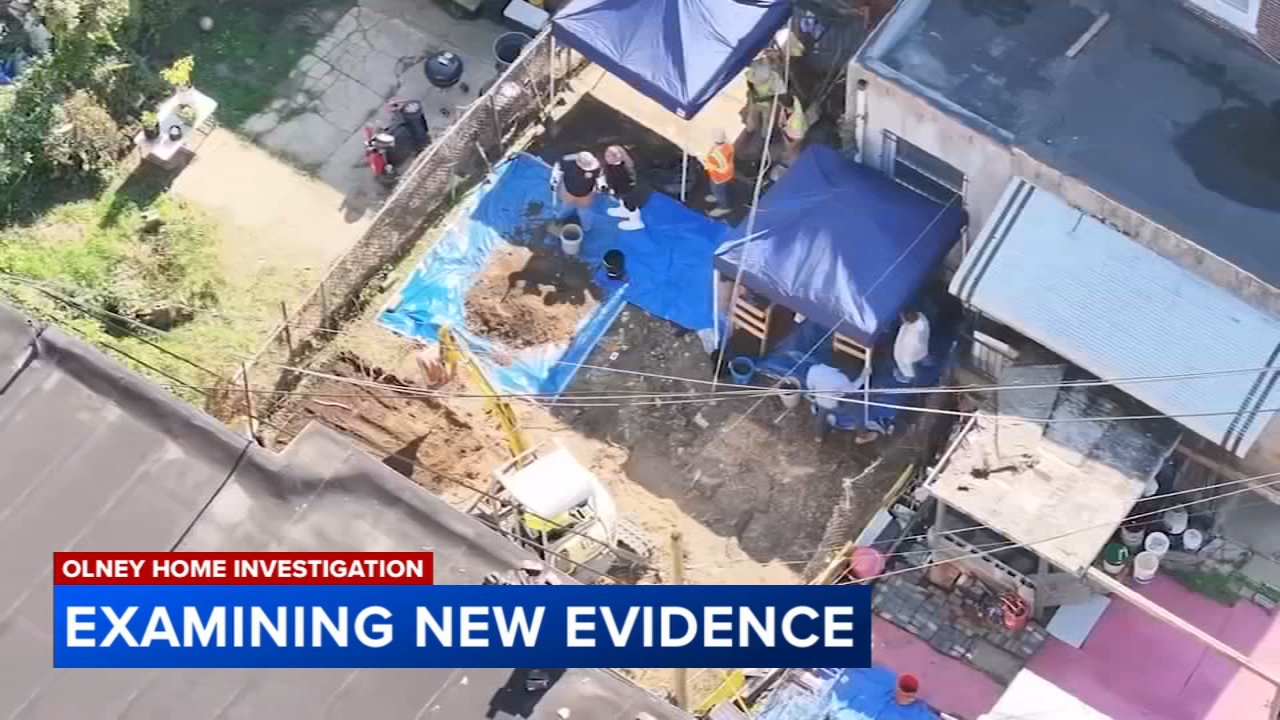

PHILADELPHIA -- Investigators searching a property in Philadelphia's Olney neighborhood have determined that bones found last week were animal bones, according to sources.
Sources also said that adipocere, a wax-like substance that can form during decomposition, was discovered during the ongoing excavation of the property.
"Adipocere is a tissue which can be used to identify a person," said Fabio Oldoni, an associate professor, program director and forensic geneticist at Arcadia University.
Oldoni noted that if DNA is significantly degraded, recovering usable genetic evidence can become difficult.
Experts noted that adipocere is not unique to human decomposition and can also be found in animals, meaning additional testing will be necessary.
READ MORE | Timeline of investigation into missing women connected to Horsch Philly house
Oldoni said investigators will need to rely on multiple forms of evidence as the investigation continues.
The search has focused on the home of the late Raymond "R.C." Horsch and his son, Eugene.
Last week, Philadelphia police and the FBI used luminol at the property, a chemical that can reveal traces of blood not visible to the naked eye. Sources said investigators received a positive chemical reaction, though additional testing remains pending.
RELATED | Investigators use luminol inside Olney home as search for evidence linked to missing women continues
"It's important to remember these DNA association can provide important lead but doesn't show when deposited or what happened when crime committed," Oldoni said.
Questions remain about the case as investigators continue gathering evidence.
Scott Duffey, a retired FBI agent with more than 20 years of experience, said the investigation is likely to be lengthy.
"You do want to have that one piece, that one thing somebody can say, 'This is a match to an already identified missing victim,'" Duffey said.
Authorities have said at least seven missing or unidentified women have been connected to the Chew Avenue home. Two of the women were seen on video appearing deceased, but Duffey said investigators will need additional evidence.
"To show their end beyond film. From what I've heard, it's dark and atrocious for law enforcement; they need to go further," Duffey said.
He added that investigators still face significant questions.
SEE ALSO | Who was woman with Eugene Horsch during Philly arrest? Here's what we're learning
"Who is to blame? Who is behind the camera? Then who is doing what ultimately leads to the homicide of an individual? Those questions will be tougher," Duffey said.
Investigators are expected to return to the property Wednesday morning to continue excavating the backyard. Once that work is complete, they plan to move to the front yard, according to sources, who said they hope to finish the excavation by the end of the week.
Authorities have not said whether Eugene Horsch had been seen in any of the digital files reviewed by investigators.