A walk through historic Black Panther sites in Oakland, where the party was founded 60 years ago

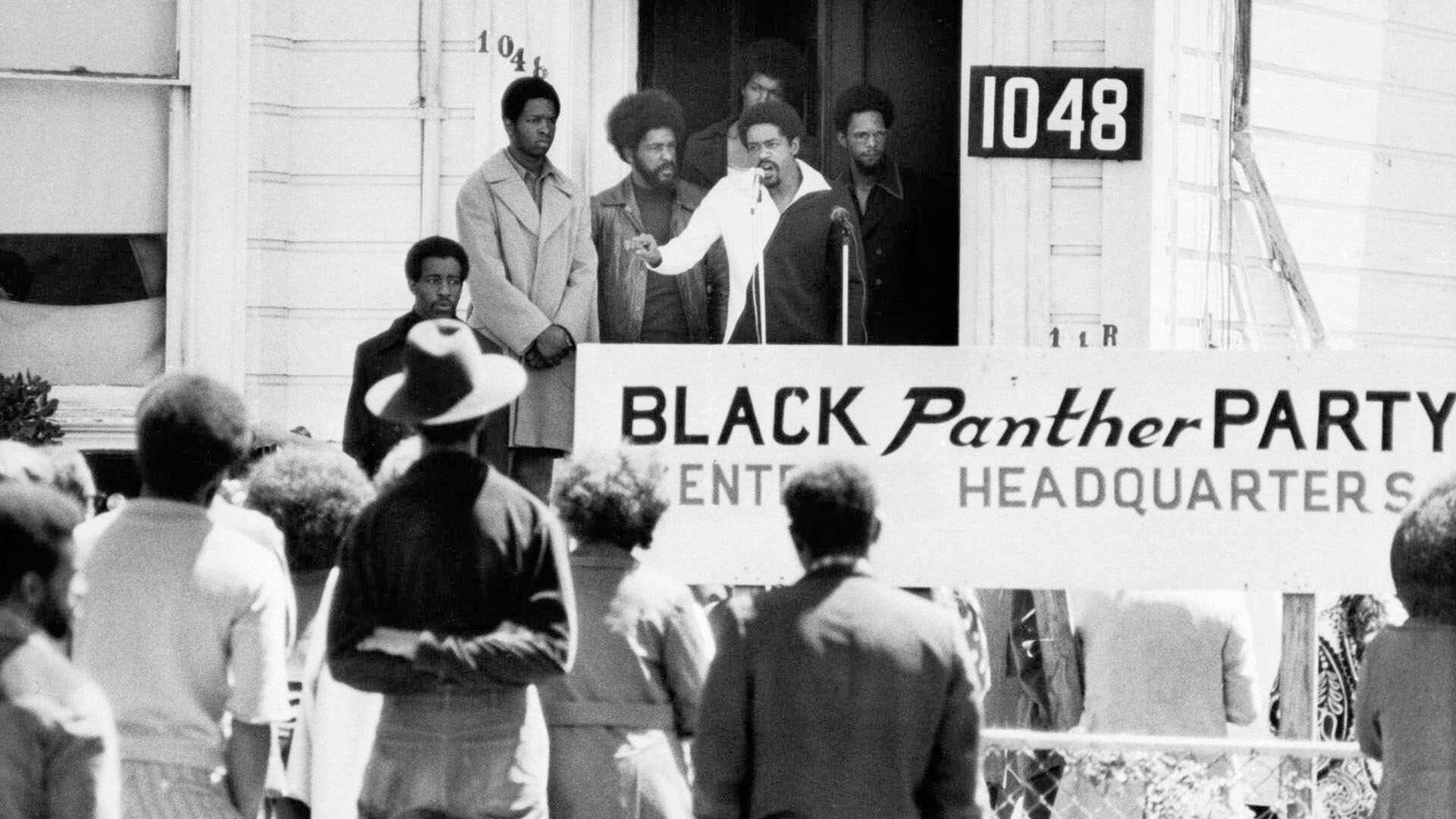
OAKLAND, Calif. (KGO) -- The Black Panther Party was founded in Oakland 60 years ago, but even though the organization dissolved in the early 1980s, it's legacy can still be seen and felt around the city.
There are countless murals honoring the Black Panthers and their complicated history.
"This is the central headquarters of the Black Panther Party," said Fredrika Newton as she pointed to a house on Peralta and 11th Street.
Newton is the widow of Huey Newton, who founded the Black Panther Party for Self-Defense in 1966 with Bobby Seale, whom he met while they were students at what is now Merritt College.
The term "self-defense" was key. Members armed themselves and followed Oakland police around the city as a response to incidents of police brutality.
They also published a newspaper that documented racial struggles. The newspaper had a circulation of 300,000 copies and was distributed around the country.
"Up there in that room, that's where the party newspaper was written actually. People would lock themselves up in that room and create content for the newspaper," Fredrika Newton.
The Black Panthers had two previous offices, including one on Grove Street, now Martin King Luther Jr. Way.
In 1969, two Oakland police officers shot through the front window as tensions rose between the party and law enforcement.
"The Panthers lived under the FBI's counterintelligence program... to discredit, disrupt, destroy Black leaders, whether tapping their phones, sending informants into the party," said Xavier Buck, executive director of the Huey P. Newton Foundation.
When the Black Panthers learned of an impending police raid, they moved their headquarters to the house on Peralta Street for safety.
"It was decided that we would move into the heart of the Black community, so in case that happened, the community could be aware of what was going on," Fredrika Newton said.
The house had an unofficial plaque commemorating the historical value of the site, but that has been taken down.
Preserving significant locations related to the Black Panther Party has been difficult. There is only one official, permanent monument to the Black Panthers' legacy in Oakland. It's a bronze bust of Huey Newton on a green space in the middle of Mandela Parkway and Dr. Huey P. Newton Way.
"We wanted to place it here to really correct misinformation out there. The Black Panther Party was demonized. It was ostracized. We were omitted from history," Fredrika Newton said. "There are so many beautiful murals around Oakland that we love. However, murals can become temporary. We wanted put Huey's image into stone, because he was the rock of West Oakland."
The bust is a block away from where Huey Newton was killed in 1989 by a member of the Black Guerrilla Family prison gang.
There are 13 Black Panther Party sites of significance in Oakland. Some, like the former site of St. Augustine's Church, are in disrepair.

In 1969, the Black Panthers set up the first free breakfast for school children program at the church, one of many community programs established by the party.
Shortly afterwards, FBI Director J. Edgar Hoover put out memo about the Black Panther Party and called them the greatest threat to the internal security of the country.
"Most people initially would think it's because they were the ones carrying guns. But he wasn't worried about the guns. He was actually more worried about that free breakfast program and the way the Panthers were organizing in the community," Buck said.
The Panthers created 65 survival programs, including free food and clothing giveaways, free rides for seniors, medical clinics and screening for sickle cell anemia, which disproportionately affects Blacks.
A lot of that organizing took place at De Fremery Park in West Oakland.
Fredrika Newton recalls the large gatherings at the park during food giveaways.
"It was an expression of love in a real material way. It was joyous and intense, filled with a feeling of optimism and determination and anger at the current conditions," she said.
The Black Panthers began calling the location Bobby Hutton Park, to honor 17-year-old Bobby Hutton who was killed by police during a confrontation in 1968.
Hutton was Huey Newton's and Bobby Seale's first recruit.
"I don't want to sanitize what the party was doing. This has been a contested history, not just nationally, but even here in Oakland, where there are a lot of supporters. It was a battleground for the party, and it's a battleground for its legacy as well," Buck said.
A National Park project to recognize significant Black Panther sites in Oakland was squashed by the Trump administration, which pulled a grant to preserve the sites.
The Huey P. Newton Foundation is working with local and state officials to recognize historical landmarks that tell a more complete story of the Black Panther Party, whose tactics still evoke debate to this day.