El Niño Effect: How climate pattern could reshape California's winter
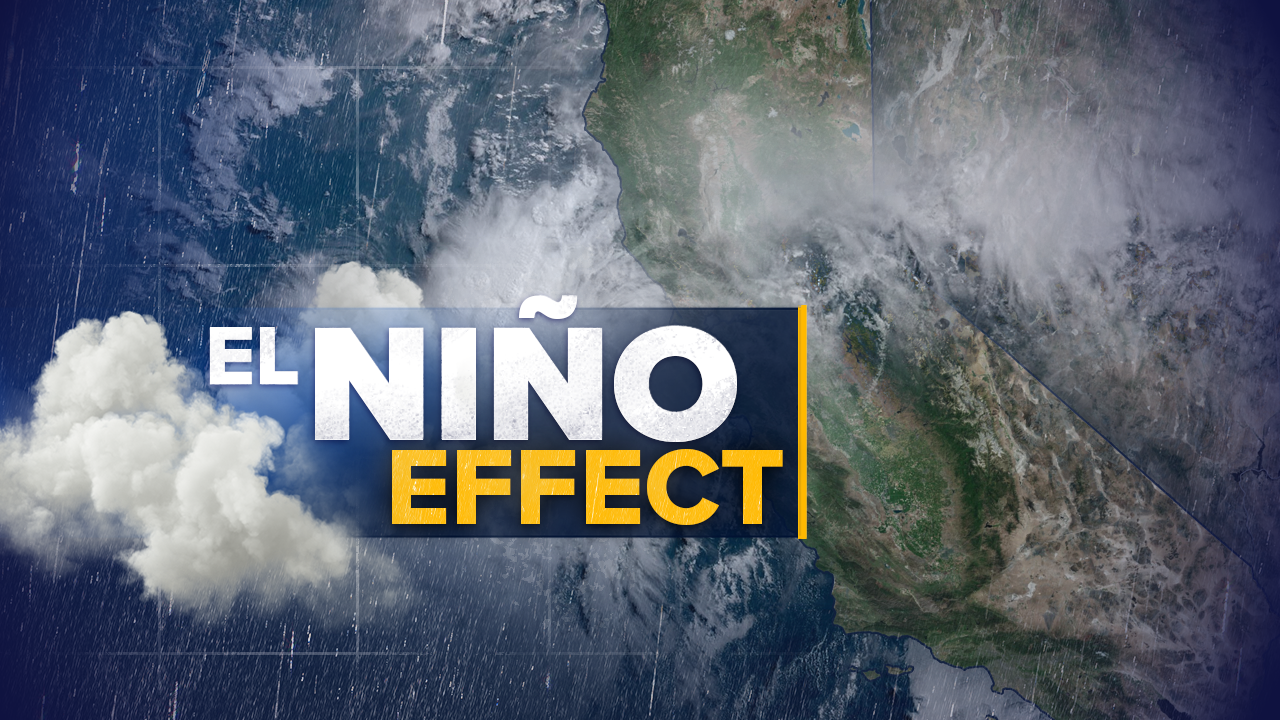

California could feel significant effects from El Niño's return, a climate pattern linked to some of the state's most memorable winter storms.
Past El Niño events have brought relentless rain, flooded communities, collapsing hillsides, and powerful surf along the California coast. But experts caution that El Niño does not guarantee a specific outcome.
A powerful El Niño can increase the likelihood of a wetter winter, though where storms make landfall and how frequently they occur can determine the severity of impacts across the state.
Watch the full special in the media player above.
California also faces different conditions than in previous El Niño years. Sea levels are higher, more people live in flood-prone areas, and years of drought have created challenges that make additional water no simple solution.
From Southern California to the Central Valley and the Bay Area, attention is focused on what scientific research suggests, what past El Niño events can teach, and what could be at stake if the current El Niño develops as forecast.
In a special report titled "El Niño Effect," we're examining the potential consequences of the climate pattern's return and the factors that could shape California's winter in the months ahead.
How does El Niño work
El Niño starts in the equatorial Pacific Ocean, stretching from Hawaii to South America. Two key changes occur during an El Niño pattern: ocean waters warm and wind patterns shift.
Under normal conditions, trade winds blow west along the equator from South America toward Asia, pushing warm water away from the Americas.
During El Niño, those winds weaken, disappear or, in some cases, reverse direction. As a result, warmer water remains closer to the Americas and is often pushed farther north toward California.
Those changes can also affect the jet stream, a major pathway for storms across the Pacific. During El Niño, the jet stream often shifts farther south.
As the storm track shifts south, storms that would typically hit Washington and Oregon can instead be directed into California.
The result is often a wetter-than-normal winter for California.
Those wetter conditions can lead to a variety of impacts across the state.
El Niño history offers warning for California
At San Francisco's Exploratorium, climate scientist Melissa Lunden is using more than a century of tide records to show that periods of unusually high water levels often coincided with El Niño years.
She pointed to the severe El Niño events of 1982-83 and 1997-98, which brought flooding, storm damage and widespread impacts across California.
Historical examples include homes lost to erosion, flooded communities, mudslides and more than $1 billion in estimated damage during the 1982-83 event.
As California awaits the outcome of the current El Niño cycle, Lunden is helping create a public exhibit highlighting the effects of sea-level rise and extreme weather.
Southern California coastal erosion
Powerful surf and coastal erosion are causing extensive damage along Orange County's coastline, impacting homes, beaches and infrastructure.
Waves have damaged or destroyed homes, prompting residents to scramble to protect their properties.
Popular beaches have lost access, while high tides have exposed decades-old infrastructure at a well-known Newport Beach surf spot.
UC Irvine professor Brett Sanders said reduced sediment reaching Southern California beaches has contributed to long-term sand loss, increasing vulnerability to erosion.

Sanders said elevated tides and El Niño-related surf have intensified the damage and underscored the seriousness of the situation for coastal communities.
Crews are building berms, placing temporary boulders, and replenishing sand as officials prepare for even higher tides expected later this winter.
Increased concern for debris flows near SoCal burn scars
Los Angeles County crews are removing sediment from Devils Gate Dam and Reservoir as Altadena continues recovering from the Eaton Fire and officials prepare for a potentially wet winter.
The reservoir can hold up to 600 million gallons of water, and crews are working to ensure it has enough capacity to capture storm runoff and debris.
Officials say the work is especially important because fire-destroyed vegetation no longer helps stabilize the ground, increasing the risk of debris flows.
At Devils Gate alone, crews will remove 20,000 cubic yards of sediment as part of a countywide effort to clear 1.3 million cubic yards from reservoirs.
Contractors involved in the project say they are extremely busy preparing for the El Niño season, and for some, including Eaton Fire survivors, the work is deeply personal.
Public Works is also urging residents to clean drains, stock up on sandbags, and consider additional insurance coverage ahead of winter storms.
Impact on California's agriculture industry
El Niño is raising concerns in the Central Valley, where storms in March 2023 flooded more than 100,000 acres in the Tulare Lake Basin.
The flooding caused major agricultural losses and exposed weaknesses in aging water infrastructure, prompting efforts to build additional groundwater recharge basins and explore on-farm recharge projects.
Early findings from an ongoing Fresno State study suggest pistachio orchards can withstand weeks of flooding, but some levees damaged in 2023 remain unrepaired.
Farmers and local officials say the region is better prepared than it was three years ago, but they remain concerned about the potential impacts of heavy rainfall and flooding.
California weighs water storage ahead of El Niño
California's water storage levels are slightly above the historical average heading into a potentially strong El Niño season, with some Southern California reservoirs near capacity and many Northern California reservoirs at normal levels.
California State Climatologist Michael Anderson said managing heavy storm years depends on improved forecasting, quick decision-making and monitoring Sierra Nevada snowpack to protect public safety while maximizing water supplies. He said the state's water system proved it can handle major weather events, pointing to the record rainfall and flooding experienced in 2023.
Experts also see groundwater recharge as a growing opportunity. Researchers at Stanford's Doerr School of Sustainability have mapped underground aquifers that can capture surplus stormwater and store it for future use.
California has invested billions in aquifer recharge projects, and supporters view the upcoming El Niño season as a chance to bank more water underground. Water managers, however, still face the challenge of balancing hopes for a strong Sierra snowpack with the risk of storms arriving too quickly and overwhelming water capture systems.
El Niño may reshape California marine life
California marine researchers are closely watching the developing El Niño cycle for clues about how warming ocean conditions could affect marine species along the state's coast.
Scientists at Stanford's Hopkins Marine Station are tracking great white sharks to study how changes in water temperature and prey distribution may alter migration patterns.
Researchers say warmer waters could concentrate some shark populations in California while forcing others to move north or south in search of food.
In Southern California, experts report more sightings of juvenile great white sharks as warmer water from Baja California moves north.
Scientists also warn that shifting prey populations could draw whales closer to shore, increasing risks from shipping traffic and fishing gear.
Researchers also noted two endangered olive ridley sea turtle nests along the Southern California coast, the report describes them as the first documented sea turtle nests on the West Coast. Scientists say the animals are likely moving north as ocean waters warm.
As ocean temperatures continue to change, researchers say California's marine ecosystem may experience both predictable and unexpected shifts, making ongoing monitoring critical for understanding how species respond to a warming environment.