How NFL players cope with CTE risks, fears and internal debates
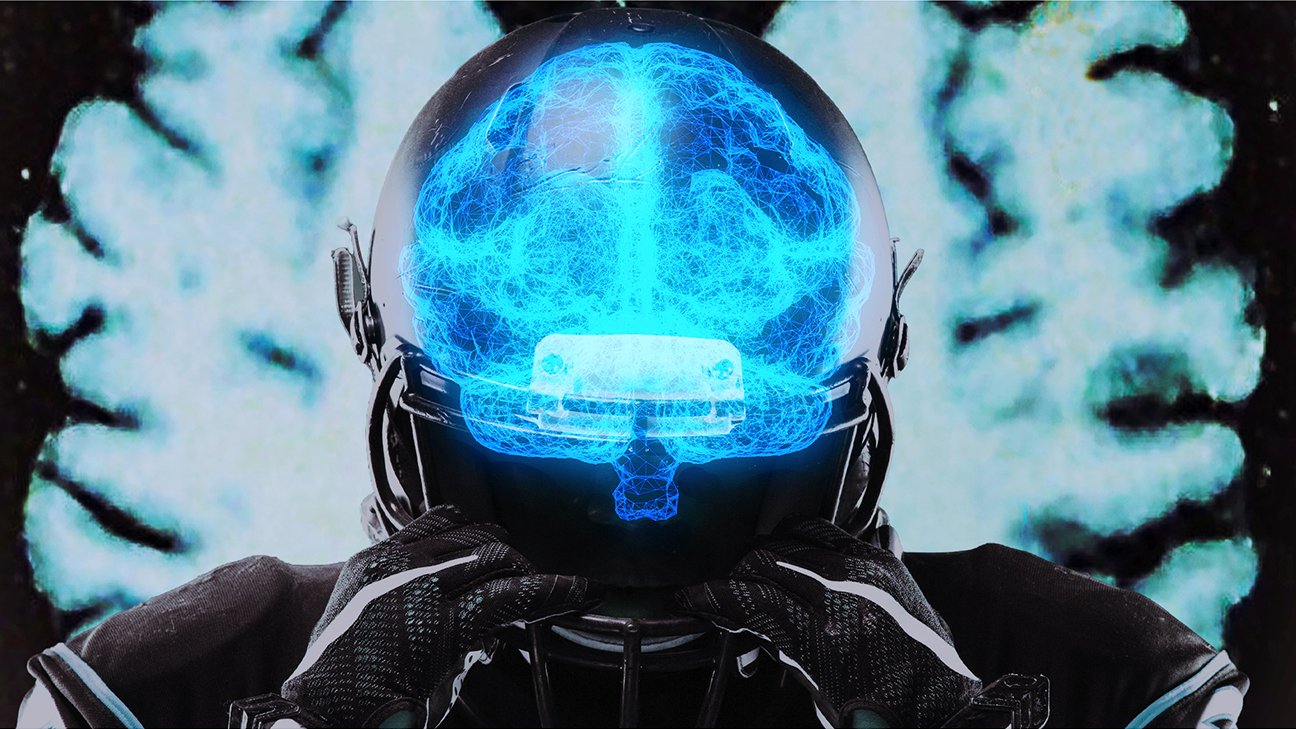

ON A HOT summer day, with sweat dripping from his nose and his body decked out in football pads from head to toe, Will Fries catalogs every step he takes in hope of avoiding chronic traumatic encephalopathy, the progressive, degenerative brain disease known as CTE.
A diet heavy in fish and omega-3 fatty acids.
Glasses that block blue light.
Never getting fewer than eight hours' sleep.
Fries, a 28-year-old Minnesota Vikings guard in his sixth NFL season, was 17 years old when the movie "Concussion" was released in 2015 and 18 when NFL executive Jeff Miller sat in front of a congressional committee and acknowledged a link between football and CTE.
"Your football life is short," Fries recently told ESPN, "and then you've got the rest of your life to live."
Researchers believe CTE is caused by repeated subconcussive hits to the head, the kind that occur on nearly every play at every level of tackle football and in other contact sports. There are no specific symptoms or treatment for CTE, in part because it can't be diagnosed until after death.
Studies of CTE, the brains of athletes, and the effects of head trauma increased dramatically after links between the disease and football began to emerge alongside reporting that the NFL had led a two-decade campaign to deny such a link before Miller's comments in 2016.
A study published this summer in the British Medical Journal estimated that at least one in four former NFL players who died between 2016 and 2021 had CTE at the time of their deaths. A study published in January found that suicide rates among former NFL players were 2.6 times higher than NBA and MLB athletes from 2011 to 2019. A 2024 study reported nearly a third of former NFL players believed they had CTE. That group was five times more likely to have suicidal thoughts than those who reported they did not believe they had CTE.
Ahead of this season, ESPN asked more than 30 active and retired players how the increased attention on brain trauma has affected their lives and career decisions. All were aware of CTE to at least a small degree, an advantage that thousands of their predecessors did not have. Some acknowledged CTE has become a topic of dark humor, including Pittsburgh Steelers safety DeShon Elliott: "Sometimes you might draw a blank and forget something from last week and you go, 'Oh my God, it's that CTE.'"
Like Fries, some players follow what they consider best practices to minimize their chances of getting CTE. NFL rules changes and attempts to improve equipment -- such as Guardian Caps -- instill confidence in some players. Others consider brain health out of their hands and ultimately an acceptable tradeoff for the benefits of an NFL career.
"I think [for] any football player, that crosses your mind," said 26-year-old Arizona Cardinals receiver Michael Wilson, who's in his fourth season. "But also, that is so far down the line and ... the legacy, the financial gain that you can carve out for yourself to me outweighs the risk of CTE, especially as a wideout.
"How cool would it be to leave a legacy that generations of my family, the Wilson legacy will talk about? And if CTE is a consequence of that, then so be it. But I also could sleep good at night knowing that I was the one person in the Wilson family that ended up changing our financial, socioeconomic class, like you can point it back to me and say, 'Michael's the one that did it.' So for my kids' kids' kids' kids, they can always look at me and if CTE is a consequence of that, then I'm willing to bet on myself that hopefully I won't get it, but if I do, then I made a decision and I chose that."
Weeks after the interview, Wilson signed a three-year, $75 million extension.
"A lot of guys want to have families and that's a goal of mine," the Vikings' Fries said. "Would I trade football for anything? Absolutely not. I love putting in the work and I know the risks of it, and I'm doing everything I can."
Retired players, especially those who played before the connection between CTE and football was recognized, react to such views with varying emotions.
Matt Hasselbeck, an NFL quarterback for 17 seasons who announced his retirement on March 9, 2016 -- five days before Miller's appearance at the congressional hearing -- recently announced he will donate his brain for CTE study after his death. In an interview with ESPN, Hasselbeck had pointed words for New York Giants running back Cam Skattebo, who when asked this summer on a podcast whether CTE was real, said: "No, it's an excuse." Skattebo later apologized, saying his response was a "tasteless joke."
"CTE is a very real thing," Hasselbeck said. "And we have guys who are very conscious of it. We also have guys who are whatever the opposite of that is. We have guys that are rookie running backs slamming their heads into everything with their helmet. And then they're making light of it and they're making jokes of it. And they're, like, 'I don't care. You only live once.' And then they have to come back and apologize.
"I'm thinking of Cam Skattebo this year. And I played with tons of guys like that. And it's funny in the moment. Teams like it because you're like, 'Oh, you're a warrior. I'll go to battle with you any day.' But it doesn't need to be that way. And there's a balance there where you can't live in fear, but also this is a real thing."
The NFL's efforts to reduce concussions through major rules changes, helmet technology and technique changes have been well-documented. Regarding CTE, the NFL's chief medical officer Dr. Allen Sills, who has been in his role for over nine years, said the league is following three precepts.
"We have to continue to do the research to try to understand how these pathologic changes might be caused in life symptoms," Sills said. "No. 2, we have to make sure that people don't self-diagnose and that they get properly evaluated, and that we treat symptoms that we know we can treat. And No. 3, we just double down on our efforts to reduce and prevent head contact where we can."
In a statement this summer, the NFLPA said in part: "We all share a responsibility to advance research, improve access to care, develop better treatments, and support those affected by the long-term impacts of the game."
FOR MANY NFL players, the movie "Concussion" marked the introduction to the risks of long-term brain injuries from playing football. Among other events, the film dramatized the discovery of CTE in former Pittsburgh Steelers center Mike Webster, who died in poor physical and mental health in 2002 at age 50.
One NFC defensive lineman said CTE was "a tough thing to think about." An NFC defensive end remembered watching the movie in high school with his mother and said: "It was one of the reasons she didn't want me playing football."
The reminders have continued this summer, most recently when researchers in July determined former Dallas Cowboys defensive end Marshawn Kneeland had CTE when he died by suicide eight months prior.
And the family of former San Francisco 49ers star Aldon Smith, who died suddenly at the age of 36 in June, is awaiting the results of testing after donating his brain to the Boston University CTE Center to determine whether CTE played a role in his death.
For some players, a concern for CTE and other long-term health risks prompted them to end their careers earlier than expected. One of the top rookies in 2014, linebacker Chris Borland, retired after just one season at age 24 citing concerns about head trauma. Former Tampa Bay Buccaneers offensive lineman Ali Marpet retired in 2022 at the age of 28. In an interview with ESPN earlier this month, he described it as "one of the hardest decisions I've made in my life."
He added, "For me, my personal value system [prioritizes] health. And if that's going to be the case, I want to live authentically and in line with those values. And if that's going to be the case, then football isn't the most conducive for that, as much as I loved it."
Vikings running back Aaron Jones Sr. is one of many players ESPN spoke with who explained why they play in spite of dangers.
"This has been my life," said the 31-year-old Jones, who's in his 10th season. "This is all I know. I love to get out and compete. And anytime I can get out and compete, I will.
"If it was easy, everybody would be doing it. I still say, 'What a privilege we have because a million people will still trade places with us.' It's something that I've always dreamed of and prayed for. So I'm here. I'm not going back and I'm thankful that God has given me this opportunity."
And the financial aspect can't be ignored, at least for some players, when it comes to why they take the risk.
"I think it just relates to what your situation is in life," said 33-year-old Indianapolis Colts tight end Mo Alie-Cox, who's in his ninth season. "Some guys have made more money, so it's easier for them to just step away. Whereas some guys are scratching and clawing. They're going to play 'til the wheels fall off."
For some, it might be easier not to focus on the risks.
"I think it's better not looking too far into the future and thinking, 'Man, how will my head feel, or how will my hip feel in 10, 15 years,'" said 25-year-old Indianapolis Colts receiver Josh Downs, who is in his fourth season. "It's what comes with the game.
"Other sports have it as well. You just have to roll with the punches and keep going."
Vikings safetyJoshua Metellus, 28 and in his seventh season, put a finer point on that thought.
"I gave my life to this game," Metellus said. "If you take [my life] from me, hey, that's what's supposed to happen. And my family knows that. I take every step necessary to make sure my body's where it needs to be."
Even some players who have experienced symptoms that are consistent with head trauma don't regret their careers. Former All-Pro running back Larry Johnson, who retired in 2011 after nine seasons, told ESPN that he asks his daughter to drive him places because he has had too many instances of blanking out at the wheel. While he said he has significant emotional swings and can "snap" at a moment's notice, he has no second thoughts.
"I wouldn't be in the position I am now without the experiences that I've had, not just on the field, but also off of it," said Johnson, 46. "Football teaches a lot when it comes to manhood, adversity, mental toughness, emotional toughness, that all comes with playing a sport hard and entrenching yourself in that sport. And you do become a better man if you use the tools to be successful in it.
"But I can't say I would change anything. I mean, I'm not bitching about it. I didn't ever bitch about it when I was getting 400 carries in a season. I wouldn't bitch about anything, [including] the consequences of that. I took everything, as far as what football was, up front."
NOTHING ABOUT ELLIOTT'S game would suggest the Steelers safety is terribly concerned about football's dangers.
His violent training camp collision with teammate DK Metcalf provided a vivid example. Elliott also talks the talk, saying shortly after signing with the Steelers in 2024, "It's football. I feel like if you are scared of being physical, get off the field."
But even a player of Elliott's profile cannot ignore what is known about CTE.
"You start getting kind of scared," said the 29-year-old Elliott, who's in his eighth season. "But I've tried my best to wear helmets that are better for me, make sure I keep my head out of it, try to do more wrapping and rolling [on tackles].
"When I was younger, I always tried to just hit anything, whatever body part. But I'm just trying to take care of my body and my mind now because when I do have kids, eventually, I want to be able to just run around with them and spend time with my grandkids as well."
NFL players can often carry themselves with a sense of invincibility. They are generally young, strong and healthy. But concern emerged from many when the topic turned to the potential for CTE.
"Of course [I worry]," said an NFC defensive end. "I mean, we're at a day and age where science has led us to the openings of what CTE is, how it's caused. Of course.
"And you realize in this sport how, obviously, guys have been affected by it. And it's one of those things where it's a part of the sport."
He added, "Clearly, at the front of my mind. And at the same time, it's understanding that there's hazards in every job."
The risks can weigh not only on the players, but with their loved ones, too.
"If it was up to my mom, I'd probably [have] retired six years ago," an NFC defensive end said.
Washington Commanders quarterback Marcus Mariota, 32 and in his 12th season, has had similar discussions at home.
"You have to have tough conversations with your family and your kids and make sure that this is really what you want to do," he said. "Because at the end of the day, the studies are showing that it is pretty relevant across all players. ... We've had discussions about it and we're all comfortable with where we're at. As long as they're good with me chasing this, then I'll keep doing it."
Mariota persists despite understanding the potential danger.
"I understand that playing long opens up for more of those [risks], and I'm OK with it," he said.
Numerous players said they take a measure of comfort in the rules changes and improvements in equipment. Metellus, for instance, said he upgraded his helmet last season for the first time in his career to ensure maximum protection. He moved from a model that was not recommended by the NFL to one that was considered safer.
New Orleans Saints star receiver Chris Olave began using a Guardian Cap this season. The 26-year-old Olave is in his fifth season and has sustained four confirmed concussions. Olave said he considered retiring at the age of 24 because of the head trauma.
"You know all the head injuries I've had in my career, so [a Guardian Cap] was just a decision I made," Olave said on Sept. 14, after the season opener. "I've got kids now ... It's not all about football. I want to live a regular life after I'm done with football."
But it remains unclear how much equipment changes such as Guardian Caps will impact CTE rates. Some experts are skeptical, like Boston University CTE researcher Michael Alosco, a lead investigator at the BU CTE Center and a co-author of the recent study estimating one in four former players have the condition.
"Some of these [mitigations], I don't think they fully address the problem," he said. "I think it's a violent game."
THERE ARE 68 players on active/reserve NFL rosters who had a father play in the league, according to the Elias Sports Bureau. Those players not only inherited a love for the game but also a willingness to accept the risks.
"I would [let my son play] because of the lessons that I've learned," said one NFC defensive back. "It's hard because I've had a lot of injuries, and I would never want to see my son go through how many surgeries and all this other stuff.
"But at the same time, it taught me toughness. It taught me discipline. It taught me how to respect others, treat others how you want to be treated. There's so many valuable life lessons that I think football taught me."
Jacksonville Jaguars center Robert Hainsey, who's 28 and in his sixth year, concurred: "As much as the most influential people you can think that have shaped you in your life, the game of football has done that for me for the last 20 years. So, there's so much good that comes out of the game. And, yeah, I definitely would let my kids play. I hope they want to, because I do think it's such a great game."
One recurring theme among those interviewed was current players expressing concern about their sons playing when too young. Many of today's players began playing while in elementary school, but BU's Alosco pointed out the longer someone plays football, the more hits they endure.
"I would let my kids play football but not until later," said the NFC North defensive end. "Not like those 6-year-olds out there. ... You watch the videos on Instagram and a lot of them are spearing each other with the crown of their helmets."
The NFC defensive lineman said he began playing in the third grade, but he would not allow that for his son. "I wouldn't start him so young. I'd probably let his body develop."
Flag football would be the initial preference for Houston Texans linebacker Azeez Al-Shaair, though he would be open to his kids playing tackle as they get older.
"They're not playing tackle football until they are older than I was when I started," said the 29-year-old Al-Shaair, who's in his eighth season. "I didn't start until I was, really, 14 years old. I was 12 when I first tried and I quit for good reason, because it's a physical game.
"I probably wouldn't even let my kids play tackle football until they're about 14, 15 years old."
Of the players asked specifically about their kids or future children playing football, only one objected to the idea.
"I'll be honest, I don't see myself wanting my son to play," said the NFC North defensive back. "I'd rather him play basketball just because this sport is getting so dangerous."
He added, "Since I'm in it and I'm seeing how much pounding we're doing ... it kind of wakes you up and you're like, 'Man, it's dangerous.'"
And yet, after all the science, the news of struggling former players and the internal wrestling players do within themselves, the NFL is thriving. Stadiums are full. Television ratings are setting records. Revenues are at historic levels.
Pro football seems here to stay so long as there are players willing to sign up for all that comes with it.
"My dad played in the league, and he used to tell me and my brother, 'Football's a rough game and you're gonna get hurt,'" Colts receiver Downs said. "When you're a kid, you don't listen. Now, I realize when I'm older, you know what? He wasn't wrong.
"But it's a risk that a lot of guys are willing to take."
Contributing: Todd Archer, Ben Baby, Sarah Barshop, DJ Bien-Aime, Rich Cimini, Courtney Cronin, Rob Demovsky, Mike DiRocco, Mike Kaye, John Keim, Brooke Pryor, Katherine Terrell, Jordan Raanan, Josh Weinfuss, Eric Woodyardbr/]
Related Topics
- SPORTS
- ESPN
- CINCINNATI BENGALS
- NEW ORLEANS-SAINTS
- ATLANTA FALCONS
- HOUSTON TEXANS
- BALTIMORE RAVENS
- PHILADELPHIA EAGLES
- LAS VEGAS-RAIDERS
- INDIANAPOLIS COLTS
- TENNESSEE TITANS
- JACKSONVILLE JAGUARS
- CAROLINA PANTHERS
- NEW YORK-JETS
- CHICAGO BEARS
- NEW ENGLAND-PATRIOTS
- SEATTLE SEAHAWKS
- DALLAS COWBOYS
- LOS ANGELES-CHARGERS
- ARIZONA CARDINALS
- MINNESOTA VIKINGS
- DETROIT LIONS
- GREEN BAY-PACKERS
- LOS ANGELES-RAMS
- WASHINGTON COMMANDERS
- BUFFALO BILLS
- SAN FRANCISCO-49ERS
- MIAMI DOLPHINS
- TAMPA BAY-BUCCANEERS
- DENVER BRONCOS
- KANSAS CITY-CHIEFS
- CLEVELAND BROWNS
- NEW YORK-GIANTS
- PITTSBURGH STEELERS